Kuntić Marin, Hahad Omar, Münzel Thomas, Daiber Andreas
Department of Cardiology 1, University Medical Center of the Johannes Gutenberg University, 55131 Mainz, Germany.
German Center for Cardiovascular Research (DZHK), Partner Site Rhine-Main, 55131 Mainz, Germany.
Antioxidants (Basel). 2024 Feb 22;13(3):266. doi: 10.3390/antiox13030266.
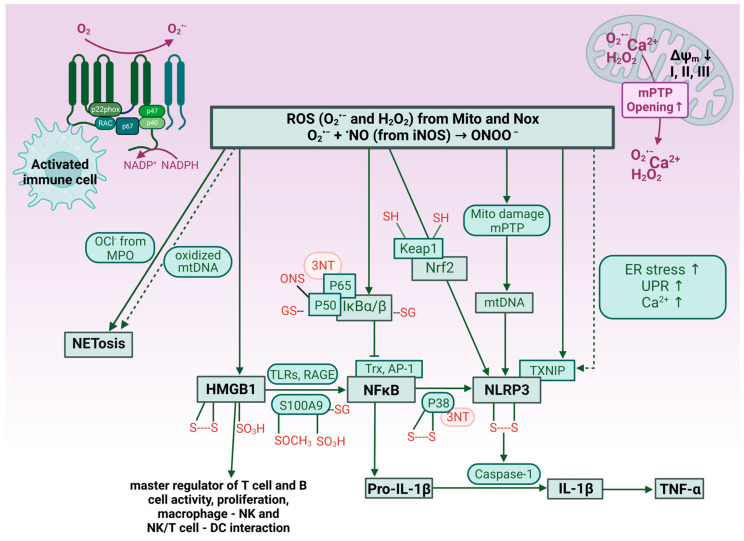
Neurodegenerative diseases are often referred to as diseases of old age, and with the aging population, they are gaining scientific and medical interest. Environmental stressors, most notably traffic noise and air pollution, have recently come to the forefront, and have emerged as disease risk factors. The evidence for a connection between environmental risk factors and neurodegenerative disease is growing. In this review, the most common neurodegenerative diseases and their epidemiological association with traffic noise and air pollution are presented. Also, the most important mechanisms involved in neurodegenerative disease development, oxidative stress, and neuroinflammation are highlighted. An overview of the in vivo findings will provide a mechanistic link between noise, air pollution, and neurodegenerative pathology. Finally, the importance of the direct and indirect pathways, by which noise and air pollution cause cerebral damage, is discussed. More high-quality data are still needed from both epidemiological and basic science studies in order to better understand the causal connection between neurodegenerative diseases and environmental risk factors.
神经退行性疾病通常被称为老年疾病,随着人口老龄化,它们正引起科学界和医学界的关注。环境压力因素,最显著的是交通噪音和空气污染,最近已成为焦点,并已成为疾病风险因素。环境风险因素与神经退行性疾病之间存在关联的证据正在增加。在这篇综述中,介绍了最常见的神经退行性疾病及其与交通噪音和空气污染的流行病学关联。此外,还强调了神经退行性疾病发展、氧化应激和神经炎症中涉及的最重要机制。对体内研究结果的概述将提供噪音、空气污染和神经退行性病理之间的机制联系。最后,讨论了噪音和空气污染导致脑损伤的直接和间接途径的重要性。为了更好地理解神经退行性疾病与环境风险因素之间的因果关系,流行病学和基础科学研究仍需要更多高质量的数据。