Hu Wenxing, Ohue Masahito
Department of Computer Science, School of Computing, Tokyo Institute of Technology, Yokohama, Kanagawa 226-8501, Japan.
Comput Struct Biotechnol J. 2024 Mar 15;23:1214-1225. doi: 10.1016/j.csbj.2024.03.009. eCollection 2024 Dec.
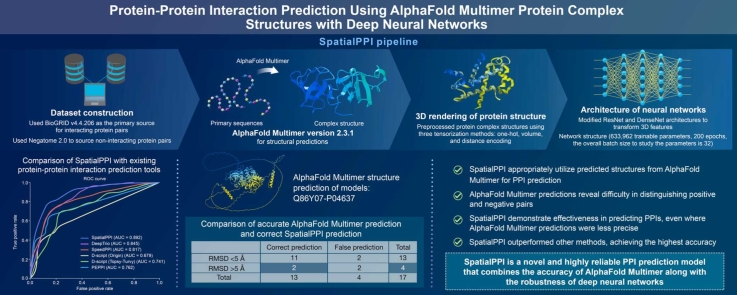
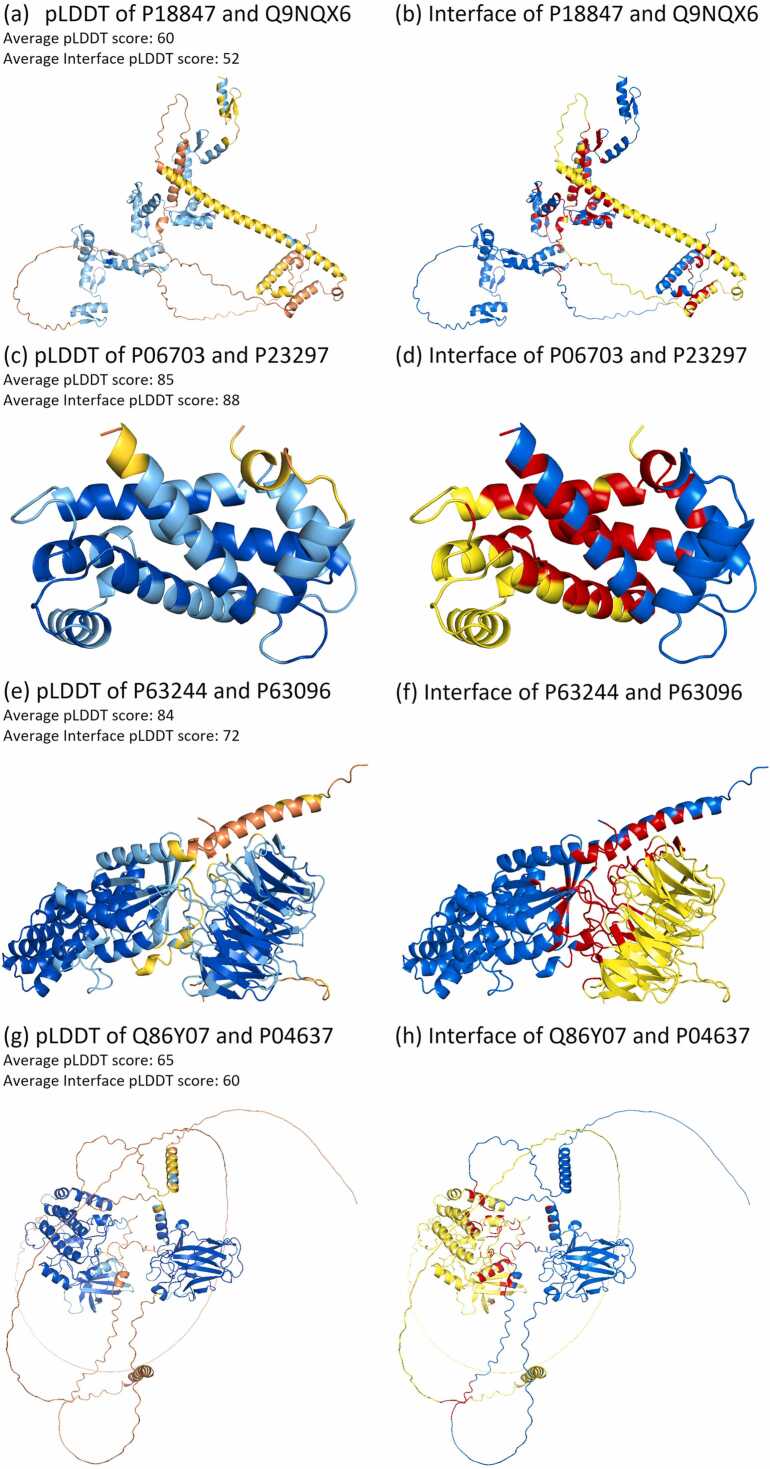
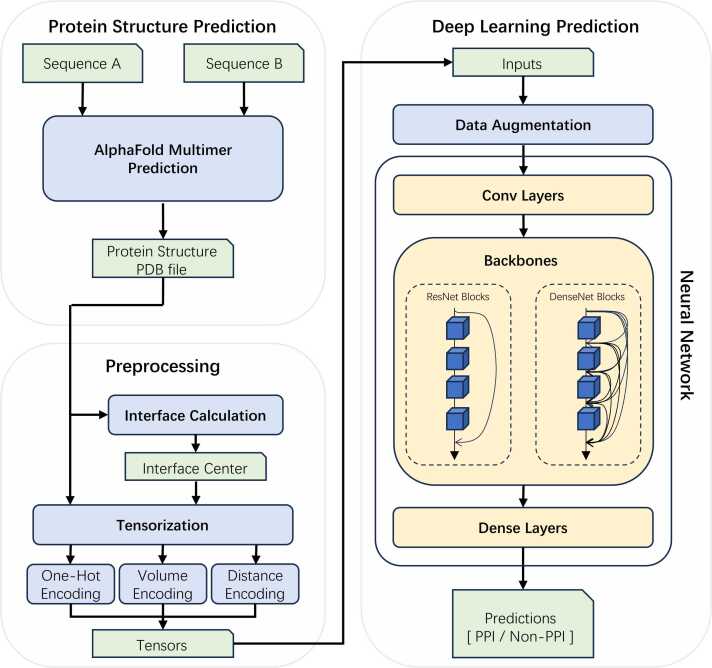
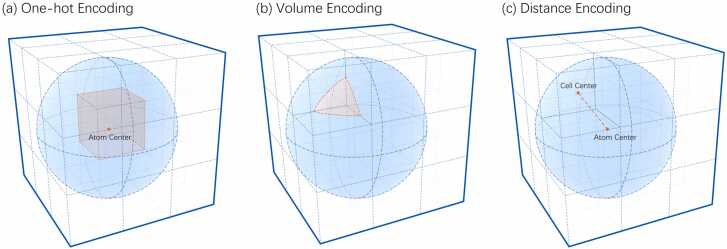
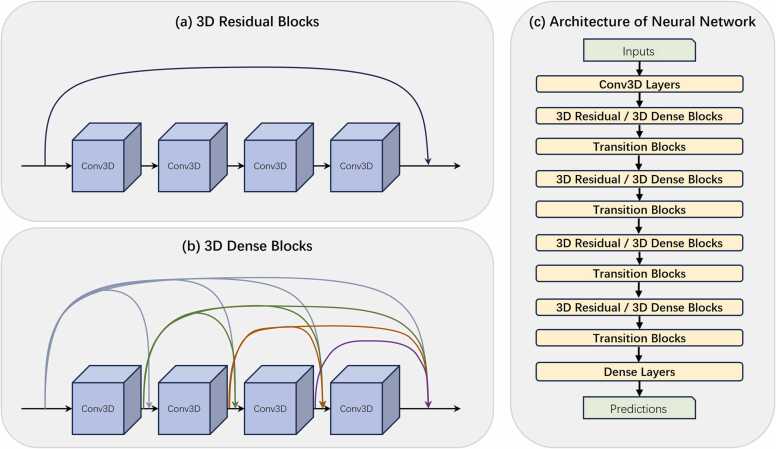
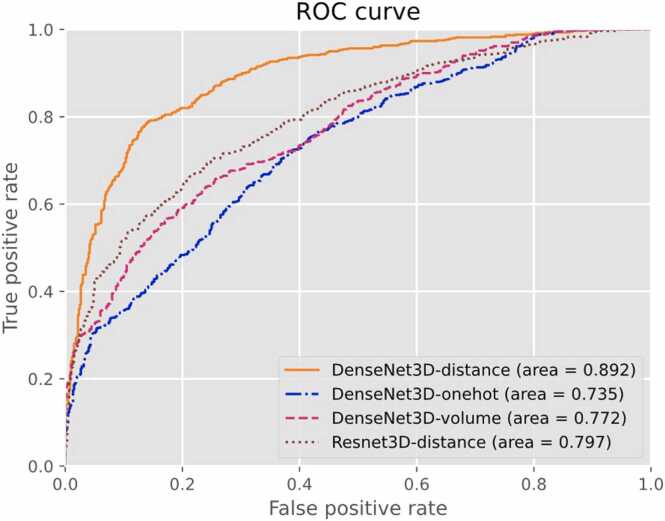
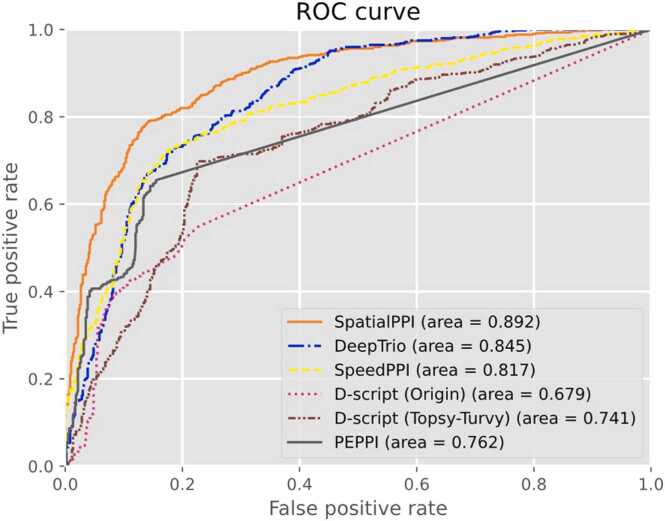
Rapid advancements in protein sequencing technology have resulted in gaps between proteins with identified sequences and those with mapped structures. Although sequence-based predictions offer insights, they can be incomplete due to the absence of structural details. Conversely, structure-based methods face challenges with respect to newly sequenced proteins. The AlphaFold Multimer has remarkable accuracy in predicting the structure of protein complexes. However, it cannot distinguish whether the input protein sequences can interact. Nonetheless, by analyzing the information in the models predicted by the AlphaFold Multimer, we propose a highly accurate method for predicting protein interactions. This study focuses on the use of deep neural networks, specifically to analyze protein complex structures predicted by the AlphaFold Multimer. By transforming atomic coordinates and utilizing sophisticated image-processing techniques, vital 3D structural details were extracted from protein complexes. Recognizing the significance of evaluating residue distances in protein interactions, this study leveraged image recognition approaches by integrating Densely Connected Convolutional Networks (DenseNet) and Deep Residual Network (ResNet) within 3D convolutional networks for protein 3D structure analysis. When benchmarked against leading protein-protein interaction prediction methods, such as SpeedPPI, D-script, DeepTrio, and PEPPI, our proposed method, named SpatialPPI, exhibited notable efficacy, emphasizing the promising role of 3D spatial processing in advancing the realm of structural biology. The SpatialPPI code is available at: https://github.com/ohuelab/SpatialPPI.
蛋白质测序技术的快速发展导致了已鉴定序列的蛋白质与已绘制结构的蛋白质之间存在差距。尽管基于序列的预测能提供一些见解,但由于缺乏结构细节,这些预测可能并不完整。相反,基于结构的方法在处理新测序的蛋白质时面临挑战。AlphaFold Multimer在预测蛋白质复合物结构方面具有显著的准确性。然而,它无法区分输入的蛋白质序列是否能够相互作用。尽管如此,通过分析AlphaFold Multimer预测模型中的信息,我们提出了一种高度准确的蛋白质相互作用预测方法。本研究专注于使用深度神经网络,特别是用于分析AlphaFold Multimer预测的蛋白质复合物结构。通过转换原子坐标并利用复杂的图像处理技术,从蛋白质复合物中提取了重要的三维结构细节。认识到评估蛋白质相互作用中残基距离的重要性,本研究通过在用于蛋白质三维结构分析的三维卷积网络中集成密集连接卷积网络(DenseNet)和深度残差网络(ResNet),利用图像识别方法。当与领先的蛋白质-蛋白质相互作用预测方法(如SpeedPPI、D-script、DeepTrio和PEPPI)进行基准测试时,我们提出的名为SpatialPPI的方法表现出显著的效果,强调了三维空间处理在推动结构生物学领域发展方面的前景。SpatialPPI代码可在以下网址获取:https://github.com/ohuelab/SpatialPPI 。