Ji Yingnan, Liu Lv, Liu Yu, Ma Yudong, Ji Zhenhua, Wu Xiaodan, Zhu Qi
Central Hospital Affiliated to Shenyang Medical College, Shenyang, China.
Benxi Central Hospital, Benxi, China.
Environ Toxicol. 2025 Jun;40(6):891-901. doi: 10.1002/tox.24250. Epub 2024 Mar 28.
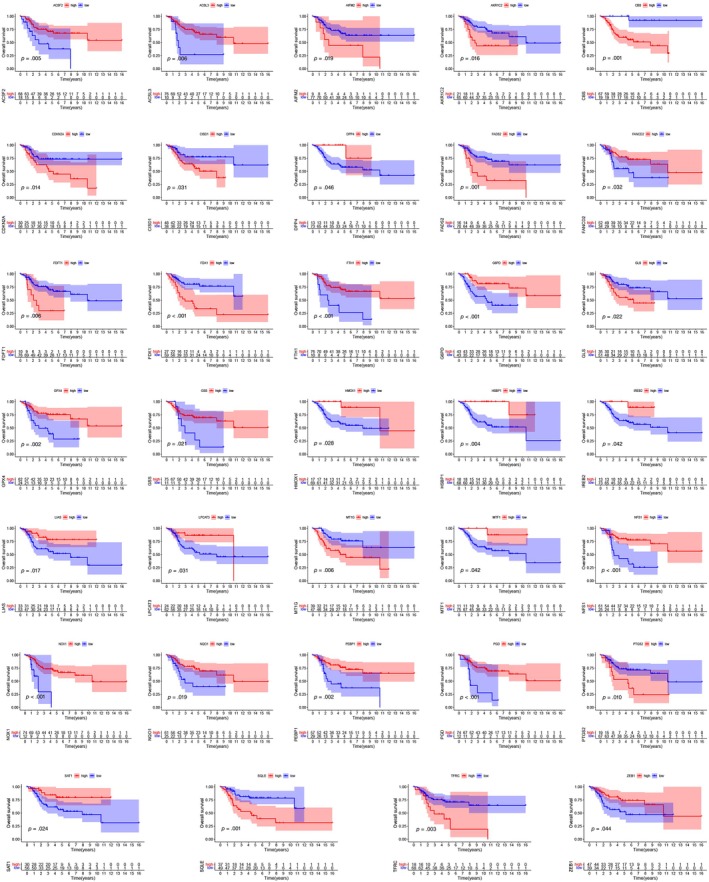
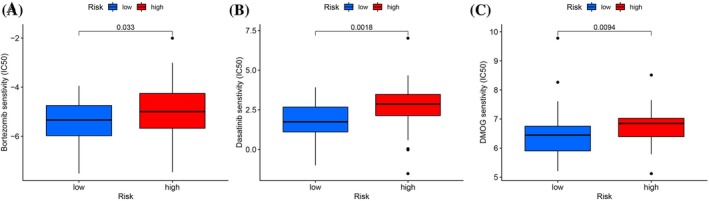
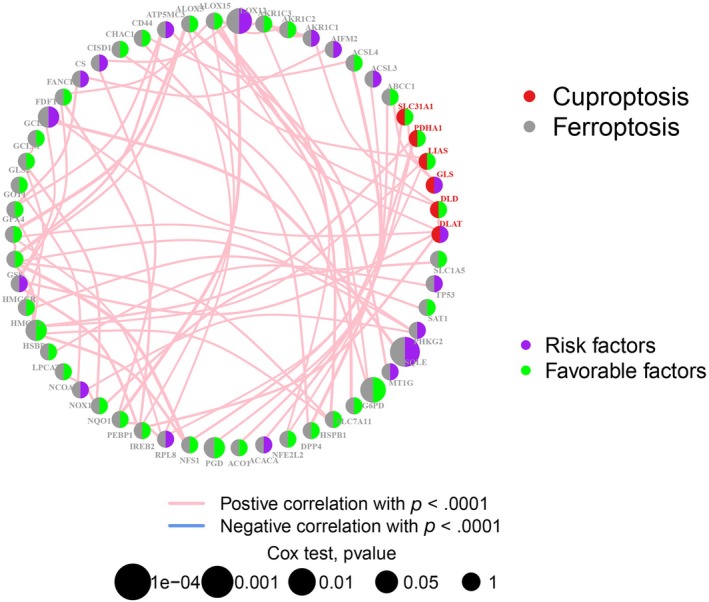
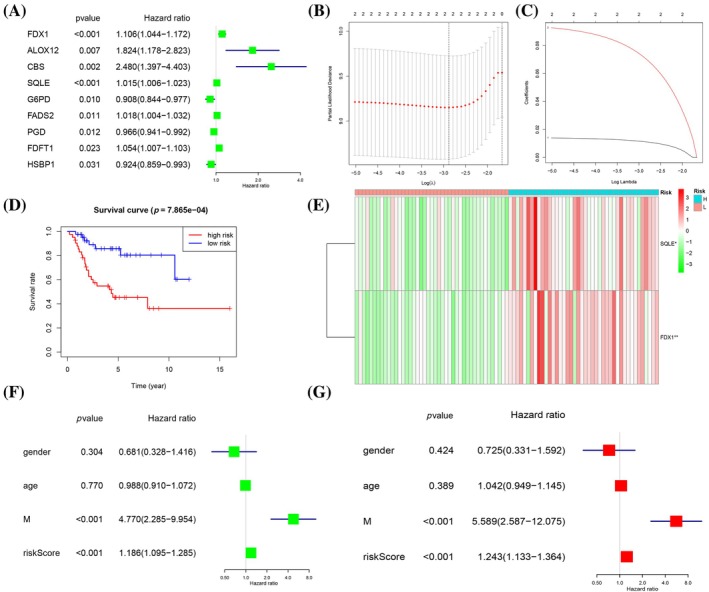
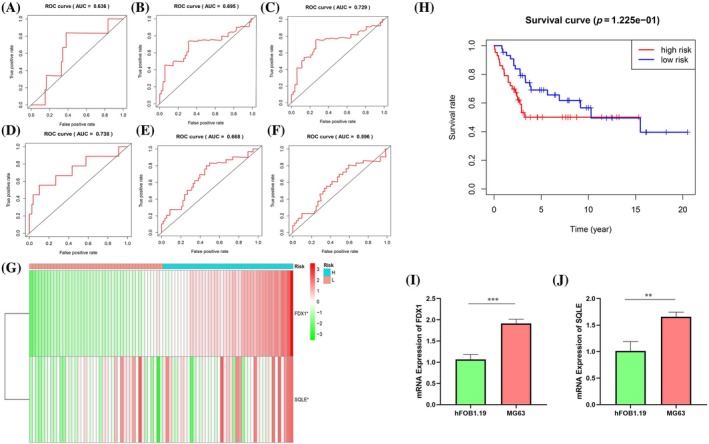
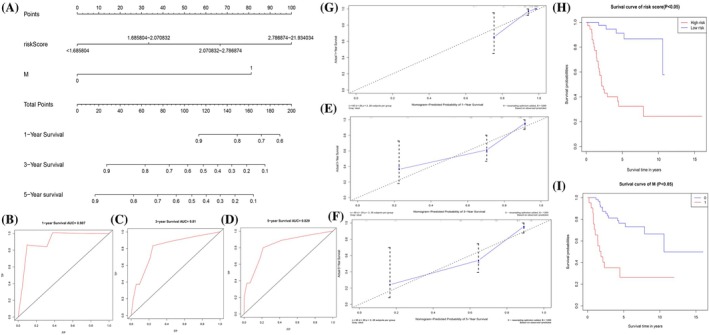
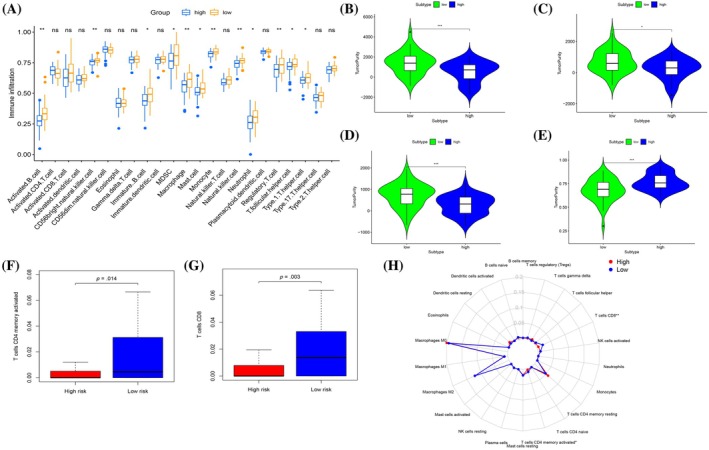
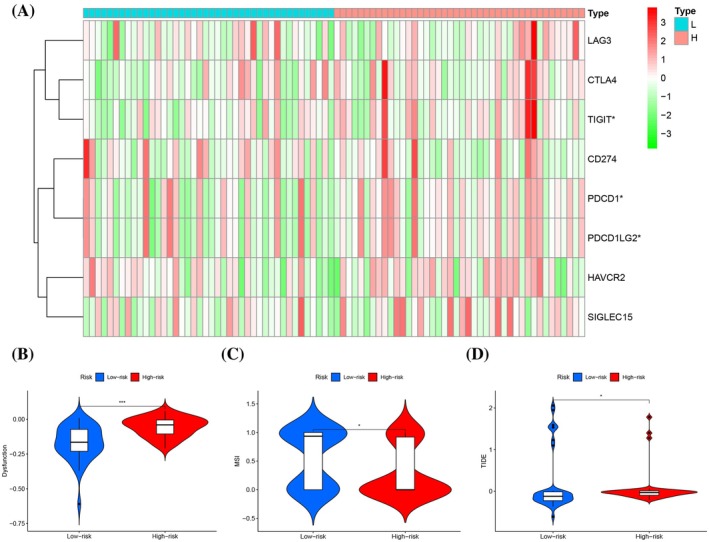
Osteosarcoma predominantly affects adolescents and young adults and is characterized as a malignant bone tumor. In recent decades, substantial advancements have been achieved in both diagnosing and treating osteosarcoma. Resulting in enhanced survival rates. Despite these advancements, the intricate relationship between ferroptosis and cuproptosis genes in osteosarcoma remains inadequately understood. Leveraging TARGET and GEO datasets, we conducted Cox regression analysis to select prognostic genes from a cohort of 71 candidates. Subsequently, a novel prognostic model was engineered using the LASSO algorithm. Kaplan-Meier analysis demonstrated that patients stratified as low risk had a substantially better prognosis compared with their high-risk counterparts. The model's validity was corroborated by the area under the receiver operating characteristic (ROC) curve. Additionally, we ascertained independent prognostic indicators, including clinical presentation, metastatic status, and risk scores, and crafted a clinical scoring system via nomograms. The tumor immune microenvironment was appraised through ESTIMATE, CIBERSORT, and single-sample gene set enrichment analysis. Gene expression within the model was authenticated through PCR validation. The prognostic model, refined by Cox regression and the LASSO algorithm, comprised two risk genes. Kaplan-Meier curves confirmed a significantly improved prognosis for the low-risk group in contrast to those identified as high-risk. For the training set, the ROC area under the curve (AUC) values stood at 0.636, 0.695, and 0.729 for the 1-, 3-, and 5-year checkpoints, respectively. Although validation set AUCs were 0.738, 0.668, and 0.596, respectively. Immune microenvironmental analysis indicated potential immune deficiencies in high-risk patients. Additionally, sensitivity to three small molecule drugs was investigated in the high-risk cohort, informing potential immunotherapeutic strategies for osteosarcoma. PCR analysis showed increased mRNA levels of the genes FDX1 and SQLE in osteosarcoma tissues. This study elucidates the interaction of ferroptosis and cuproptosis genes in osteosarcoma and paves the way for more targeted immunotherapy.
骨肉瘤主要影响青少年和年轻成年人,其特征为恶性骨肿瘤。近几十年来,骨肉瘤的诊断和治疗都取得了重大进展,生存率因此得以提高。尽管有这些进展,但骨肉瘤中细胞铁死亡和铜死亡基因之间的复杂关系仍未得到充分了解。利用TARGET和GEO数据集,我们进行了Cox回归分析,从71个候选基因队列中选择预后基因。随后,使用LASSO算法构建了一个新的预后模型。Kaplan-Meier分析表明,与高危患者相比,低风险分层患者的预后明显更好。该模型的有效性通过受试者操作特征(ROC)曲线下面积得到证实。此外,我们确定了独立的预后指标,包括临床表现、转移状态和风险评分,并通过列线图构建了一个临床评分系统。通过ESTIMATE、CIBERSORT和单样本基因集富集分析评估肿瘤免疫微环境。通过PCR验证对模型中的基因表达进行了验证。经Cox回归和LASSO算法优化的预后模型包含两个风险基因。Kaplan-Meier曲线证实,与高危组相比,低风险组的预后有显著改善。对于训练集,1年、3年和5年检查点的ROC曲线下面积(AUC)值分别为0.636、0.695和0.729。尽管验证集的AUC值分别为0.738、0.668和0.596。免疫微环境分析表明高危患者存在潜在的免疫缺陷。此外,在高危队列中研究了对三种小分子药物的敏感性,为骨肉瘤潜在的免疫治疗策略提供了依据。PCR分析显示骨肉瘤组织中FDX1和SQLE基因的mRNA水平升高。本研究阐明了骨肉瘤中细胞铁死亡和铜死亡基因的相互作用,为更有针对性的免疫治疗铺平了道路。