Univ. Grenoble Alpes, INSERM U1055, Pharmacy Department, Grenoble Alpes University Hospital, Laboratory of Fundamental and Applied Bioenergetics, Grenoble, France.
Univ. Grenoble Alpes, CEA-Leti, Clinatec, Grenoble, France.
Front Endocrinol (Lausanne). 2024 Mar 19;15:1303638. doi: 10.3389/fendo.2024.1303638. eCollection 2024.
Diabetes is a global health concern characterized by chronic hyperglycemia resulting from insulinopenia and/or insulin resistance. The rising prevalence of diabetes and its associated complications (ulcers, periodontitis, healing of bone defect, neuropathy, retinopathy, cardiopathy and nephropathy) necessitate innovative therapeutic approaches. Photobiomodulation (PBM), involves exposing tissues and cells to low-energy light radiation, leading to biological effects, largely via mitochondrial activation.
This review evaluates preclinical and clinical studies exploring the potential of PBM in diabetes and its complications, as well all clinical trials, both planned and completed, available on ClinicalTrials database.
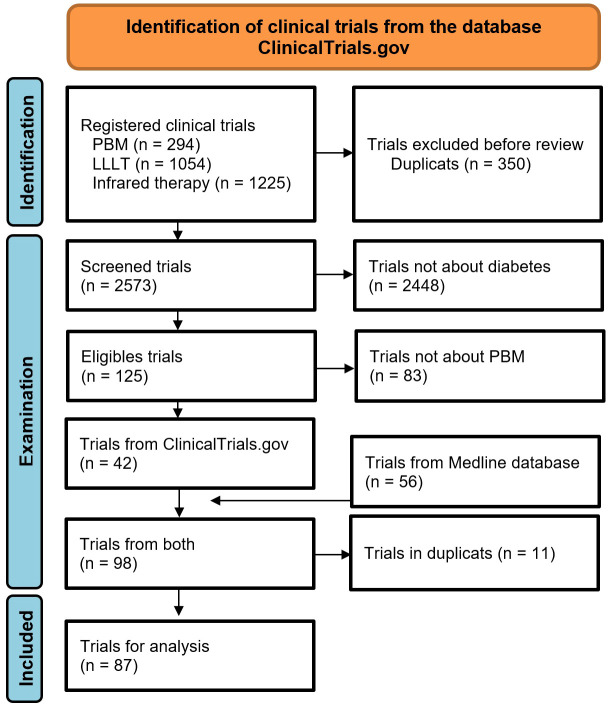
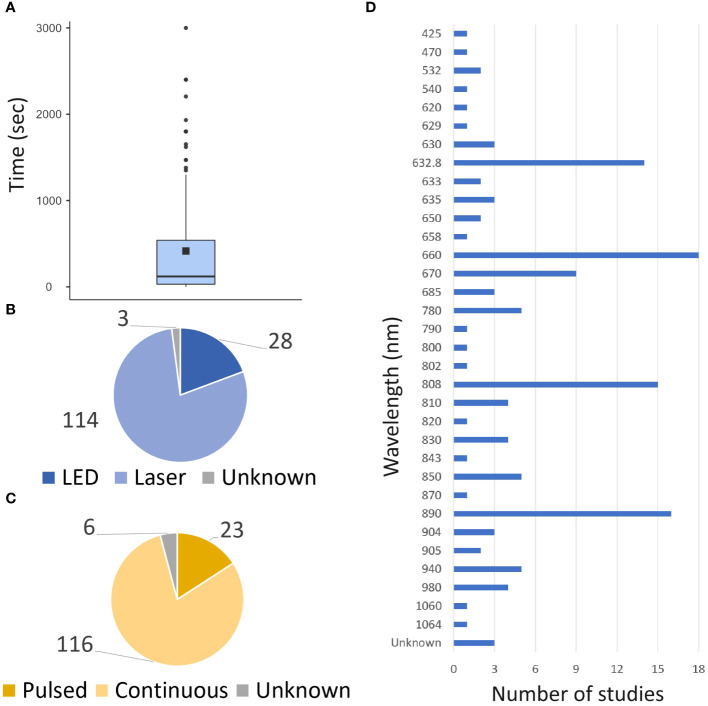
This review highlights the variability in PBM parameters across studies, hindering consensus on optimal protocols. Standardization of treatment parameters and rigorous clinical trials are needed to unlock PBM's full therapeutic potential. 87 clinical trials were identified that investigated PBM in diabetes mellitus (with 5,837 patients planned to be treated with PBM). Clinical trials assessing PBM effects on diabetic neuropathy revealed pain reduction and potential quality of life improvement. Studies focusing on wound healing indicated encouraging results, with PBM enhancing angiogenesis, fibroblast proliferation, and collagen density. PBM's impact on diabetic retinopathy remains inconclusive however, requiring further investigation. In glycemic control, PBM exhibits positive effects on metabolic parameters, including glucose tolerance and insulin resistance.
Clinical studies have reported PBM-induced reductions in fasting and postprandial glycemia without an increased hypoglycemic risk. This impact of PBM may be related to its effects on the beta cells and islets in the pancreas. Notwithstanding challenges, PBM emerges as a promising adjunctive therapy for managing diabetic neuropathy, wound healing, and glycemic control. Further investigation into its impact on diabetic retinopathy and muscle recovery is warranted.
糖尿病是一种全球性的健康问题,其特征是由于胰岛素分泌不足和/或胰岛素抵抗导致的慢性高血糖。糖尿病及其相关并发症(溃疡、牙周炎、骨缺损愈合、神经病、视网膜病变、心脏病和肾病)的患病率不断上升,需要创新的治疗方法。光生物调节(PBM)涉及用低能量光辐射暴露组织和细胞,从而产生生物学效应,主要通过线粒体激活。
本综述评估了探索 PBM 在糖尿病及其并发症中的潜在应用的临床前和临床研究,以及 ClinicalTrials 数据库中所有已计划和已完成的临床试验。
本综述强调了研究中 PBM 参数的可变性,这阻碍了对最佳方案的共识。需要标准化治疗参数并进行严格的临床试验,以释放 PBM 的全部治疗潜力。确定了 87 项研究,这些研究调查了 PBM 在糖尿病中的应用(计划用 PBM 治疗 5837 名患者)。评估 PBM 对糖尿病神经病影响的临床试验显示疼痛减轻和潜在的生活质量改善。关注伤口愈合的研究表明了令人鼓舞的结果,PBM 增强了血管生成、成纤维细胞增殖和胶原蛋白密度。然而,PBM 对糖尿病视网膜病变的影响仍不确定,需要进一步研究。在血糖控制方面,PBM 对代谢参数(包括葡萄糖耐量和胰岛素抵抗)显示出积极影响。
临床研究报告了 PBM 诱导的空腹和餐后血糖降低,而没有增加低血糖风险。PBM 的这种影响可能与其对胰腺中的β细胞和胰岛的作用有关。尽管存在挑战,但 PBM 作为一种有前途的辅助治疗方法,用于管理糖尿病神经病、伤口愈合和血糖控制。需要进一步研究其对糖尿病视网膜病变和肌肉恢复的影响。