Department of Life Sciences, Imperial College London, London SW7 2AZ, U.K.
Department of Experimental and Clinical Biomedical Sciences, Section of Biochemistry, University of Florence, Florence 50134, Italy.
J Am Chem Soc. 2024 Apr 17;146(15):10537-10549. doi: 10.1021/jacs.3c14703. Epub 2024 Apr 3.
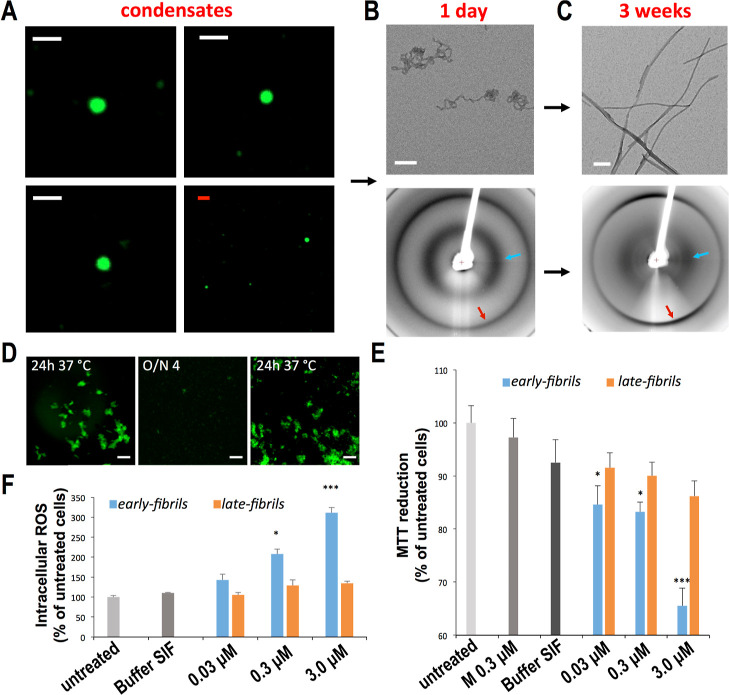
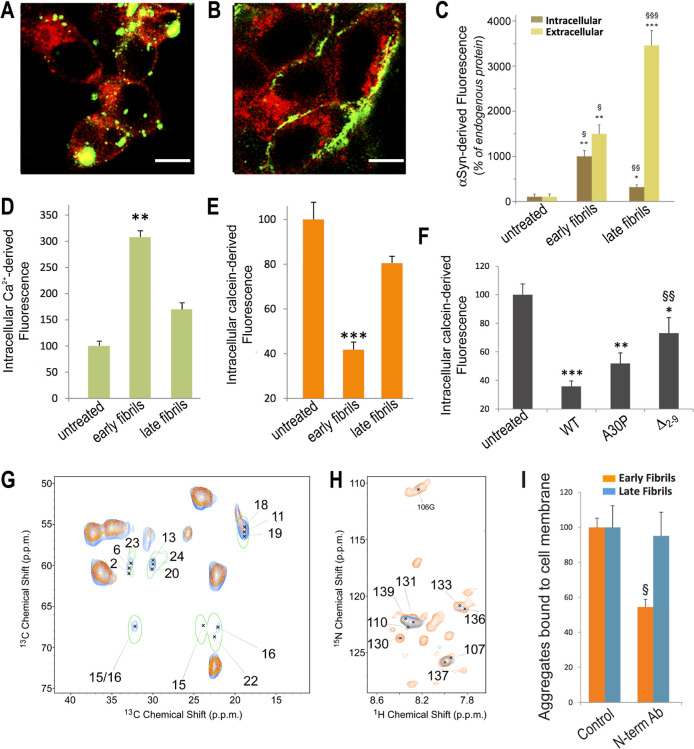
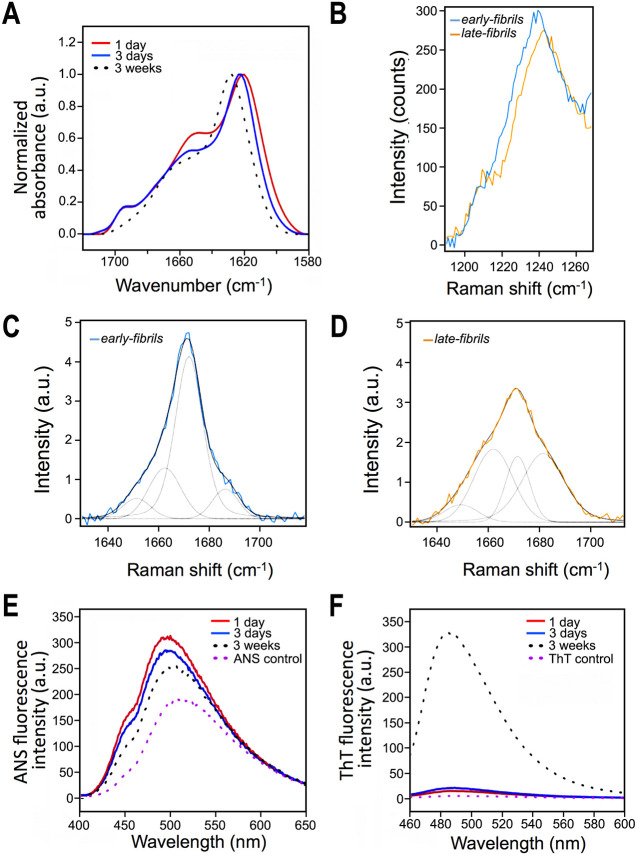
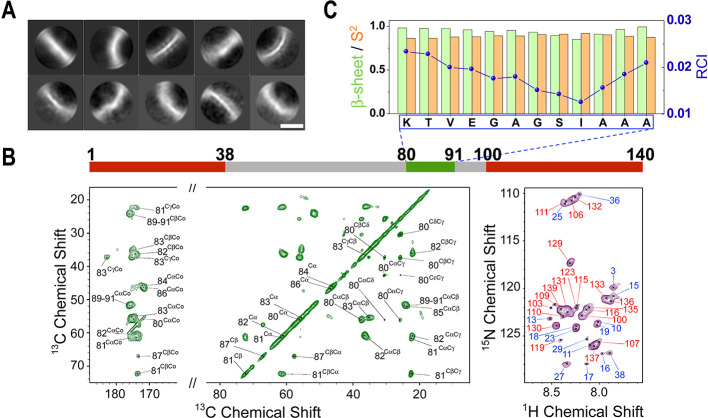
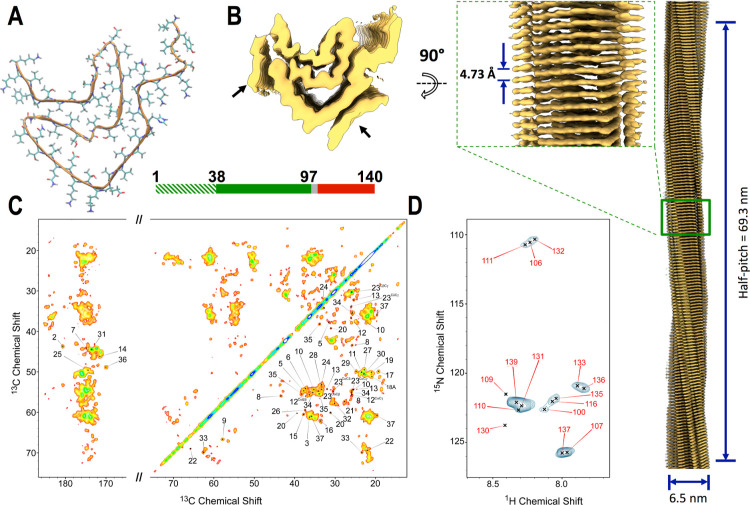
The aberrant aggregation of α-synuclein (αS) into amyloid fibrils is associated with a range of highly debilitating neurodegenerative conditions, including Parkinson's disease. Although the structural properties of mature amyloids of αS are currently understood, the nature of transient protofilaments and fibrils that appear during αS aggregation remains elusive. Using solid-state nuclear magnetic resonance (ssNMR), cryogenic electron microscopy (cryo-EM), and biophysical methods, we here characterized intermediate amyloid fibrils of αS forming during the aggregation from liquid-like spherical condensates to mature amyloids adopting the structure of pathologically observed aggregates. These transient amyloid intermediates, which induce significant levels of cytotoxicity when incubated with neuronal cells, were found to be stabilized by a small core in an antiparallel β-sheet conformation, with a disordered N-terminal region of the protein remaining available to mediate membrane binding. In contrast, mature amyloids that subsequently appear during the aggregation showed different structural and biological properties, including low levels of cytotoxicity, a rearranged structured core embedding also the N-terminal region, and a reduced propensity to interact with the membrane. The characterization of these two fibrillar forms of αS, and the use of antibodies and designed mutants, enabled us to clarify the role of critical structural elements endowing intermediate amyloid species with the ability to interact with membranes and induce cytotoxicity.
异常聚集的α-突触核蛋白(αS)形成淀粉样纤维与一系列高度衰弱的神经退行性疾病有关,包括帕金森病。尽管目前已经了解了成熟的αS 淀粉样纤维的结构特性,但在 αS 聚集过程中出现的瞬态原纤维和纤维的性质仍然难以捉摸。我们使用固态核磁共振(ssNMR)、低温电子显微镜(cryo-EM)和生物物理方法,在此对从液态球形凝聚物到成熟淀粉样纤维的聚集过程中形成的αS 中间淀粉样纤维进行了表征,该成熟淀粉样纤维采用了病理观察到的聚集体的结构。这些瞬态淀粉样中间物在与神经元细胞孵育时会诱导出显著的细胞毒性水平,它们被发现由一个反平行β-折叠构象的小核心稳定,蛋白质的无序 N 端区域仍然可以介导与膜的结合。相比之下,随后在聚集过程中出现的成熟淀粉样纤维表现出不同的结构和生物学特性,包括低水平的细胞毒性、重新排列的结构化核心,同时也嵌入了 N 端区域,以及与膜相互作用的能力降低。对这两种纤维形式的αS 的表征,以及使用抗体和设计的突变体,使我们能够阐明赋予中间淀粉样物质与膜相互作用和诱导细胞毒性的能力的关键结构元素的作用。