Department of Psychiatry, University of Oviedo, Oviedo, Spain.
Health Research Institute of the Principality of Asturias (ISPA), Oviedo, Spain.
Eur Psychiatry. 2024 Apr 11;67(1):e36. doi: 10.1192/j.eurpsy.2024.17.
One of the challenges of psychiatry is the staging of patients, especially those with severe mental disorders. Therefore, we aim to develop an empirical staging model for schizophrenia.
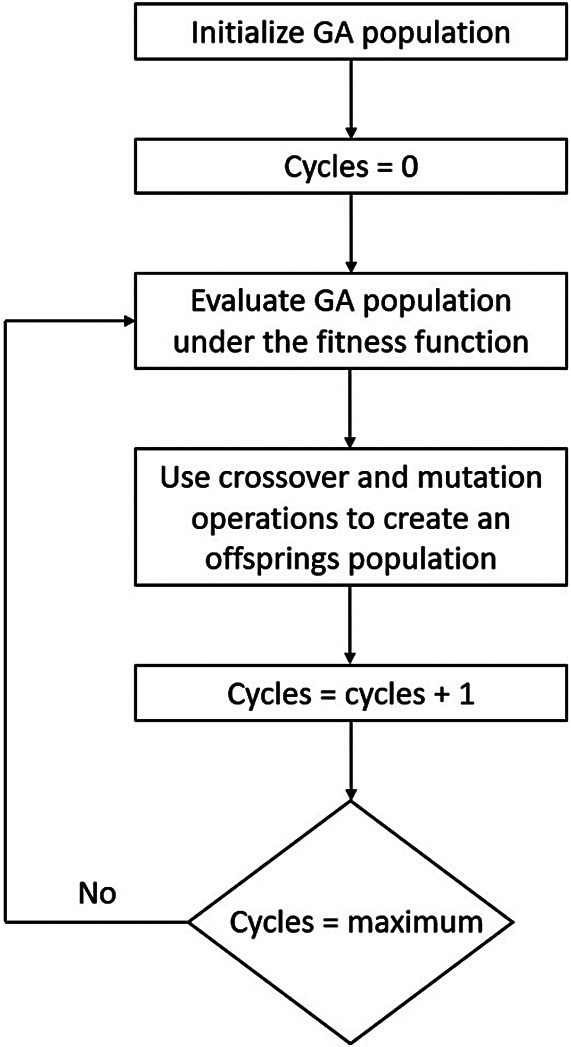
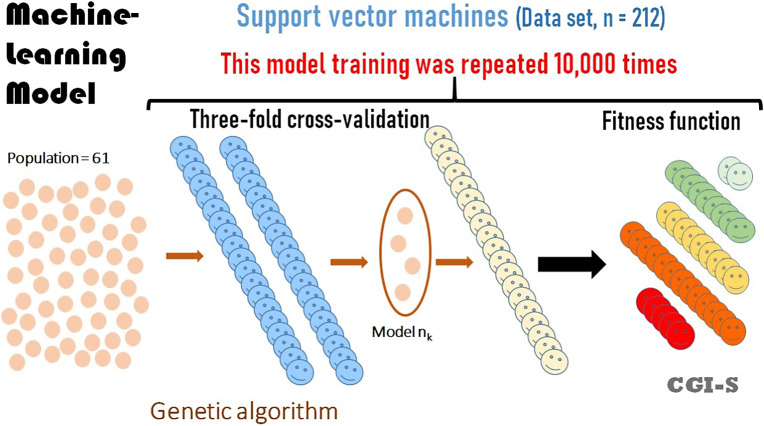
Data were obtained from 212 stable outpatients with schizophrenia: demographic, clinical, psychometric (PANSS, CAINS, CDSS, OSQ, CGI-S, PSP, MATRICS), inflammatory peripheral blood markers (C-reactive protein, interleukins-1RA and 6, and platelet/lymphocyte [PLR], neutrophil/lymphocyte [NLR], and monocyte/lymphocyte [MLR] ratios). We used machine learning techniques to develop the model (genetic algorithms, support vector machines) and applied a fitness function to measure the model's accuracy (% agreement between patient classification of our model and the CGI-S).
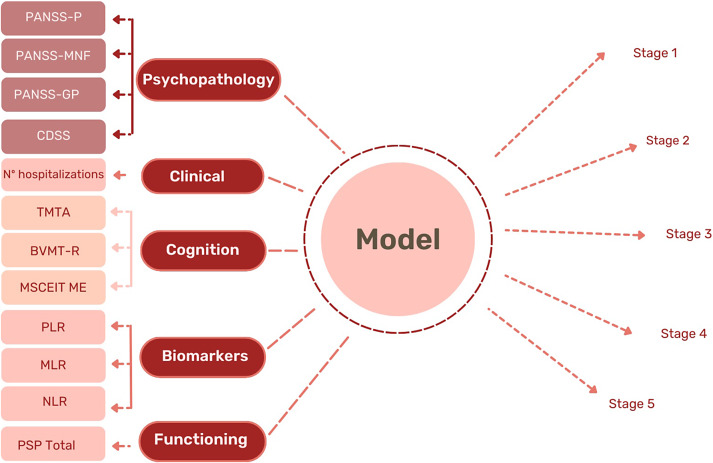
Our model includes 12 variables from 5 dimensions: 1) psychopathology: positive, negative, depressive, general psychopathology symptoms; 2) clinical features: number of hospitalizations; 3) cognition: processing speed, visual learning, social cognition; 4) biomarkers: PLR, NLR, MLR; and 5) functioning: PSP total score. Accuracy was 62% (SD = 5.3), and sensitivity values were appropriate for mild, moderate, and marked severity (from 0.62106 to 0.6728).
We present a multidimensional, accessible, and easy-to-apply model that goes beyond simply categorizing patients according to CGI-S score. It provides clinicians with a multifaceted patient profile that facilitates the design of personalized intervention plans.
精神病学面临的挑战之一是对患者进行分期,尤其是那些患有严重精神障碍的患者。因此,我们旨在为精神分裂症开发一种经验分期模型。
数据来自 212 名稳定的精神分裂症门诊患者:人口统计学、临床、心理计量学(PANSS、CAINS、CDSS、OSQ、CGI-S、PSP、MATRICS)、炎症性外周血标志物(C 反应蛋白、白细胞介素-1RA 和 6、血小板/淋巴细胞 [PLR]、中性粒细胞/淋巴细胞 [NLR]和单核细胞/淋巴细胞 [MLR] 比值)。我们使用机器学习技术(遗传算法、支持向量机)来开发模型,并应用适合度函数来衡量模型的准确性(我们的模型对患者分类与 CGI-S 的一致性百分比)。
我们的模型包括 5 个维度的 12 个变量:1)精神病理学:阳性、阴性、抑郁、一般精神病理学症状;2)临床特征:住院次数;3)认知:加工速度、视觉学习、社会认知;4)生物标志物:PLR、NLR、MLR;5)功能:PSP 总分。准确率为 62%(SD=5.3),敏感性值适用于轻度、中度和明显严重程度(从 0.62106 到 0.6728)。
我们提出了一个多维的、易于获取和应用的模型,它超越了简单地根据 CGI-S 评分对患者进行分类。它为临床医生提供了一个多方面的患者概况,有助于制定个性化的干预计划。