Yong Loo Lin School of Medicine, National University of Singapore, NUHS Tower Block, Level 11, Singapore, Singapore.
Division of Supportive and Palliative Care, National Cancer Centre Singapore, Singapore, Singapore.
BMC Med Educ. 2024 Apr 10;24(1):398. doi: 10.1186/s12909-024-05203-w.
Reviewing experiences and recognizing the impact of personal and professional views and emotions upon conduct shapes a physician's professional and personal development, molding their professional identity formation (PIF). Poor appreciation on the role of reflection, shortages in trained tutors and inadequate 'protected time' for reflections in packed medical curricula has hindered its integration into medical education. Group reflection could be a viable alternative to individual reflections; however, this nascent practice requires further study.
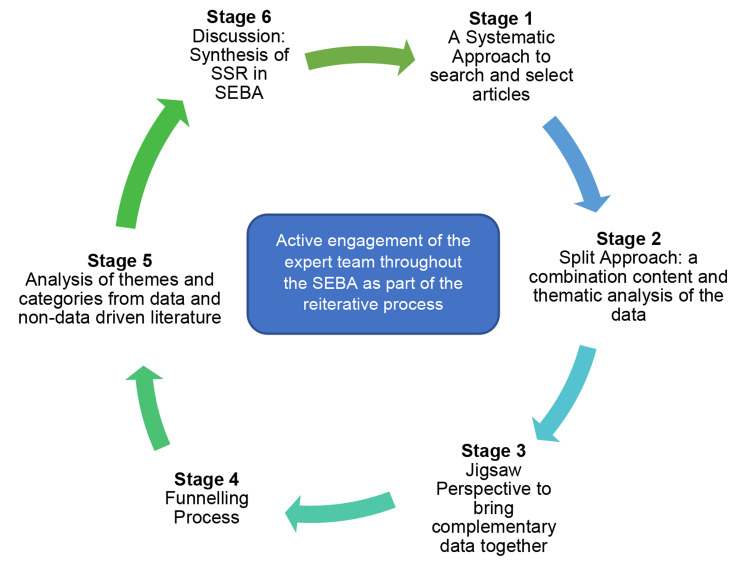
A Systematic Evidence Based Approach guided Systematic Scoping Review (SSR in SEBA) was adopted to guide and structure a review of group reflections in medical education. Independent searches of articles published between 1st January 2000 and 30th June 2022 in bibliographic and grey literature databases were carried out. Included articles were analysed separately using thematic and content analysis, and combined into categories and themes. The themes/categories created were compared with the tabulated summaries of included articles to create domains that framed the synthesis of the discussion.
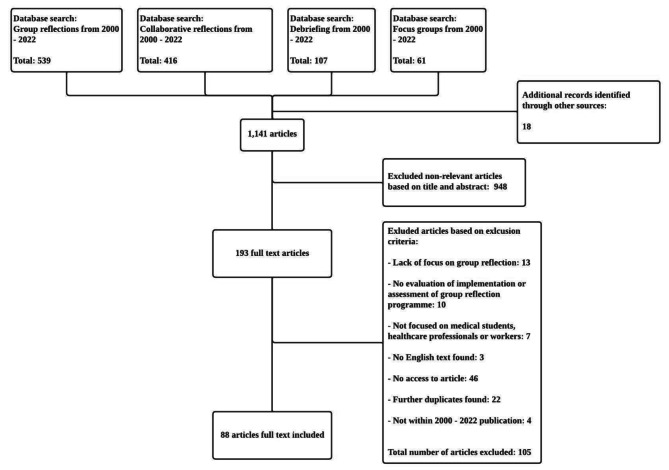
1141 abstracts were reviewed, 193 full-text articles were appraised and 66 articles were included and the domains identified were theories; indications; types; structure; and benefits and challenges of group reflections.
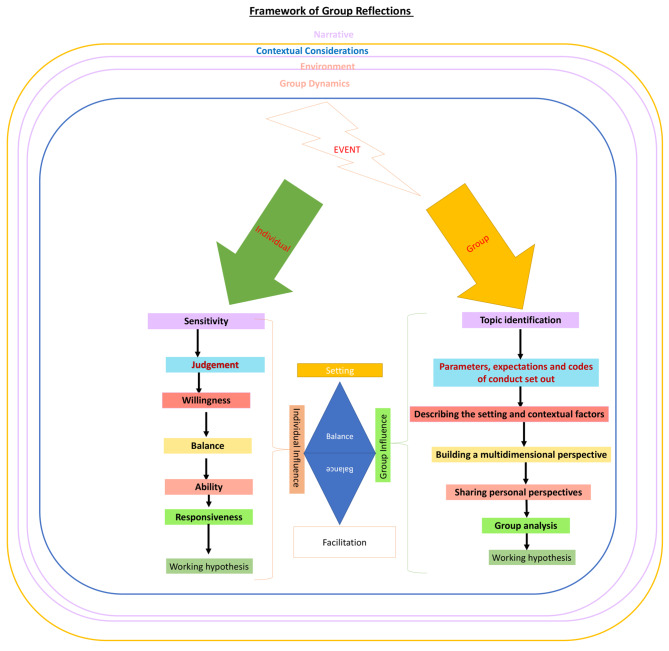
Scaffolded by current approaches to individual reflections and theories and inculcated with nuanced adaptations from other medical practices, this SSR in SEBA suggests that structured group reflections may fill current gaps in training. However, design and assessment of the evidence-based structuring of group reflections proposed here must be the focus of future study.
回顾经验并认识到个人和专业观点以及情感对行为的影响,塑造了医生的专业和个人发展,塑造了他们的专业身份形成(PIF)。对反思作用的认识不足、缺乏经过培训的导师以及在繁忙的医学课程中为反思提供的“保护时间”不足,阻碍了其融入医学教育。小组反思可能是个人反思的可行替代方法;然而,这种新兴实践需要进一步研究。
采用系统循证方法指导系统范围综述(SEBA 中的 SSR)来指导和构建医学教育中小组反思的综述。在文献和灰色文献数据库中独立搜索了 2000 年 1 月 1 日至 2022 年 6 月 30 日期间发表的文章。使用主题和内容分析分别分析纳入的文章,并将其组合成类别和主题。创建的主题/类别与纳入文章的表格摘要进行比较,以创建框架讨论综合的领域。
共审查了 1141 篇摘要,评估了 193 篇全文文章,纳入了 66 篇文章,并确定了领域,包括理论;适应症;类型;结构;以及小组反思的益处和挑战。
在当前个人反思方法和理论的基础上,并从其他医学实践中汲取细微的适应,本 SEBA 中的 SSR 表明,结构化小组反思可能可以填补培训中的当前空白。然而,必须将这里提出的基于证据的结构化小组反思的设计和评估作为未来研究的重点。