Ribe Eloi, Cezard Genevieve Isabelle, Marshall Alan, Keenan Katherine
School of Economic, Social and Political Sciences, University of Southampton, Southampton, UK.
British Heart Foundation Cardiovascular Epidemiology Unit, Department of Public Health and Primary Care, University of Cambridge, Cambridge, UK.
Eur J Public Health. 2024 Aug 1;34(4):696-703. doi: 10.1093/eurpub/ckae062.
In the United Kingdom, rising prevalence of multimorbidity-the co-occurrence of two or more chronic conditions- is coinciding with stagnation in life expectancy. We investigate patterns of disease accumulation and how they vary by birth cohort, social and environmental inequalities in Scotland, a country which has long suffered from excess mortality and poorer health outcomes relative to its neighbours.
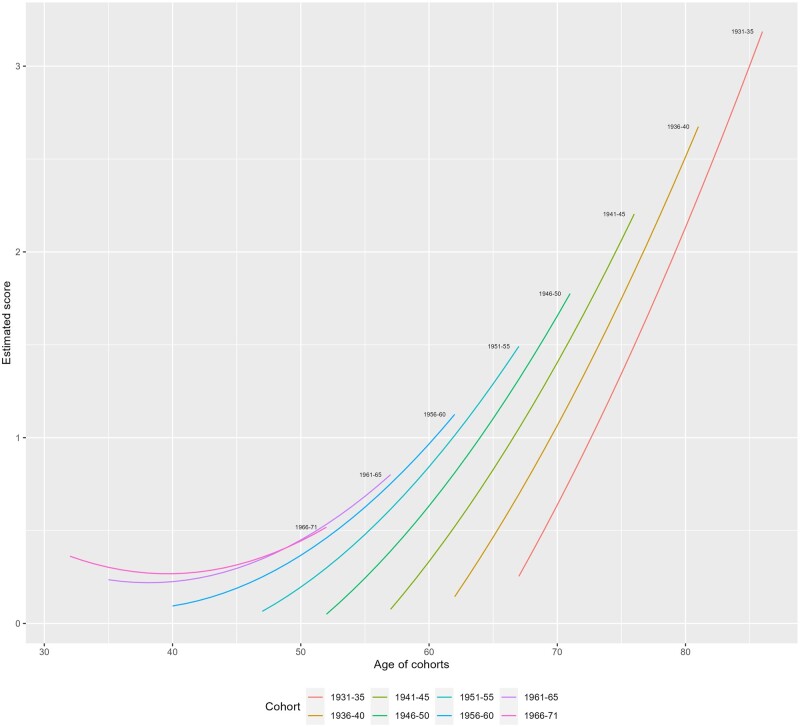
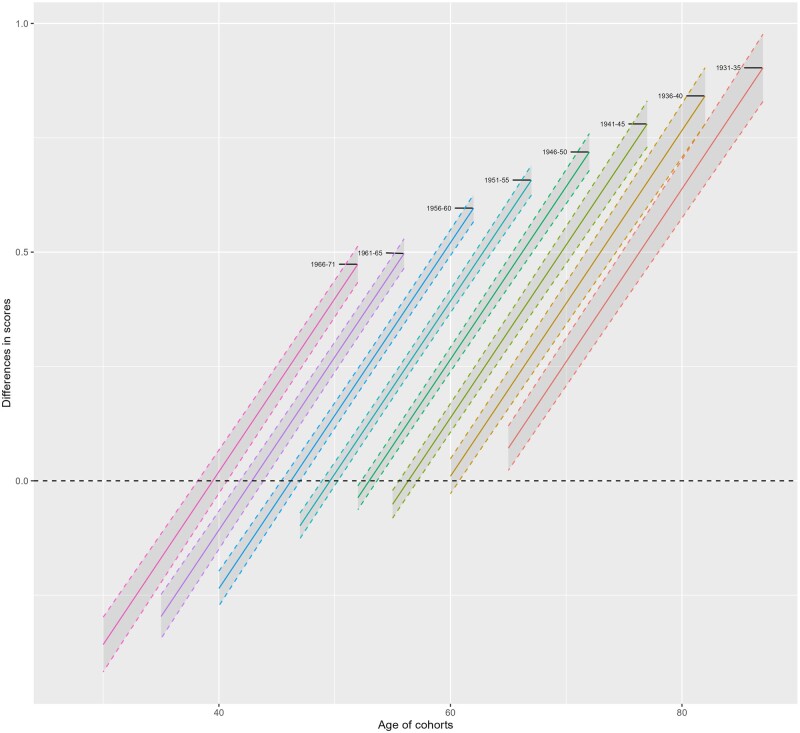
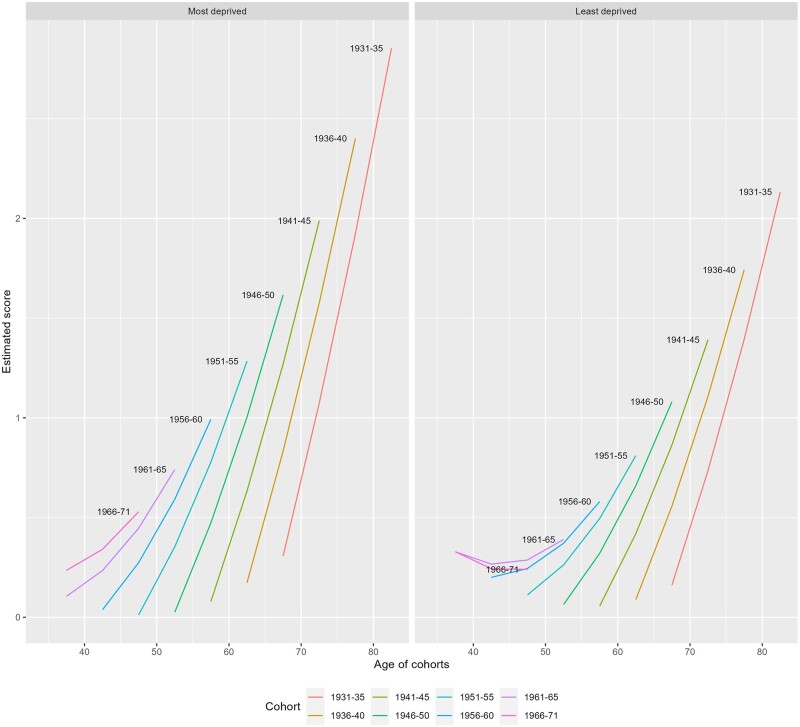
Using a dataset which links census data from 1991, 2001 and 2011 to disease registers and hospitalization data, we follow cohorts of adults aged 30-69 years for 18 years. We model physical and mental disease accumulation using linear mixed-effects models.
Recent cohorts experience higher levels of chronic disease accumulation compared to their predecessors at the same ages. Moreover, in more recently born cohorts we observe socioeconomic status disparities emerging earlier in the life course, which widen over time and with every successive cohort. Patterns of chronic conditions are also changing, and the most common diseases suffered by later born cohorts are cancer, hypertension, asthma, drug and alcohol problems and depression.
We recommend policies which target prevention of chronic disease in working age adults, considering how and why certain conditions are becoming more prevalent across time and space.
在英国,多种慢性病(两种或更多种慢性病同时出现)患病率的上升与预期寿命的停滞不前同时发生。我们调查了疾病累积模式以及它们如何因出生队列、社会和环境不平等而在苏格兰有所不同,相对于其邻国,苏格兰长期以来一直存在超额死亡率和较差的健康结果。
利用一个将1991年、2001年和2011年的人口普查数据与疾病登记册和住院数据相链接的数据集,我们对30至69岁的成年人队列进行了18年的跟踪。我们使用线性混合效应模型对身体和精神疾病的累积进行建模。
与同年龄的前辈相比,最近几代人经历了更高水平的慢性病累积。此外,在最近出生的队列中,我们观察到社会经济地位差异在生命历程中出现得更早,并且随着时间的推移和每一个连续的队列而扩大。慢性病模式也在发生变化,较晚出生队列中最常见的疾病是癌症、高血压、哮喘、药物和酒精问题以及抑郁症。
我们建议制定针对工作年龄成年人慢性病预防的政策,同时考虑某些疾病在时间和空间上变得更加普遍的方式和原因。