Department of Cardiology, Amsterdam UMC, Vrije Universiteit Amsterdam, Amsterdam, The Netherlands.
Department of Vascular Medicine, Amsterdam UMC, University of Amsterdam, Amsterdam, The Netherlands.
Eur Heart J. 2024 May 27;45(20):1783-1800. doi: 10.1093/eurheartj/ehae190.
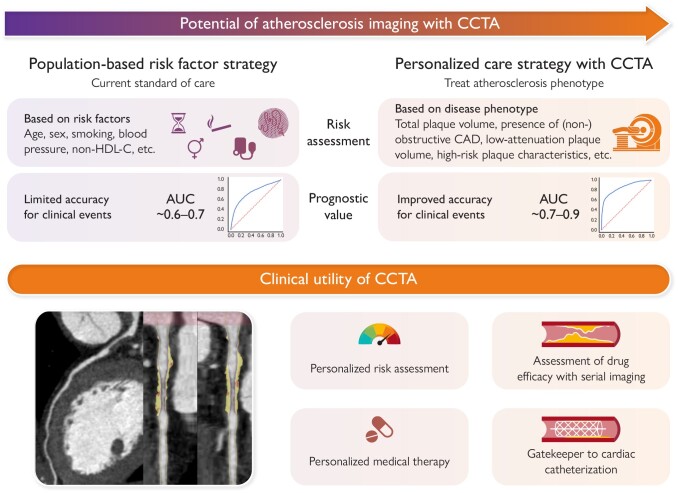
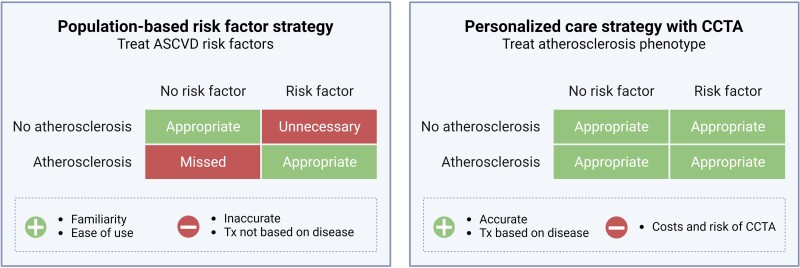
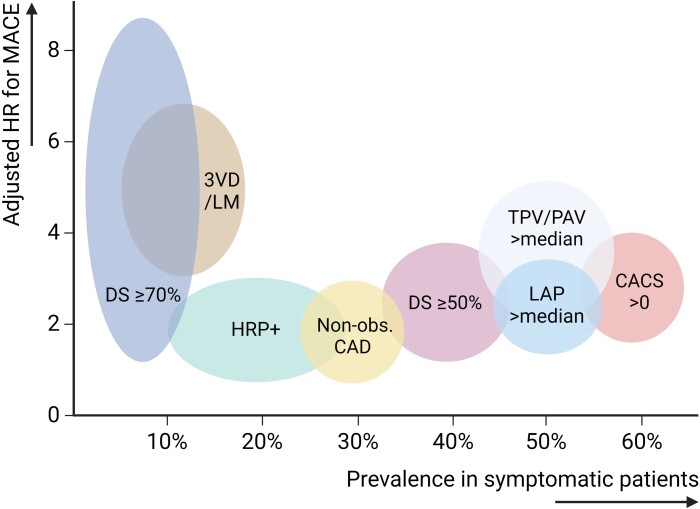
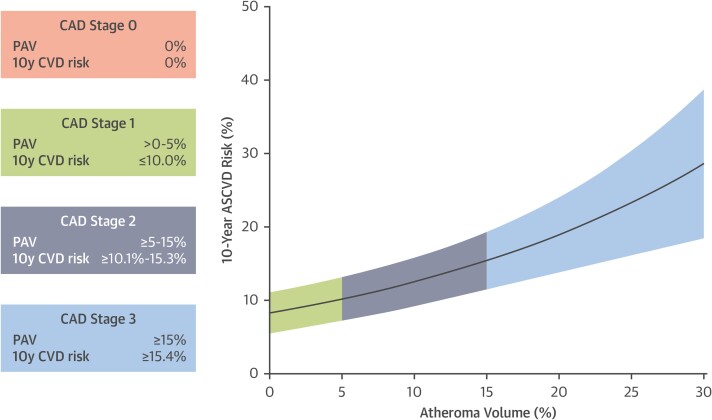
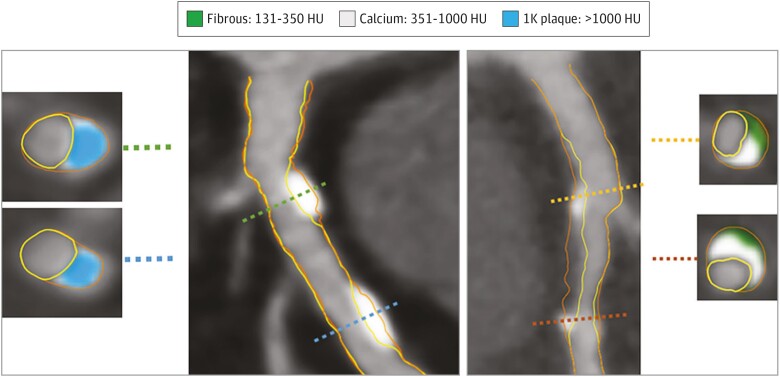
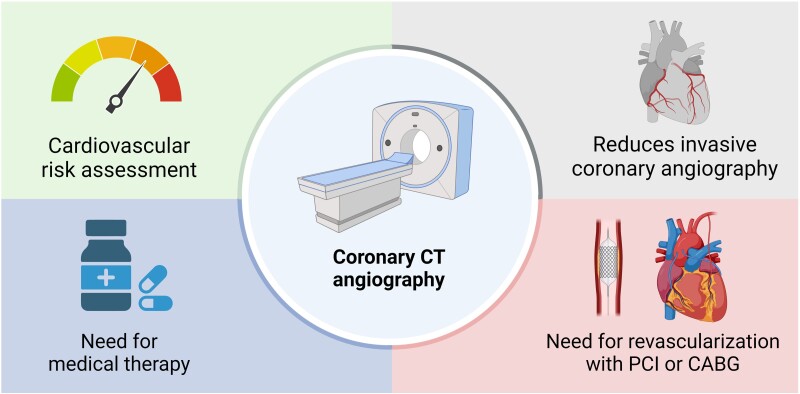
Clinical risk scores based on traditional risk factors of atherosclerosis correlate imprecisely to an individual's complex pathophysiological predisposition to atherosclerosis and provide limited accuracy for predicting major adverse cardiovascular events (MACE). Over the past two decades, computed tomography scanners and techniques for coronary computed tomography angiography (CCTA) analysis have substantially improved, enabling more precise atherosclerotic plaque quantification and characterization. The accuracy of CCTA for quantifying stenosis and atherosclerosis has been validated in numerous multicentre studies and has shown consistent incremental prognostic value for MACE over the clinical risk spectrum in different populations. Serial CCTA studies have advanced our understanding of vascular biology and atherosclerotic disease progression. The direct disease visualization of CCTA has the potential to be used synergistically with indirect markers of risk to significantly improve prevention of MACE, pending large-scale randomized evaluation.
基于传统动脉粥样硬化危险因素的临床风险评分与个体复杂的动脉粥样硬化病理生理学易感性相关性不精确,对预测主要不良心血管事件(MACE)的准确性有限。在过去的二十年中,计算机断层扫描仪和冠状动脉计算机断层扫描血管造影(CCTA)分析技术有了实质性的改进,使更精确的动脉粥样硬化斑块定量和特征化成为可能。CCTA 对狭窄和动脉粥样硬化进行定量的准确性已在多项多中心研究中得到验证,并在不同人群的临床风险谱中显示出对 MACE 的一致增量预后价值。系列 CCTA 研究推进了我们对血管生物学和动脉粥样硬化疾病进展的认识。CCTA 的直接疾病可视化有可能与风险的间接标志物协同使用,从而大大提高 MACE 的预防效果,这有待于大规模随机评估。