Harris Rif, Veretnik Shirel, Dewan Simran, Baruch Leshem Avigail, Lampel Ayala
Shmunis School of Biomedicine and Cancer Research, George S. Wise Faculty of Life Sciences, Tel Aviv University, Tel Aviv, Israel.
Center for Nanoscience and Nanotechnology Tel Aviv University, Tel Aviv, 69978, Israel.
Commun Chem. 2024 Apr 20;7(1):90. doi: 10.1038/s42004-024-01174-7.
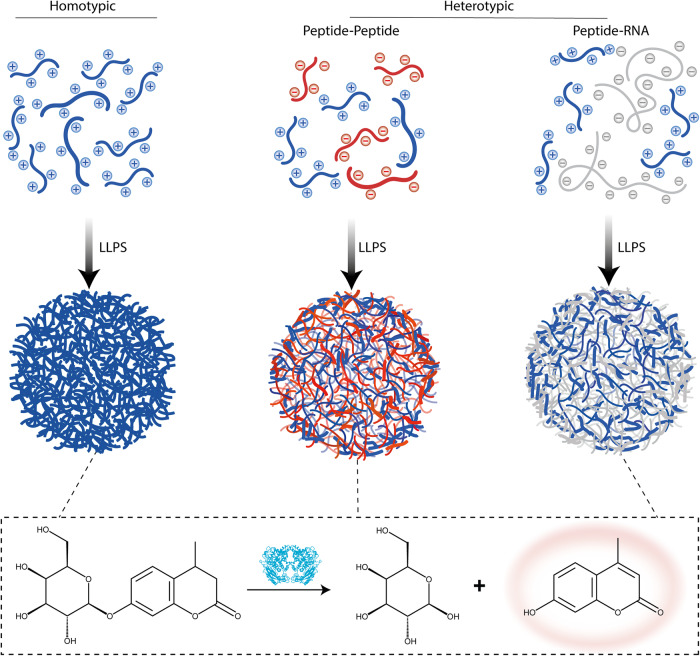
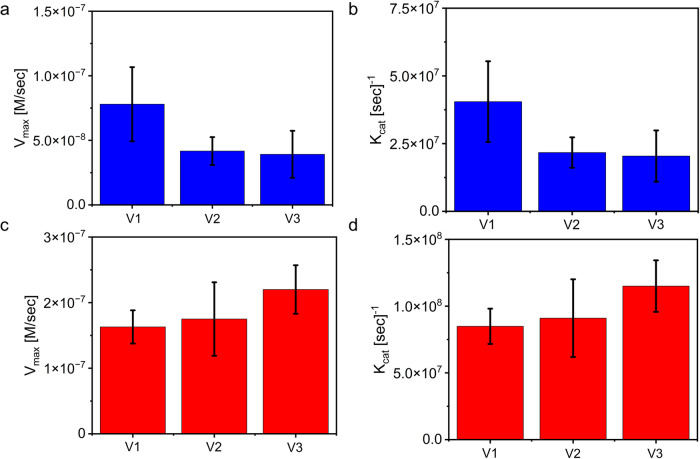
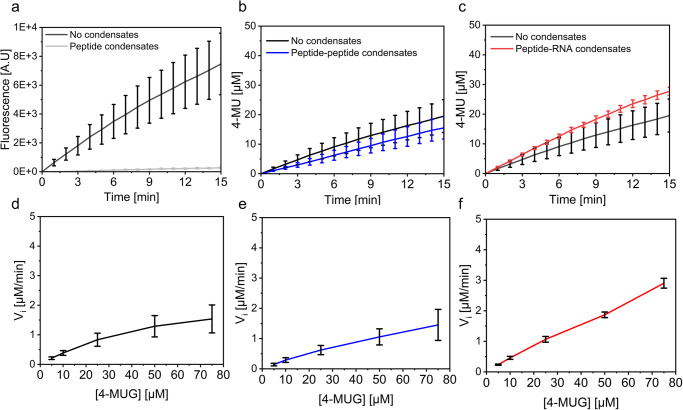
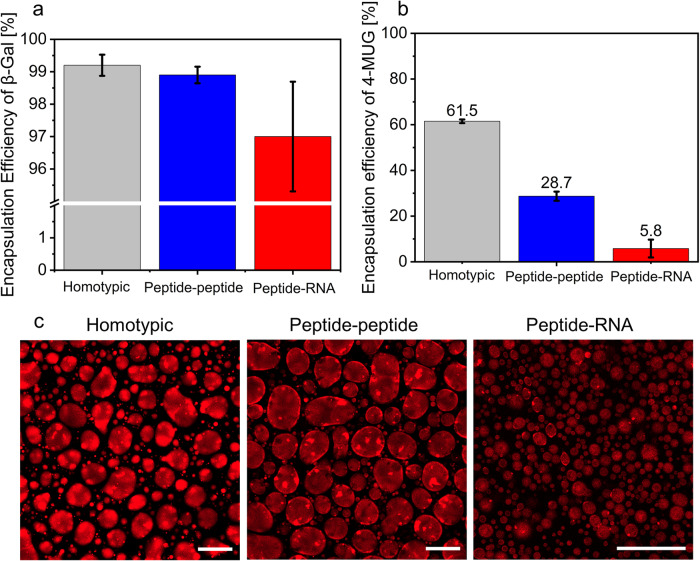
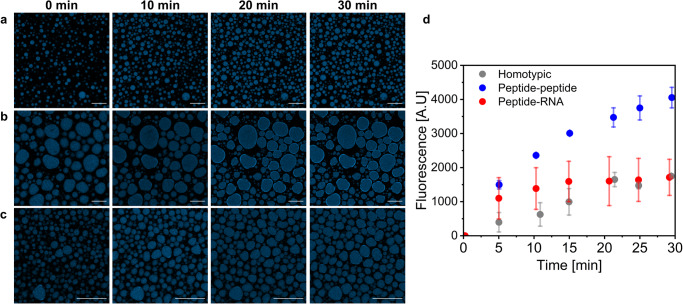
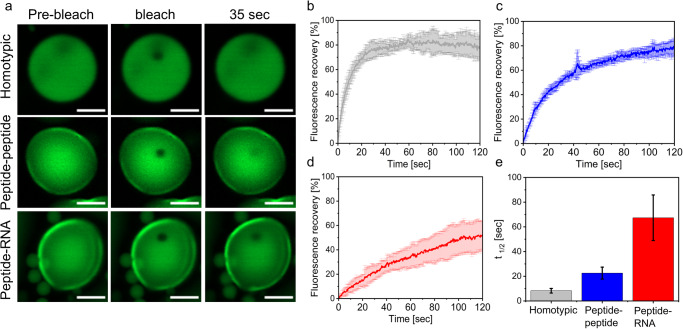
Biomolecular condensates are condensed intracellular phases that are formed by liquid-liquid phase separation (LLPS) of proteins, either in the absence or presence of nucleic acids. These condensed phases regulate various biochemical reactions by recruitment of enzymes and substrates. Developments in the field of LLPS facilitated new insights on the regulation of compartmentalized enzymatic reactions. Yet, the influence of condensate chemical composition on enzymatic reactions is still poorly understood. Here, by using peptides as minimalistic condensate building blocks and β-galactosidase as a simple enzymatic model we show that the reaction is restricted in homotypic peptide condensates, while product formation is enhanced in peptide-RNA condensates. Our findings also show that condensate composition affects the recruitment of substrate, the spatial distribution, and the kinetics of the reaction. Thus, these findings can be further employed for the development of microreactors for biotechnological applications.
生物分子凝聚物是通过蛋白质的液-液相分离(LLPS)形成的凝聚细胞内相,无论有无核酸存在。这些凝聚相通过招募酶和底物来调节各种生化反应。LLPS领域的发展促进了对区室化酶促反应调控的新认识。然而,凝聚物化学成分对酶促反应的影响仍知之甚少。在这里,通过使用肽作为简约的凝聚物构建块,并以β-半乳糖苷酶作为简单的酶模型,我们表明该反应在同型肽凝聚物中受到限制,而在肽-RNA凝聚物中产物形成增强。我们的研究结果还表明,凝聚物组成会影响底物的招募、空间分布和反应动力学。因此,这些发现可进一步用于开发用于生物技术应用的微反应器。