Department of Food Science and Technology, Biotechnical Faculty, University of Ljubljana, Ljubljana, Slovenia.
Preschool Galjevica, Ljubljana, Slovenia.
Eur J Pediatr. 2024 Jul;183(7):3085-3094. doi: 10.1007/s00431-024-05576-6. Epub 2024 Apr 25.
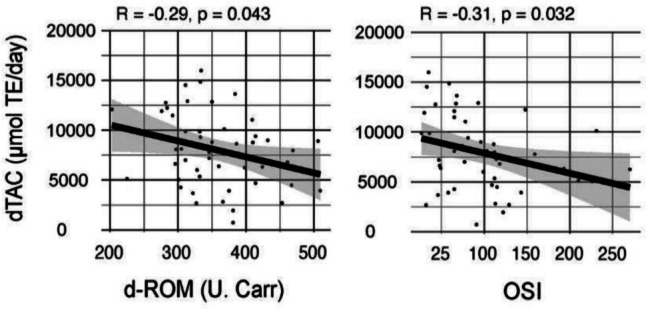
As children spend up to 9 h a day in kindergarten, the main purpose of our study was to evaluate the effect of antioxidant-rich kindergarten meals on oxidative stress biomarkers (OSBs) in healthy children. In the randomized control trial with a follow-up, healthy 5-6-year-old children from six kindergartens were randomly divided into a prototype group (PG, n = 40) and a control group (CG, n = 17). PG followed a 2-week antioxidant-rich kindergarten meal plan (breakfast, lunch, and two snacks), and CG followed their standard kindergarten meal plans. Outside the kindergartens, participants ate as usual. We used a consecutive 7-day dietary record inside and outside the kindergarten and the national dietary assessment tool OPEN to assess the total dietary antioxidant capacity (dTAC) of the consumed foods. Malondialdehyde (MDA), 8-hydroxy-2-deoxyguanosine (8-OHdG), and four F2-isoprostane were measured in fasting urine on days 1 and 15. We also measured total antioxidant power (PAT) and hydroperoxides (d-ROMs) in fasting serum on day 15 and obtained the value of the oxidative stress index (OSI). We used a Welch two-sample t-test and multiple regression analysis to compare the prototype and control groups and a nonparametric Wilcoxon signed rank exact test to compare pre- and post-intervention results in urine. Antioxidant-rich kindergarten meals contributed to a significantly (p < 0.05) higher intake of dTAC in PG participants compared to standard meals in CG participants (8.6 vs. 2.8 mmol/day). We detected a negative correlation between dTAC intake and d-ROMs and between dTAC intake and OSI (r = - 0.29, p = 0.043 and r = - 0.31, p = 0.032, respectively). A significant decrease in urinary 8-iso-15-prostaglandin-F-2 alpha was detected in PG participants between days 1 and 15; however, no other intra-individual significant differences in urinary OSBs were found. Conclusion: Antioxidant-rich food in kindergarten is warranted due to its potential health-protective effect. Additionally, we present original data on the average levels of urinary and serum OSBs in healthy 5-6-year-old children. Trial registration: The study was registered at ClinicalTrials.gov, on February 5, 2020 ( https://clinicaltrials.gov/ct2/show/NCT04252105 ). What is Known: • Kindergartens are recognized as promising environments for public health measures. • A diet rich in antioxidants can reduce OSBs and, consequently, the risk of developing NCDs. What is New: • Antioxidant-rich kindergarten diet can ensure a protective intake of dTAC in children. • Original data on serum oxidative stress biomarkers (d-ROMs, PAT, and OSI) and urinary oxidative stress biomarkers (MDA, 8-OHdG, and F2 isoprostanes) in healthy 5-6-year-old children.
作为孩子们每天在幼儿园中度过 9 个小时的主要目的,我们的研究旨在评估富含抗氧化剂的幼儿园膳食对健康儿童氧化应激生物标志物(OSB)的影响。在这项随机对照试验中,我们对来自六所幼儿园的 5-6 岁健康儿童进行了随访,将他们随机分为原型组(PG,n=40)和对照组(CG,n=17)。PG 遵循为期两周的富含抗氧化剂的幼儿园膳食计划(早餐、午餐和两份零食),而 CG 则遵循他们的标准幼儿园膳食计划。在幼儿园外,参与者照常饮食。我们使用连续 7 天的幼儿园内外饮食记录和国家饮食评估工具 OPEN 来评估摄入食物的总膳食抗氧化能力(dTAC)。在第 1 天和第 15 天收集空腹尿液,测量丙二醛(MDA)、8-羟基-2-脱氧鸟苷(8-OHdG)和四种 F2-异前列腺素。在第 15 天还测量了空腹血清中的总抗氧化能力(PAT)和氢过氧化物(d-ROMs),并获得了氧化应激指数(OSI)的值。我们使用 Welch 两样本 t 检验和多元回归分析比较原型组和对照组,使用非参数 Wilcoxon 符号秩精确检验比较尿液中干预前后的结果。与 CG 组相比,富含抗氧化剂的幼儿园膳食使 PG 组参与者的 dTAC 摄入量显著增加(p<0.05)(8.6 与 2.8mmol/天)。我们发现 dTAC 摄入量与 d-ROMs 和 dTAC 摄入量与 OSI 之间存在负相关(r= -0.29,p=0.043 和 r= -0.31,p=0.032)。PG 组参与者在第 1 天至第 15 天之间检测到尿液中 8-异-15-前列腺素 F-2α的含量显著降低;然而,在其他尿 OSB 中未发现个体内的显著差异。结论:由于富含抗氧化剂的食物具有潜在的健康保护作用,因此幼儿园提供这种食物是合理的。此外,我们提供了健康 5-6 岁儿童尿液和血清 OSB 平均水平的原始数据。试验注册:该研究于 2020 年 2 月 5 日在 ClinicalTrials.gov 注册(https://clinicaltrials.gov/ct2/show/NCT04252105)。已知信息:•幼儿园被公认为实施公共卫生措施的有前途的环境。•富含抗氧化剂的饮食可以减少 OSB,从而降低患非传染性疾病的风险。新发现:•富含抗氧化剂的幼儿园饮食可以确保儿童摄入保护性的 dTAC。•健康 5-6 岁儿童血清氧化应激生物标志物(d-ROMs、PAT 和 OSI)和尿液氧化应激生物标志物(MDA、8-OHdG 和 F2 异前列腺素)的原始数据。