
采样对于利什曼原虫(维扬亚属)物种的鉴定至关重要。
Sampling is decisive to determination of Leishmania (Viannia) species.
作者信息
De Los Santos Maxy B, Loyola Steev, Perez-Velez Erika S, Santos Rocio Del Pilar, Ramírez Ivonne Melissa, Valdivia Hugo O
机构信息
Department of Parasitology, U.S. Naval Medical Research Unit SOUTH (NAMRU SOUTH), Bellavista, Lima, Peru.
Facultad de Medicina, Universidad Peruana Cayetano Heredia, Lima, Peru.
出版信息
PLoS Negl Trop Dis. 2024 Apr 25;18(4):e0012113. doi: 10.1371/journal.pntd.0012113. eCollection 2024 Apr.
BACKGROUND
Accuracy of molecular tools for the identification of parasites that cause human cutaneous leishmaniasis (CL) could largely depend on the sampling method. Non-invasive or less-invasive sampling methods such as filter paper imprints and cotton swabs are preferred over punch biopsies and lancet scrapings for detection methods of Leishmania based on polymerase chain reaction (PCR) because they are painless, simple, and inexpensive, and of benefit to military and civilian patients to ensure timely treatment. However, different types of samples can generate false negatives and there is a clear need to demonstrate which sample is more proper for molecular assays.
METHODOLOGY
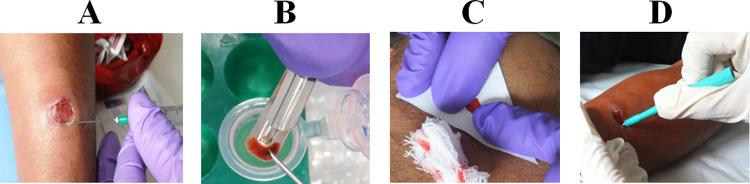
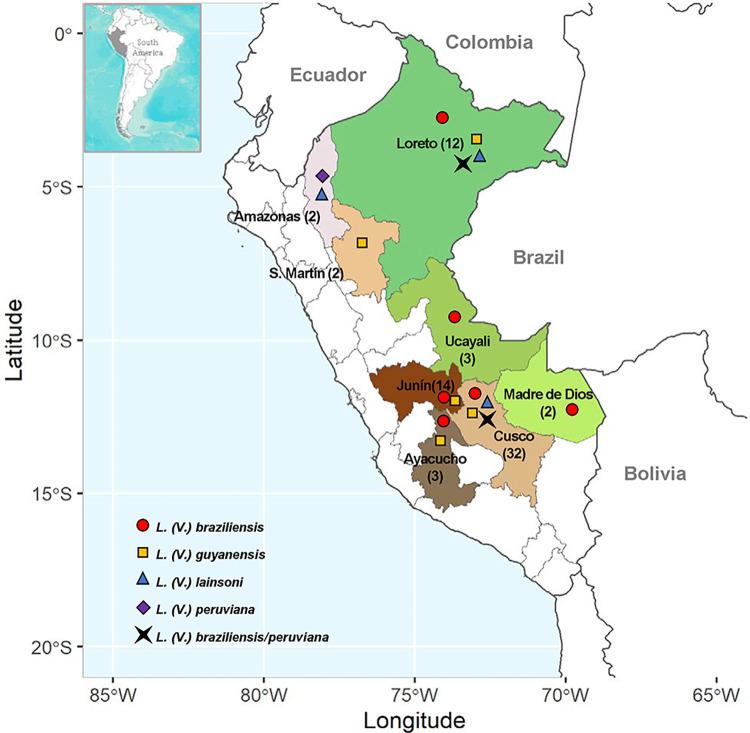
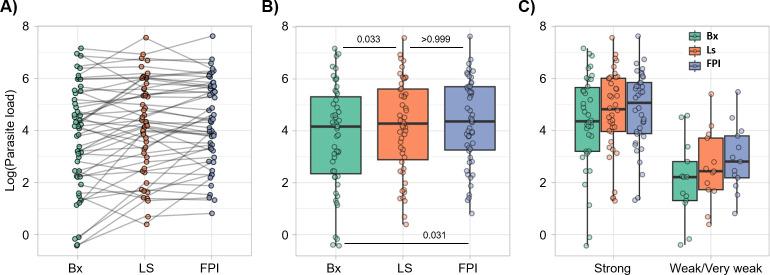
Here, we compared the sensitivity of molecular identification of different Leishmania (Viannia) species from Peru, using three types of sampling: punch biopsy, filter paper imprint and lancet scraping. Different composite reference standards and latent class models allowed to evaluate the accuracy of the molecular tools. Additionally, a quantitative PCR assessed variations in the results and parasite load in each type of sample.
PRINCIPAL FINDINGS
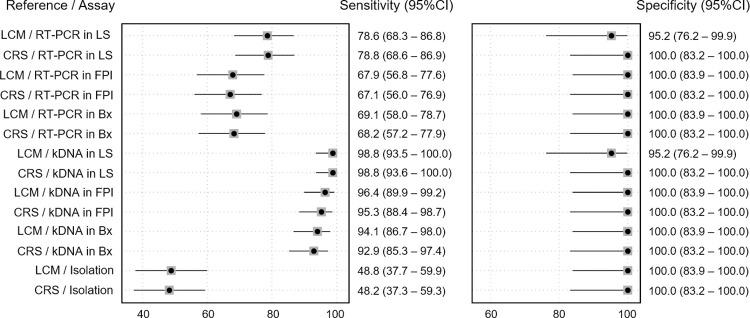
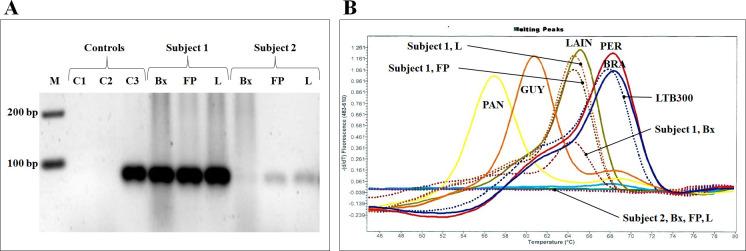
Different composite reference standards and latent class models determined higher sensitivity when lancet scrapings were used for sampling in the identification and determination of Leishmania (Viannia) species through PCR-based assays. This was consistent for genus identification through kinetoplastid DNA-PCR and for the determination of species using FRET probes-based Nested Real-Time PCR. Lack of species identification in some samples correlated with the low intensity of the PCR electrophoretic band, which reflects the low parasite load in samples.
CONCLUSIONS
The type of clinical sample can directly influence the detection and identification of Leishmania (Viannia) species. Here, we demonstrated that lancet scraping samples consistently allowed the identification of more leishmaniasis cases compared to filter paper imprints or biopsies. This procedure is inexpensive, painless, and easy to implement at the point of care and avoids the need for anesthesia, surgery, and hospitalization and therefore could be used in resource limited settings for both military and civilian populations.
背景
用于鉴定引起人类皮肤利什曼病(CL)的寄生虫的分子工具的准确性很大程度上可能取决于采样方法。基于聚合酶链反应(PCR)的利什曼原虫检测方法中,滤纸印记和棉签等非侵入性或侵入性较小的采样方法优于打孔活检和柳叶刀刮片,因为它们无痛、简单且成本低廉,对军事和 civilian 患者有益,可确保及时治疗。然而,不同类型的样本可能会产生假阴性结果,因此明确哪种样本更适合分子检测非常必要。
方法
在此,我们比较了使用三种采样方式(打孔活检、滤纸印记和柳叶刀刮片)对来自秘鲁的不同利什曼原虫(维扬尼利什曼原虫)物种进行分子鉴定的敏感性。不同的复合参考标准和潜伏类模型用于评估分子工具的准确性。此外,定量PCR评估了每种样本类型结果和寄生虫载量的差异。
主要发现
不同的复合参考标准和潜伏类模型确定,在通过基于PCR的检测方法鉴定和确定利什曼原虫(维扬尼利什曼原虫)物种时,使用柳叶刀刮片采样具有更高的敏感性。通过动基体DNA-PCR进行属鉴定以及使用基于荧光共振能量转移(FRET)探针的巢式实时PCR进行物种鉴定时均是如此。一些样本中无法进行物种鉴定与PCR电泳条带强度低相关,这反映了样本中寄生虫载量低。
结论
临床样本类型可直接影响利什曼原虫(维扬尼利什曼原虫)物种的检测和鉴定。在此,我们证明与滤纸印记或活检相比,柳叶刀刮片样本始终能鉴定出更多的利什曼病病例。该方法成本低廉、无痛且易于在护理点实施,无需麻醉、手术和住院,因此可用于资源有限的军事和 civilian 人群环境。
 Zotero 插件