Chen Jipeng, Zheng Xiaoxiao, Jian Rongkun, Bai Weibin, Zheng Guocai, Xie Zhipeng, Lin Qi, Lin Fengcai, Xu Yanlian
Fujian Engineering and Research Center of New Chinese Lacquer Materials, College of Materials and Chemical Engineering, Minjiang University, Fuzhou 350108, China.
State Key Laboratory for Marine Corrosion and Protection, Luoyang Ship Material Research Institute (LSMRI), Xiamen 361100, China.
Polymers (Basel). 2024 Apr 21;16(8):1167. doi: 10.3390/polym16081167.
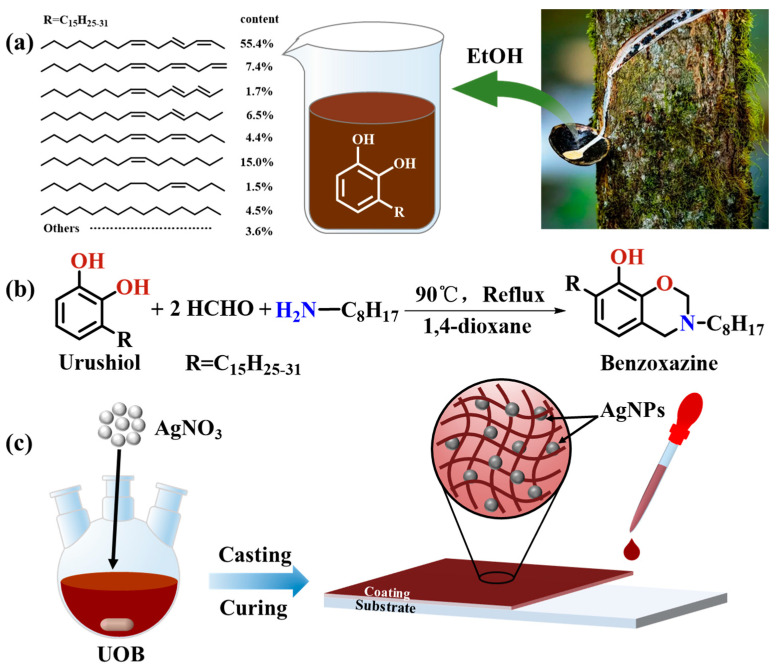
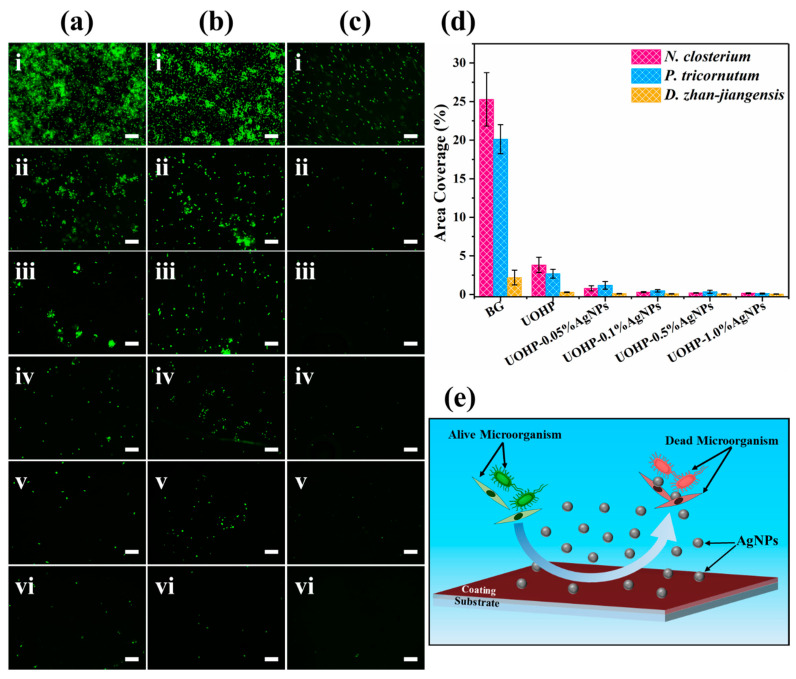
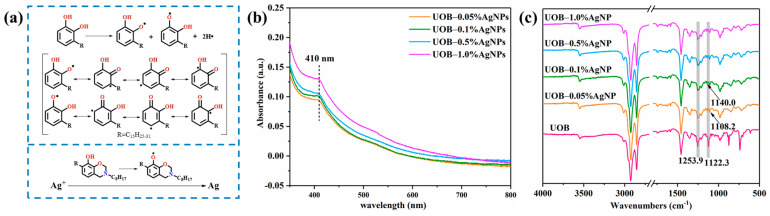
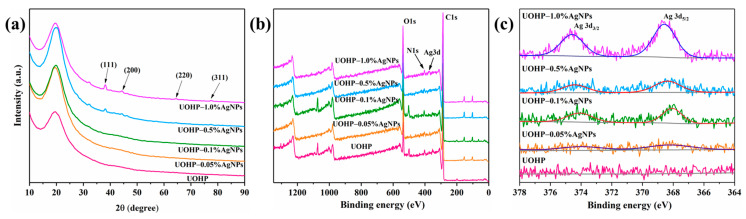
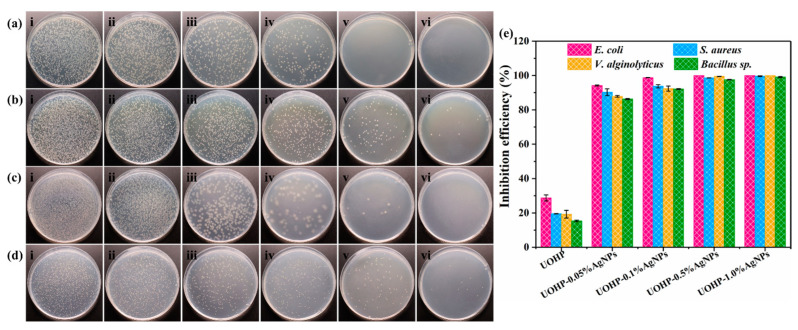
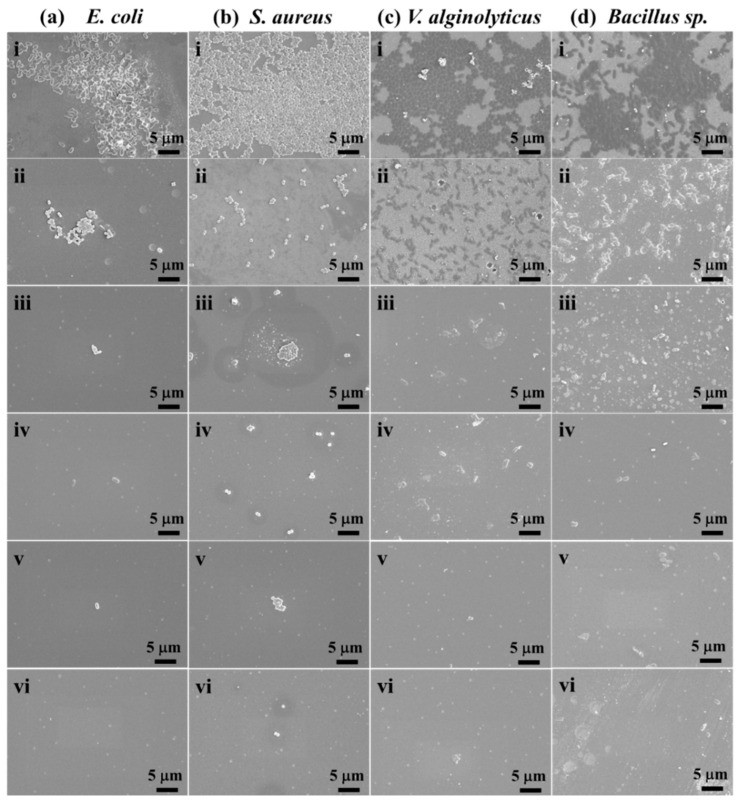
Marine anti-fouling coatings represent an efficient approach to prevent and control the marine biofouling. However, a significant amount of antifouling agent is added to improve the static antifouling performance of the coatings, which leads to an issue whereby static antifouling performance conflicts with eco-friendly traits. Herein, this work reports an in situ reduction synthesis of silver nanoparticles (AgNPs) within polymers to produce composite coatings, aiming to solve the aforementioned issue. Firstly, urushiol-based benzoxazine monomers were synthesized by the Mannich reaction, using an eco-friendly natural product urushiol and -octylamine and paraformaldehyde as the reactants. Additionally, AgNPs were obtained through the employment of free radicals formed by phenolic hydroxyl groups in the urushiol-based benzoxazine monomers, achieved by the in situ reduction of silver nitrate in benzoxazine. Then, the urushiol-based benzoxazine/AgNPs composite coatings were prepared by the thermosetting method. AgNPs exhibit broad-spectrum and highly efficient antimicrobial properties, with a low risk to human health and a minimal environmental impact. The composite coating containing a small amount of AgNPs (≤1 wt%) exhibits effective inhibition against various types of bacteria and marine microalgae in static immersion, thereby displaying outstanding antifouling properties. This organic polymer and inorganic nanoparticle composite marine antifouling coating, with its simple preparation method and eco-friendliness, presents an effective solution to the conflict between static antifouling effectiveness and environmental sustainability in marine antifouling coatings.
海洋防污涂料是预防和控制海洋生物污损的一种有效方法。然而,为了提高涂料的静态防污性能,需要添加大量的防污剂,这就导致了静态防污性能与环保特性之间的矛盾。在此,本文报道了一种在聚合物中原位还原合成银纳米颗粒(AgNPs)以制备复合涂层的方法,旨在解决上述问题。首先,以环保型天然产物漆酚、正辛胺和多聚甲醛为反应物,通过曼尼希反应合成了漆酚基苯并恶嗪单体。此外,利用漆酚基苯并恶嗪单体中酚羟基形成的自由基,通过在苯并恶嗪中原位还原硝酸银获得AgNPs。然后,通过热固化法制备了漆酚基苯并恶嗪/AgNPs复合涂层。AgNPs具有广谱高效的抗菌性能,对人类健康风险低,对环境影响小。含有少量AgNPs(≤1 wt%)的复合涂层在静态浸泡中对各种细菌和海洋微藻表现出有效的抑制作用,从而显示出优异的防污性能。这种有机聚合物与无机纳米颗粒复合的海洋防污涂料,制备方法简单且环保,为解决海洋防污涂料中静态防污效果与环境可持续性之间的矛盾提供了一种有效的解决方案。