Department of Surgery, Wake Forest University School of Medicine, Winston-Salem, North Carolina.
Department of Cancer Biology, Wake Forest University School of Medicine, Winston-Salem, North Carolina.
Cancer Prev Res (Phila). 2024 Sep 4;17(9):415-428. doi: 10.1158/1940-6207.CAPR-24-0055.
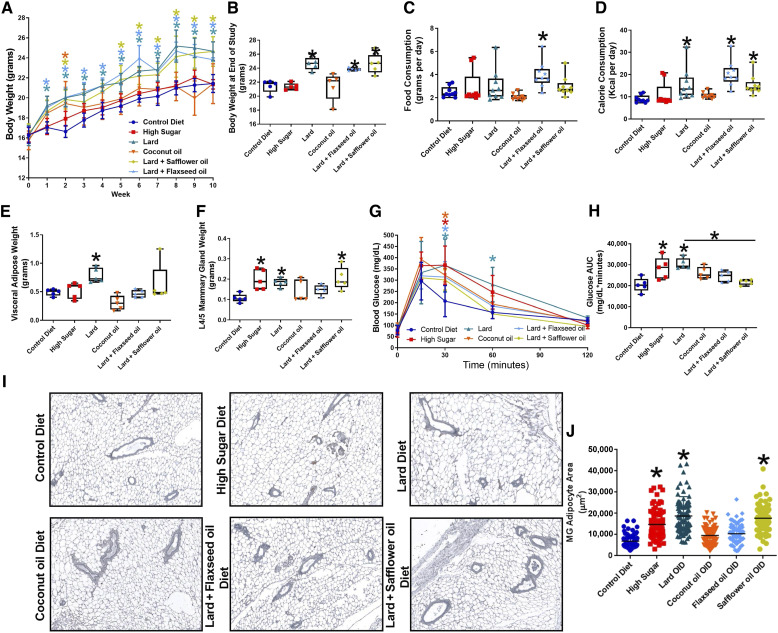
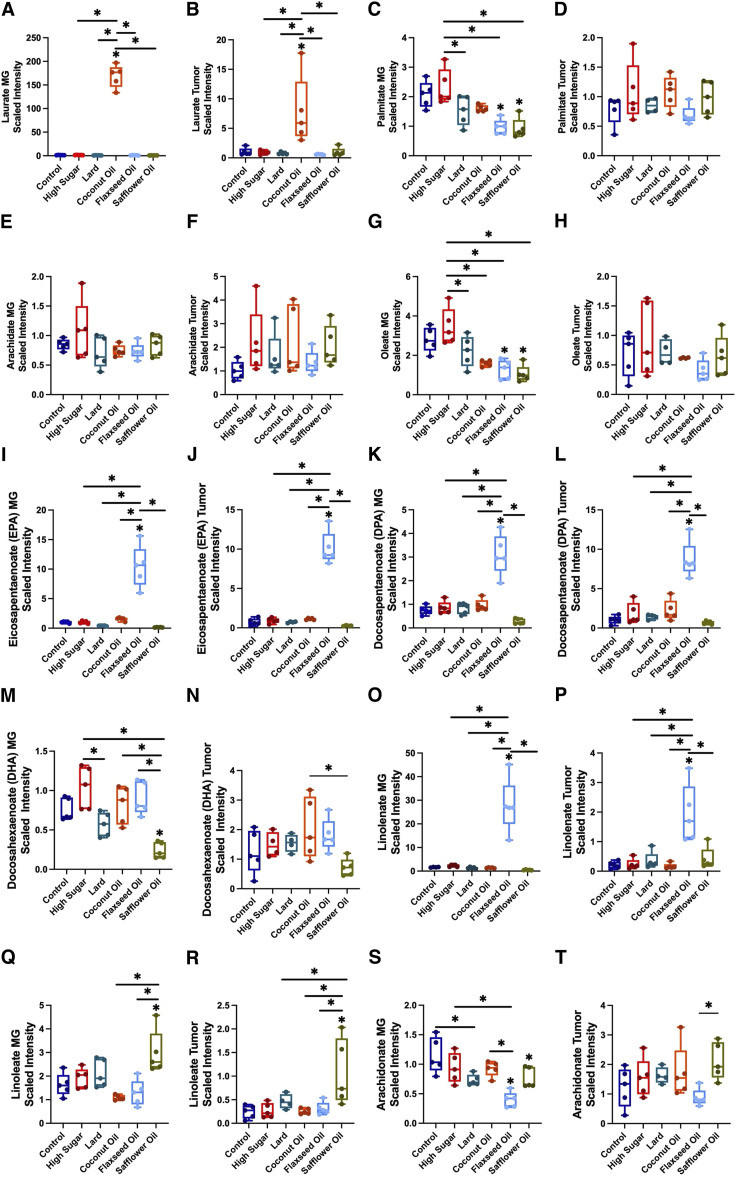
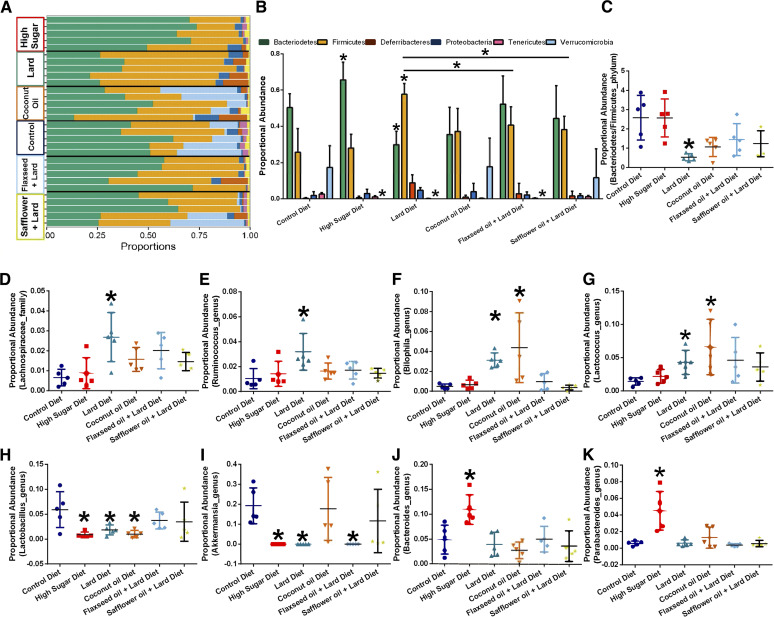
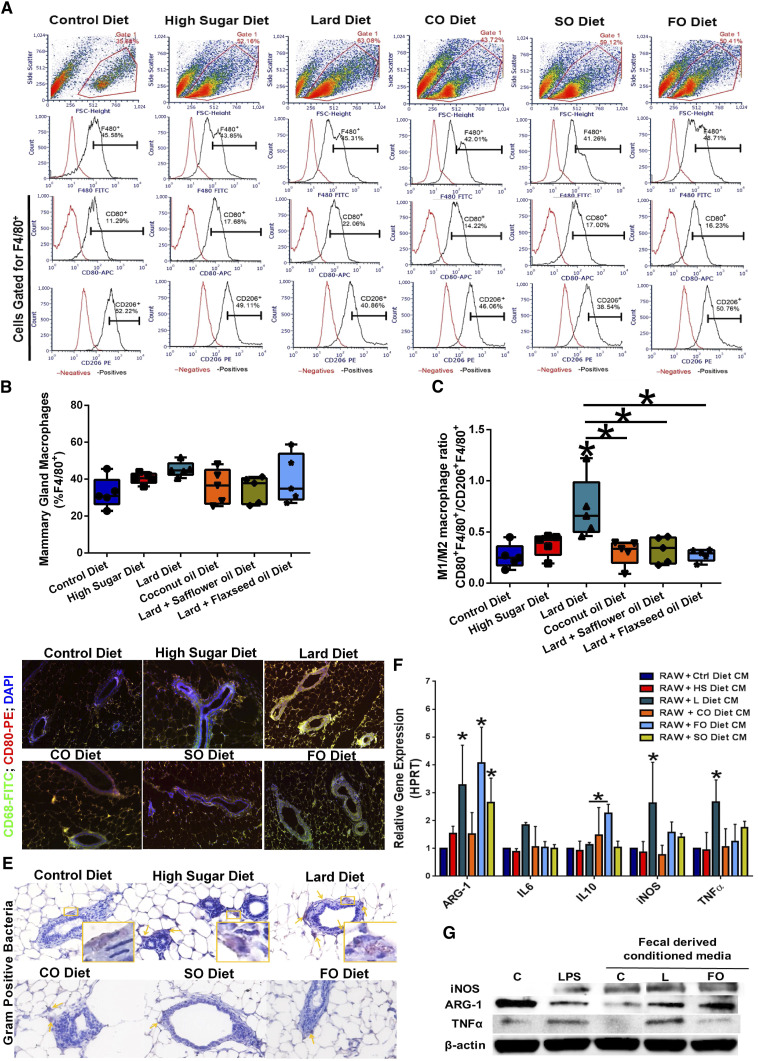
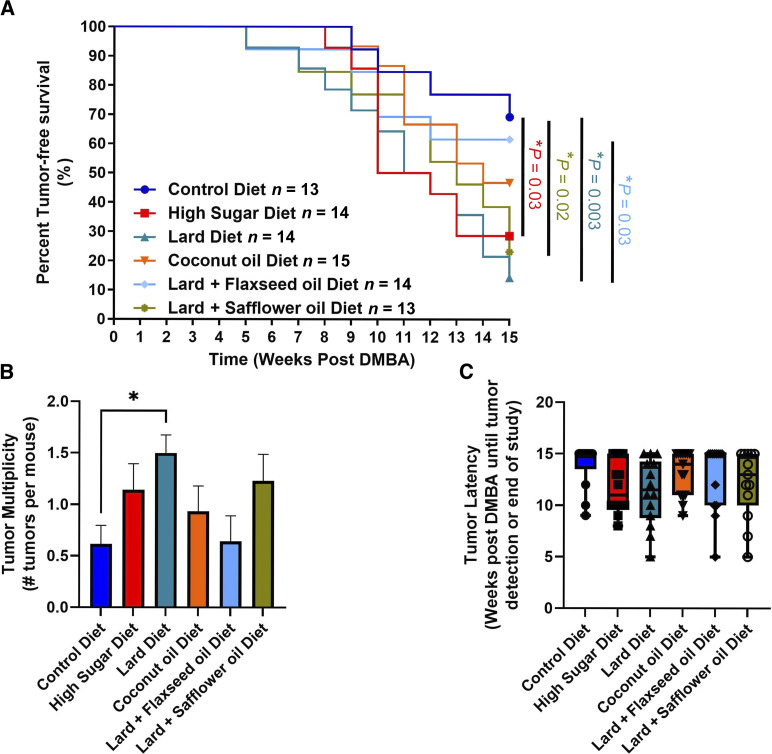
Several studies indicate a strong link between obesity and the risk of breast cancer. Obesity decreases gut microbial biodiversity and modulates Bacteroidetes-to-Firmicutes phyla proportional abundance, suggesting that increased energy-harvesting capacity from indigestible dietary fibers and elevated lipopolysaccharide bioavailability may promote inflammation. To address the limited evidence linking diet-mediated changes in gut microbiota to breast cancer risk, we aimed to determine how diet affects the microbiome and breast cancer risk. For ten weeks, female 3-week-old BALB/c mice were fed six different diets (control, high-sugar, lard, coconut oil, lard + flaxseed oil, and lard + safflower oil). Fecal 16S sequencing was performed for each group. Diet shifted fecal microbiome populations and modulated mammary gland macrophage infiltration. Fecal-conditioned media shifted macrophage polarity and inflammation. In our DMBA-induced breast cancer model, diet differentially modulated tumor and mammary gland metabolism. We demonstrated how dietary patterns change metabolic outcomes and the gut microbiota, possibly contributing to breast tumor risk. Furthermore, we showed the influence of diet on metabolism, inflammation, and macrophage polarity. This study suggests that dietary-microbiome interactions are key mediators of breast cancer risk. Prevention Relevance: Our study demonstrates the impact of diet on breast cancer risk, focusing on the interplay between diet, the gut microbiome, and mammary gland inflammation.
多项研究表明,肥胖与乳腺癌风险之间存在很强的关联。肥胖会降低肠道微生物多样性,并改变拟杆菌门到厚壁菌门的比例丰度,这表明来自不可消化膳食纤维的能量获取能力增加和内毒素生物利用度升高可能会促进炎症。为了解决将饮食介导的肠道微生物群变化与乳腺癌风险联系起来的证据有限的问题,我们旨在确定饮食如何影响微生物组和乳腺癌风险。在十周的时间里,将 3 周龄的雌性 BALB/c 小鼠喂食六种不同的饮食(对照、高糖、猪油、椰子油、猪油+亚麻籽油和猪油+红花油)。对每组的粪便 16S 测序。饮食改变了粪便微生物群的种群,并调节了乳腺巨噬细胞浸润。粪便条件培养基改变了巨噬细胞极性和炎症。在我们的 DMBA 诱导的乳腺癌模型中,饮食差异调节了肿瘤和乳腺的代谢。我们展示了饮食模式如何改变代谢结果和肠道微生物群,这可能导致乳腺癌风险。此外,我们还展示了饮食对代谢、炎症和巨噬细胞极性的影响。这项研究表明,饮食-微生物群相互作用是乳腺癌风险的主要调节因素。预防相关性:我们的研究表明饮食对乳腺癌风险的影响,重点关注饮食、肠道微生物群和乳腺炎症之间的相互作用。