Department of Internal Medicine, Kenwakai Hospital, Kanaenakadaira, Iida, 1936, 395-0801, Japan.
Department of Pathology, Kenwakai Hospital, Kanaenakadaira, Iida, 1936, 395-0801, Japan.
BMC Gastroenterol. 2024 May 8;24(1):157. doi: 10.1186/s12876-024-03252-5.
At present, eradication regimens for non-Helicobacter pylori Helicobacter (NHPH) have not been established yet. We investigated effectiveness of the standard triple-drug combination therapy for Helicobacter pylori eradication and of a proton pump inhibitor (PPI) monotherapy in eradication of NHPH.
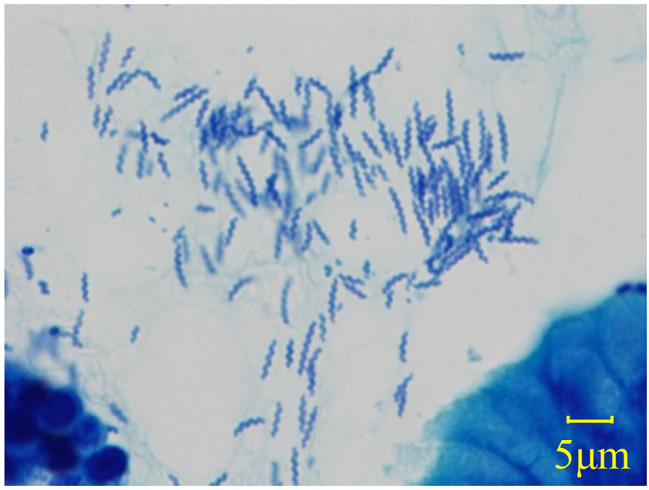
Subjects were the patients who were diagnosed with NHPH-infected gastritis based on microscopic findings, helical-shaped organisms obviously larger than Helicobacter pylori, in the gastric mucosal specimens using Giemsa staining at Kenwakai Hospital between November 2010 and September 2021, whose NHPH species were identified by polymerase chain reaction (PCR) analysis of urease genes in endoscopically-biopsied samples, and who consented to NHPH eradication with either the triple-drug combination therapy for one week or a PPI monotherapy for six months. Six months after the completion of eradication, its result was determined with esophagogastroduodenoscopy, microscopic examination, and PCR analysis. In cases of unsuccessful eradication, a second eradication with the other therapy was suggested to the patient.
PCR analysis detected NHPH in 38 patients: 36 as Helicobacter suis and two as Helicobacter heilmannii/Helicobacter ailurogastricus. Fourteen Helicobacter suis-infected and one Helicobacter heilmannii/Helicobacter ailurogastricus-infected patients requested eradication therapy. The triple-drug combination therapy succeeded in four of five patients, while the PPI monotherapy succeeded in five of 10 patients. Three of five patients who had been unsuccessful with the latter therapy requested the triple-drug combination therapy as the second eradication and all three were successful. In total, the triple-drug combination therapy succeeded in seven out of eight (87.5%) attempted cases, while the PPI monotherapy in five out of 10 (50%) attempted cases.
In NHPH eradication, the triple-drug combination therapy was considered to be effective to some extent and to become the first-line therapy. While, although less successful, PPI monotherapy appeared to be a potentially promising option particularly for patients with allergy or resistance to antibiotics. Effectiveness of PPI monotherapy may be attributed to hyperacid environment preference of Helicobacter suis and PPI's acid-suppressive effect. Additionally, male predominance in NHPH-infected gastritis patients may be explained by gender difference in gastric acid secretory capacity. However, further evidence needs to be accumulated.
This study was approved by the Research Ethics Committee of Kenwakai Hospital (No. 2,017,024).
目前,尚无针对非幽门螺杆菌 Helicobacter(NHPH)的根除方案。我们调查了标准三联药物根除幽门螺杆菌(H. pylori)方案和质子泵抑制剂(PPI)单药治疗对 NHPH 根除的效果。
本研究的对象为 2010 年 11 月至 2021 年 9 月期间在健和会医院根据胃黏膜标本中经吉姆萨染色发现的微观表现(明显大于幽门螺杆菌的螺旋形生物体)诊断为 NHPH 感染性胃炎的患者。使用聚合酶链反应(PCR)分析内窥镜活检样本中的脲酶基因鉴定 NHPH 种属,且同意接受为期一周的三联药物联合治疗或为期六个月的 PPI 单药治疗以进行 NHPH 根除。根除结束后 6 个月,通过上消化道内镜检查、显微镜检查和 PCR 分析确定其结果。如果根除失败,建议患者进行第二种治疗。
PCR 分析在 38 例患者中检测到 NHPH:36 例为猪源螺杆菌,2 例为希氏/猫胃螺杆菌。14 例猪源螺杆菌感染和 1 例希氏/猫胃螺杆菌感染的患者要求进行根除治疗。5 例猪源螺杆菌感染患者接受了三联药物联合治疗,其中 4 例成功,10 例接受 PPI 单药治疗的患者中,有 5 例成功。5 例对后者治疗不成功的患者要求接受三联药物治疗作为第二次根除,均成功。总共有 8 例尝试的患者中,7 例(87.5%)采用三联药物联合治疗成功,10 例尝试的患者中有 5 例(50%)采用 PPI 单药治疗成功。
在 NHPH 根除中,三联药物联合治疗在一定程度上被认为是有效的,成为一线治疗方法。而 PPI 单药治疗虽然成功率较低,但似乎是一种有前途的选择,特别是对过敏或抗生素耐药的患者。PPI 单药治疗的有效性可能归因于猪源螺杆菌对高酸环境的偏好和 PPI 的抑酸作用。此外,NHPH 感染性胃炎患者中男性占优势可能可以用胃酸性分泌能力的性别差异来解释。然而,还需要进一步的证据积累。
本研究得到了健和会医院研究伦理委员会的批准(编号:2017024)。