Kim Haein, Zhong Ziqing, Cui Xinyue, Sung Hayeon, Agrawal Naman, Jiang Tianxing, Dus Monica, Yapici Nilay
Department of Neurobiology and Behavior, Cornell University, Ithaca, NY, USA.
Current address: Tianqiao and Chrissy Chen Institute for Neuroscience, California Institute of Technology, Pasadena, CA, USA.
bioRxiv. 2024 May 8:2024.05.06.592591. doi: 10.1101/2024.05.06.592591.
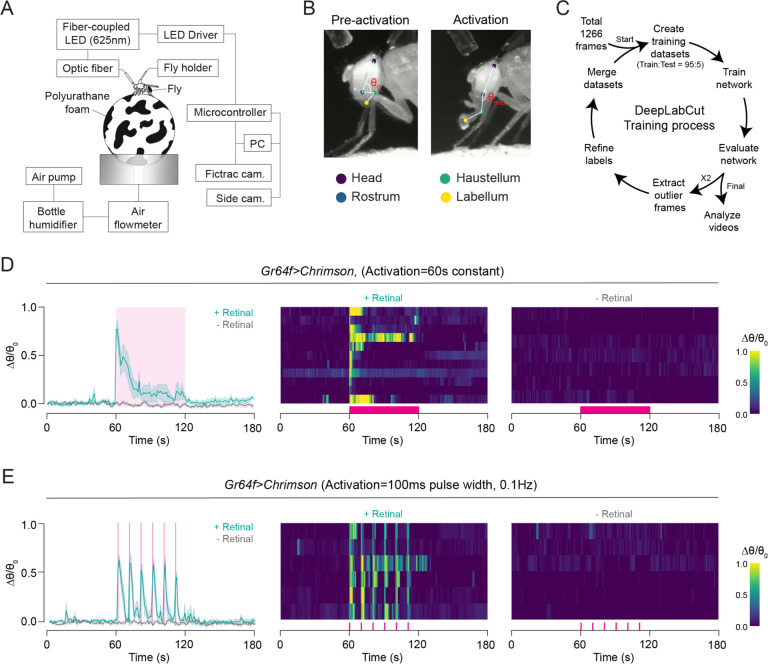
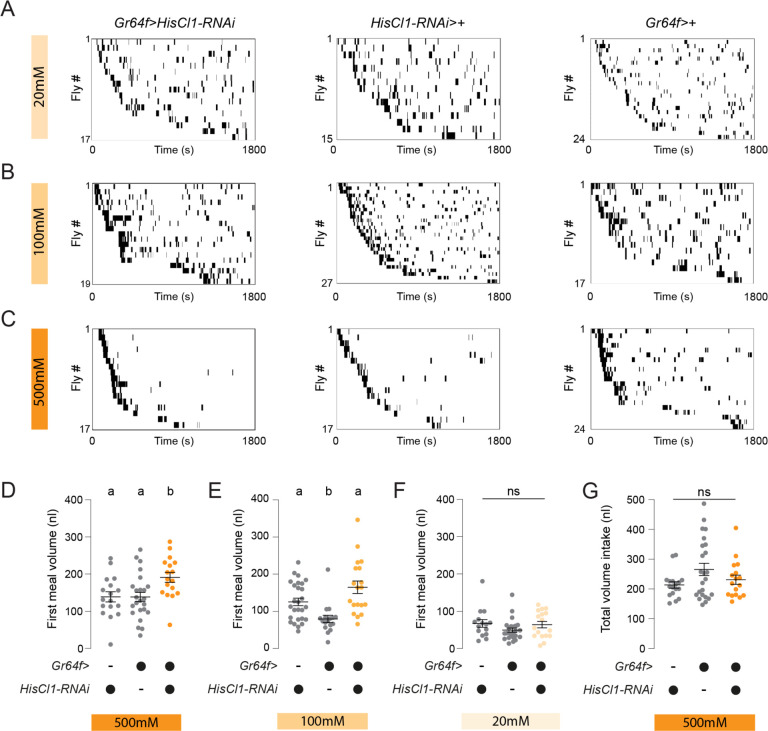
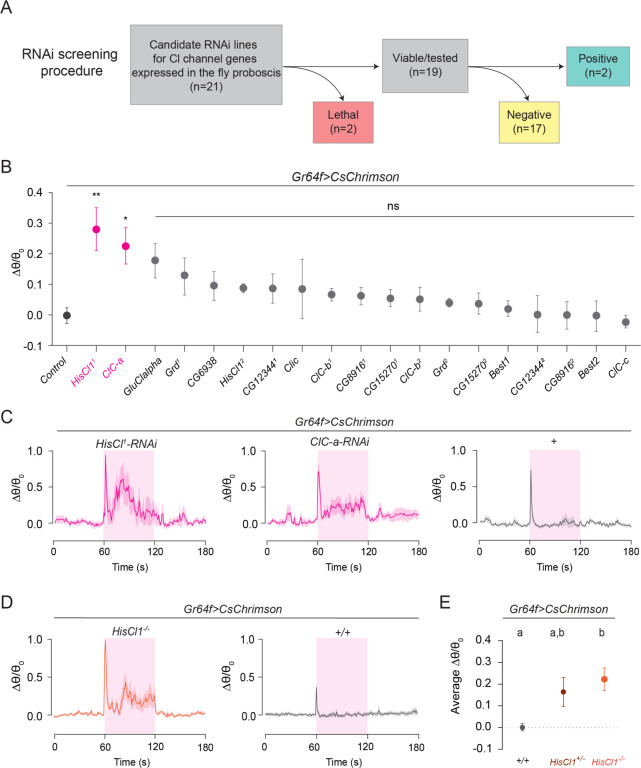
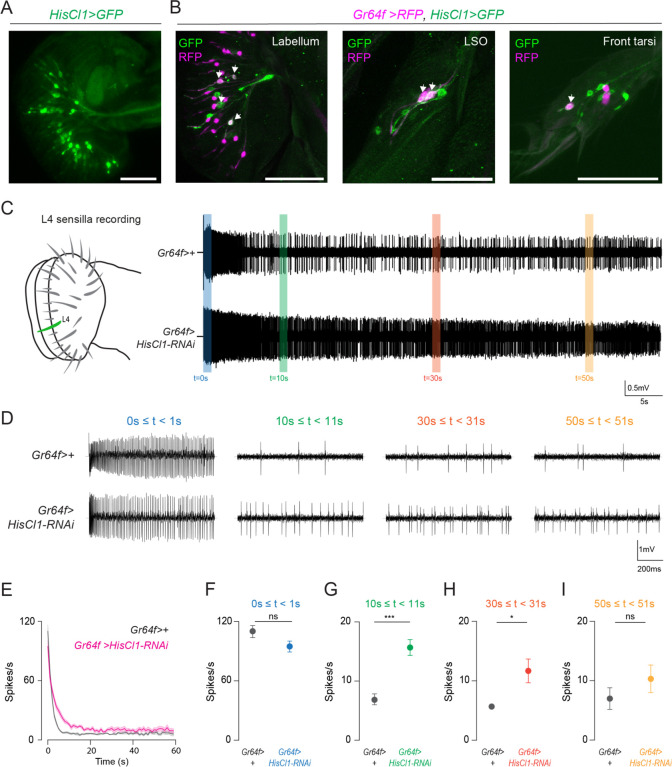
Similar to other animals, the fly, reduces its responsiveness to tastants with repeated exposure, a phenomenon called gustatory habituation. Previous studies have focused on the circuit basis of gustatory habituation in the fly chemosensory system. However, gustatory neurons reduce their firing rate during repeated stimulation, suggesting that cell-autonomous mechanisms also contribute to habituation. Here, we used deep learning-based pose estimation and optogenetic stimulation to demonstrate that continuous activation of sweet taste neurons causes gustatory habituation in flies. We conducted a transgenic RNAi screen to identify genes involved in this process and found that knocking down ( in the sweet taste neurons significantly reduced gustatory habituation. Anatomical analysis showed that is expressed in the sweet taste neurons of various chemosensory organs. Using single sensilla electrophysiology, we showed that sweet taste neurons reduced their firing rate with prolonged exposure to sucrose. Knocking down in sweet taste neurons suppressed gustatory habituation by reducing the spike frequency adaptation observed in these neurons during high-concentration sucrose stimulation. Finally, we showed that flies lacking in sweet taste neurons increased their consumption of high-concentration sucrose solution at their first meal bout compared to control flies. Together, our results demonstrate that HisCl1 tunes spike frequency adaptation in sweet taste neurons and contributes to gustatory habituation and food intake regulation in flies. Since HisCl1 is highly conserved across many dipteran and hymenopteran species, our findings open a new direction in studying insect gustatory habituation.
与其他动物类似,果蝇在反复接触味觉刺激物后会降低对其的反应性,这种现象称为味觉习惯化。以往的研究主要集中在果蝇化学感受系统中味觉习惯化的神经回路基础。然而,味觉神经元在反复刺激过程中会降低其放电频率,这表明细胞自主机制也参与了习惯化过程。在这里,我们使用基于深度学习的姿态估计和光遗传学刺激来证明甜味神经元的持续激活会导致果蝇的味觉习惯化。我们进行了一项转基因RNA干扰筛选,以鉴定参与这一过程的基因,发现敲除甜味神经元中的HisCl1会显著降低味觉习惯化。解剖学分析表明,HisCl1在各种化学感受器官的甜味神经元中表达。使用单根感器电生理学方法,我们发现甜味神经元在长时间暴露于蔗糖时会降低其放电频率。在甜味神经元中敲除HisCl1可通过减少这些神经元在高浓度蔗糖刺激期间观察到的动作电位频率适应来抑制味觉习惯化。最后,我们发现与对照果蝇相比,甜味神经元中缺乏HisCl1的果蝇在首次进食时会增加对高浓度蔗糖溶液的消耗。总之,我们的结果表明HisCl1调节甜味神经元的动作电位频率适应,并有助于果蝇的味觉习惯化和食物摄入调节。由于HisCl1在许多双翅目和膜翅目物种中高度保守,我们的发现为研究昆虫味觉习惯化开辟了一个新方向。