Department of Neurosurgery, the Third Affiliated Hospital of Sun Yat-sen University, No. 600 Tianhe Road, Guangzhou, Guangdong, 510630, PR China.
Department of Radiology, Guangdong Provincial Hospital of Chinese Medicine, Guangzhou, 510000, China.
J Nanobiotechnology. 2024 May 24;22(1):283. doi: 10.1186/s12951-024-02536-y.
Endothelial cell (EC)-driven intraneural revascularization (INRV) and Schwann cells-derived exosomes (SCs-Exos) both play crucial roles in peripheral nerve injury (PNI). However, the interplay between them remains unclear. We aimed to elucidate the effects and underlying mechanisms of SCs-Exos on INRV following PNI.
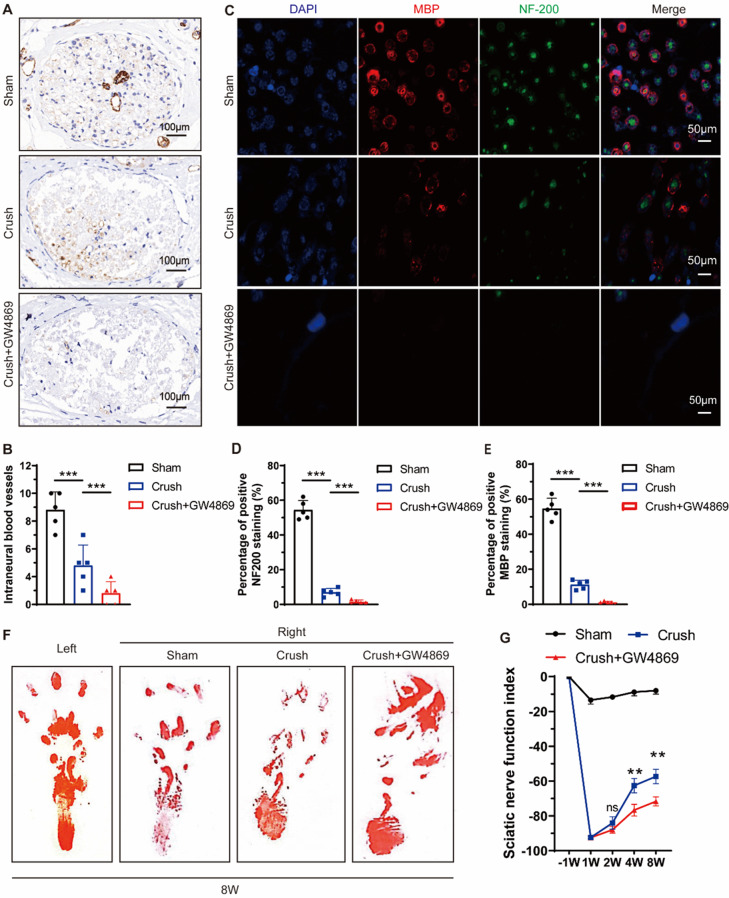
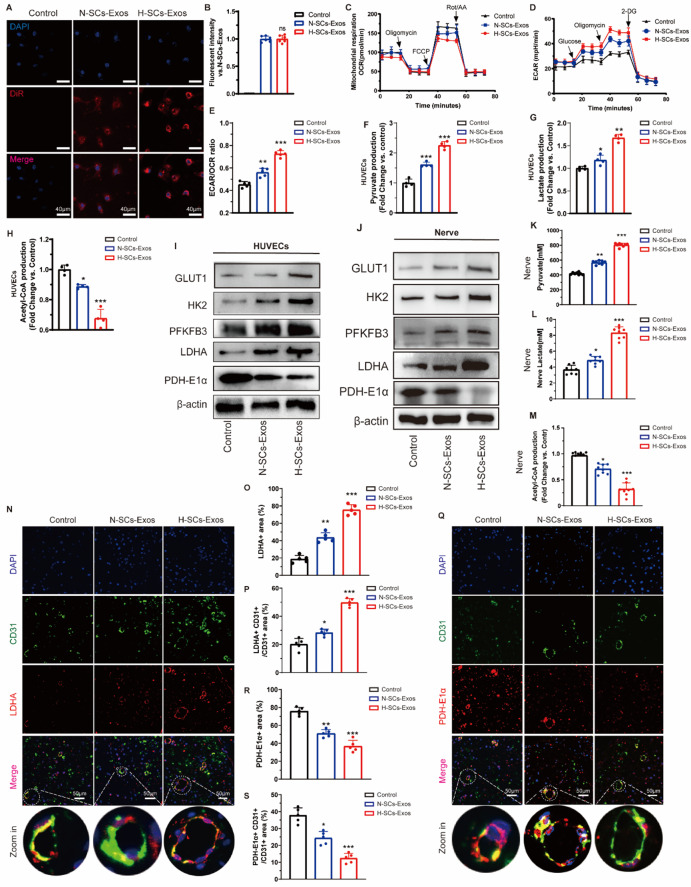
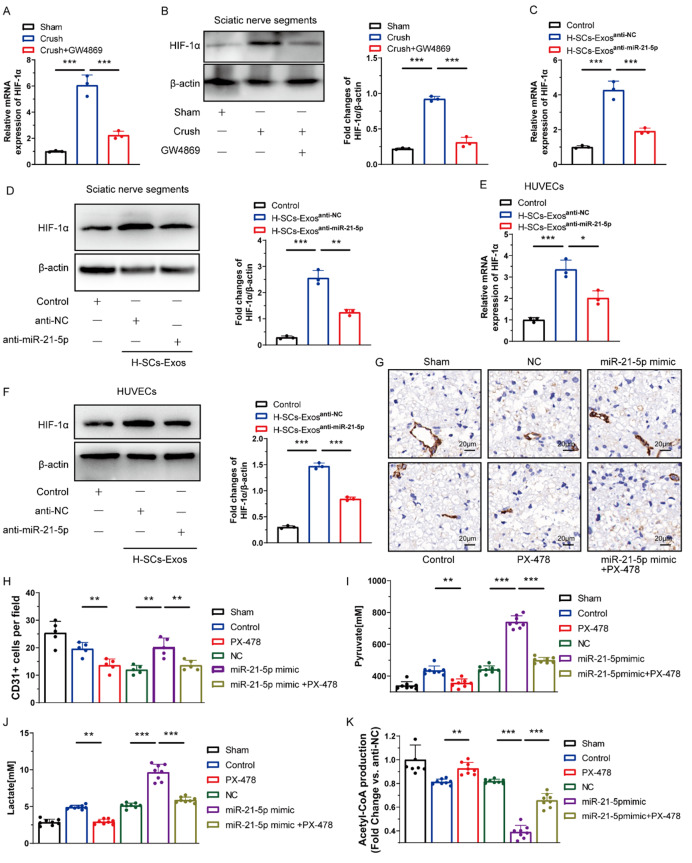
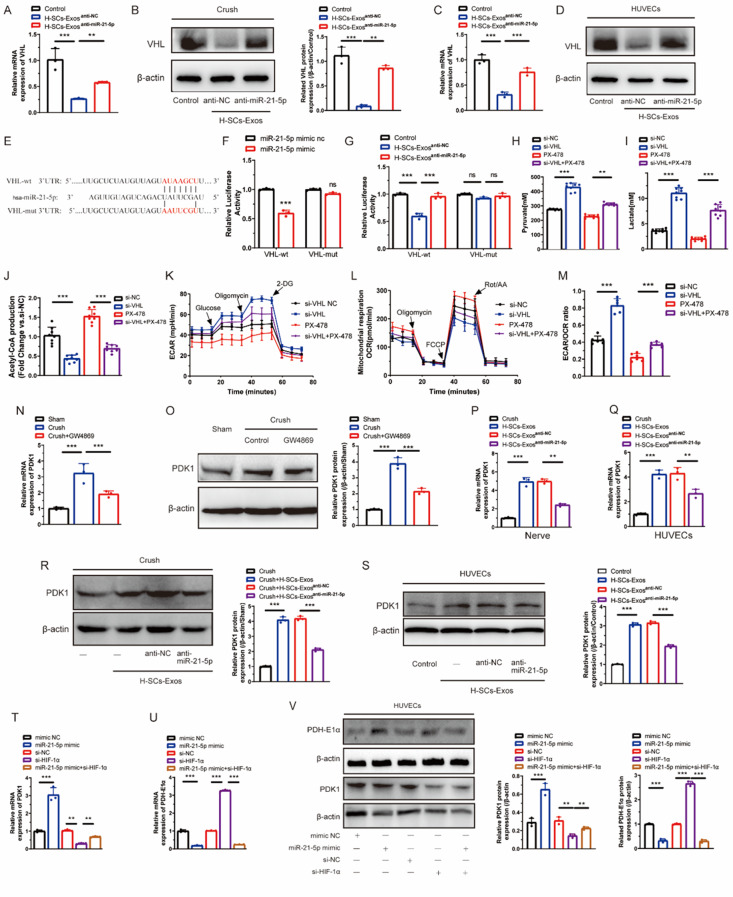
We found that GW4869 inhibited INRV, as well as that normoxic SCs-Exos (N-SCs-Exos) exhibited significant pro-INRV effects in vivo and in vitro that were potentiated by hypoxic SCs-Exos (H-SCs-Exos). Upregulation of glycolysis emerged as a pivotal factor for INRV after PNI, as evidenced by the observation that 3PO administration, a glycolytic inhibitor, inhibited the INRV process in vivo and in vitro. H-SCs-Exos more significantly enhanced extracellular acidification rate/oxygen consumption rate ratio, lactate production, and glycolytic gene expression while simultaneously suppressing acetyl-CoA production and pyruvate dehydrogenase E1 subunit alpha (PDH-E1α) expression than N-SCs-Exos both in vivo and in vitro. Furthermore, we determined that H-SCs-Exos were more enriched with miR-21-5p than N-SCs-Exos. Knockdown of miR-21-5p significantly attenuated the pro-glycolysis and pro-INRV effects of H-SCs-Exos. Mechanistically, miR-21-5p orchestrated EC metabolism in favor of glycolysis by targeting von Hippel-Lindau/hypoxia-inducible factor-1α and PDH-E1α, thereby enhancing hypoxia-inducible factor-1α-mediated glycolysis and inhibiting PDH-E1α-mediated oxidative phosphorylation.
This study unveiled a novel intrinsic mechanism of pro-INRV after PNI, providing a promising therapeutic target for post-injury peripheral nerve regeneration and repair.
内皮细胞(EC)驱动的神经内再血管化(INRV)和施万细胞衍生的外泌体(SCs-Exos)在外周神经损伤(PNI)中都起着至关重要的作用。然而,它们之间的相互作用尚不清楚。我们旨在阐明SCs-Exos 对 PNI 后 INRV 的影响及其潜在机制。
我们发现 GW4869 抑制 INRV,并且在体内和体外,缺氧SCs-Exos(H-SCs-Exos)增强了正常氧SCs-Exos(N-SCs-Exos)的显著促 INRV 作用。PNI 后糖酵解的上调成为 INRV 的关键因素,因为观察到糖酵解抑制剂 3PO 给药在体内和体外抑制 INRV 过程。H-SCs-Exos 比 N-SCs-Exos 更显著地增强细胞外酸化率/耗氧量比、乳酸产生和糖酵解基因表达,同时抑制乙酰辅酶 A 产生和丙酮酸脱氢酶 E1 亚基 alpha(PDH-E1α)表达,无论是在体内还是体外。此外,我们确定 H-SCs-Exos 比 N-SCs-Exos 更富含 miR-21-5p。miR-21-5p 的敲低显著减弱了 H-SCs-Exos 的促糖酵解和促 INRV 作用。在机制上,miR-21-5p 通过靶向 von Hippel-Lindau/缺氧诱导因子-1α和 PDH-E1α 来协调 EC 代谢有利于糖酵解,从而增强缺氧诱导因子-1α 介导的糖酵解和抑制 PDH-E1α 介导的氧化磷酸化。
这项研究揭示了 PNI 后促 INRV 的一种新的内在机制,为损伤后周围神经再生和修复提供了有希望的治疗靶点。