Key Laboratory of Regenerative Medicine of Ministry of Education, Institute of Aging and Regenerative Medicine, Department of Developmental & Regenerative Medicine, College of Life Science and Technology, Jinan University, Guangzhou 510632, China.
Int J Mol Sci. 2024 May 13;25(10):5303. doi: 10.3390/ijms25105303.
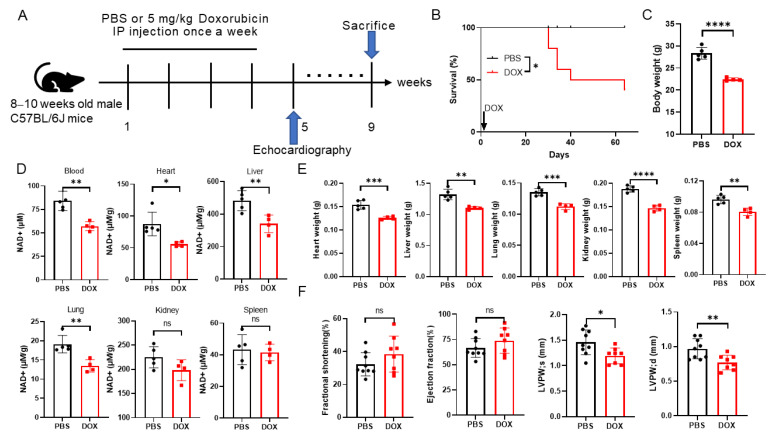
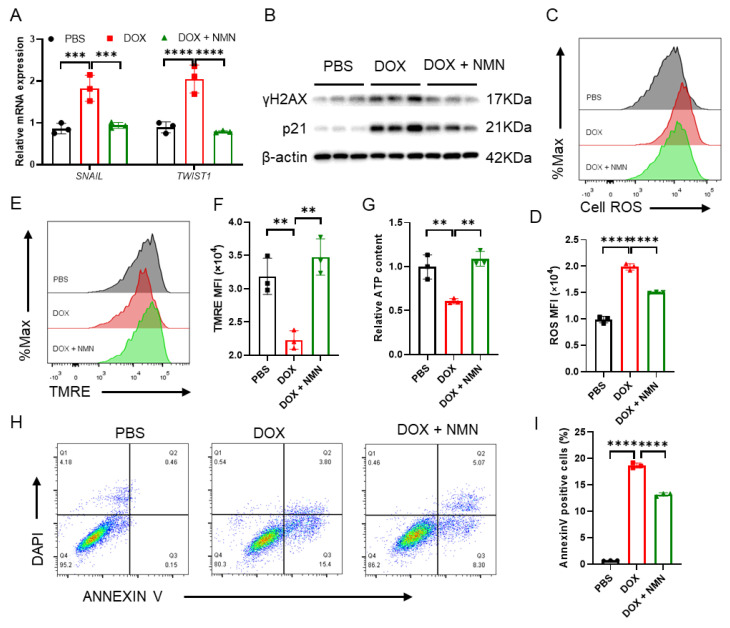
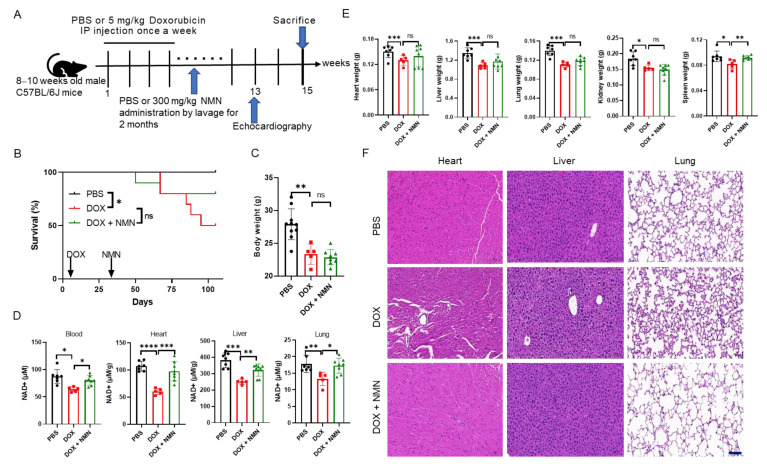
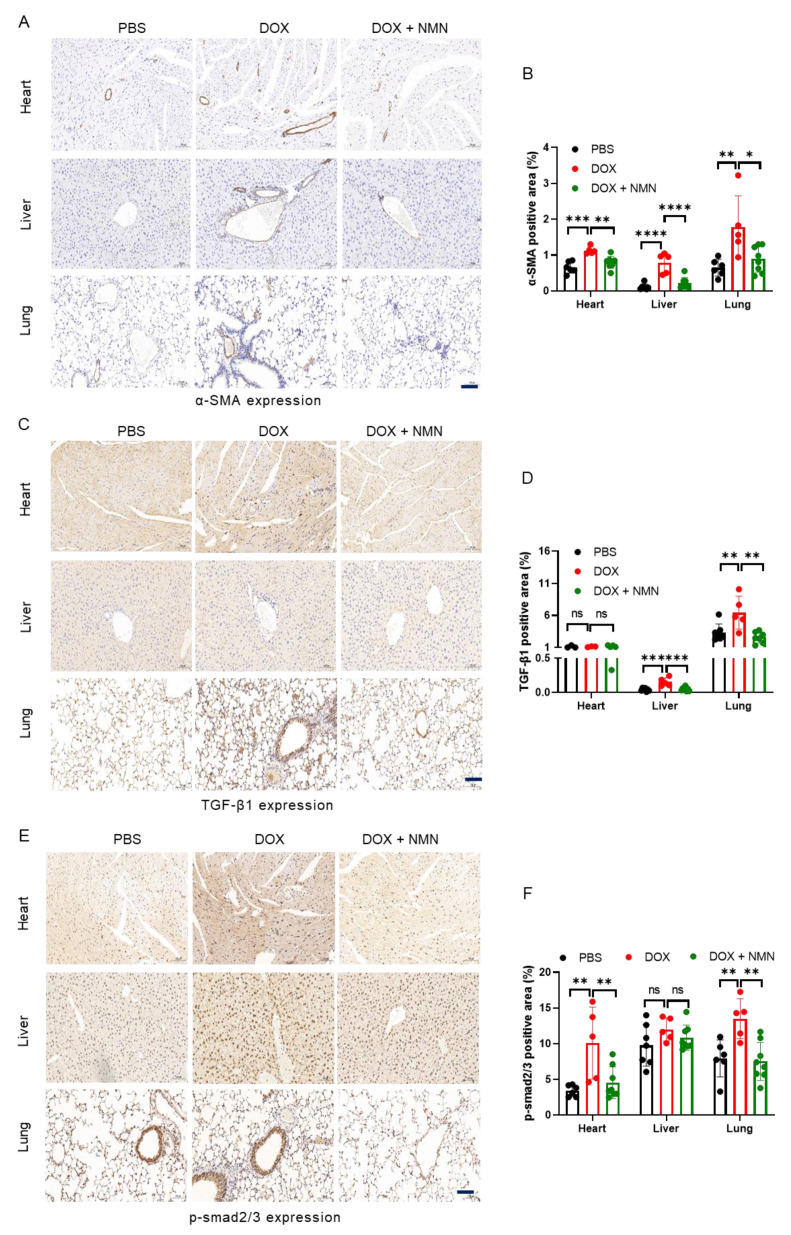
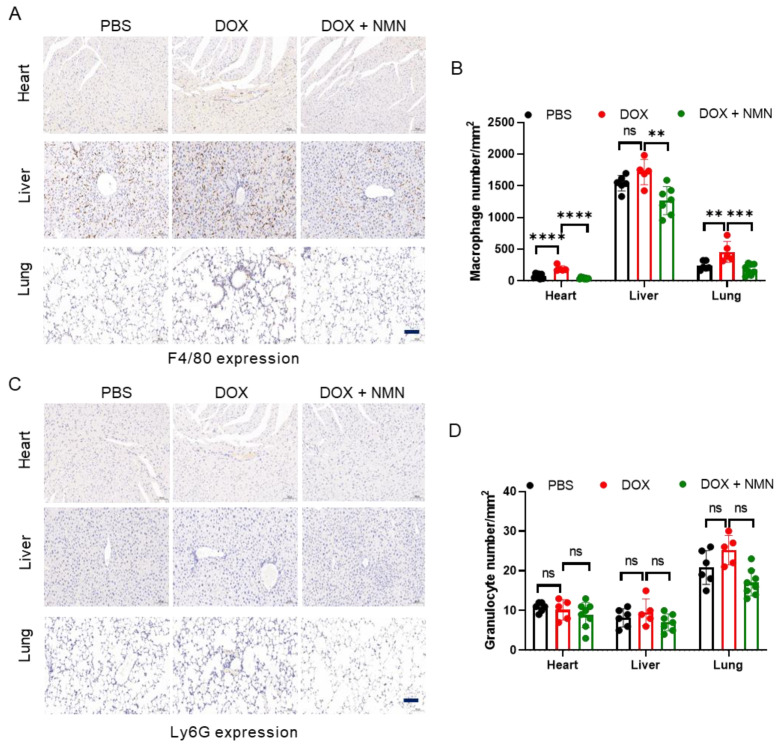
Doxorubicin (DOX) is a potent chemotherapeutic agent known for its multi-organ toxicity, especially in the heart, which limits its clinical application. The toxic side effects of DOX, including DNA damage, oxidative stress, mitochondrial dysfunction and cell apoptosis, are intricately linked to the involvement of nicotinamide adenine dinucleotide (NAD). To assess the effectiveness of the NAD precursor nicotinamide mononucleotide (NMN) in counteracting the multi-organ toxicity of DOX, a mouse model was established through DOX administration, which led to significant reductions in NAD in tissues with evident injury, including the heart, liver and lungs. NMN treatment alleviated both multi-organ fibrosis and mortality in mice. Mechanistically, tissue fibrosis, macrophage infiltration and DOX-related cellular damage, which are potentially implicated in the development of multi-organ fibrosis, could be attenuated by NAD restoration. Our findings provide compelling evidence for the benefits of NMN supplementation in mitigating the adverse effects of chemotherapeutic drugs on multiple organs.
多柔比星(DOX)是一种有效的化疗药物,因其多器官毒性而闻名,尤其是在心脏,这限制了它的临床应用。DOX 的毒副作用,包括 DNA 损伤、氧化应激、线粒体功能障碍和细胞凋亡,与烟酰胺腺嘌呤二核苷酸(NAD)的参与密切相关。为了评估 NAD 前体烟酰胺单核苷酸(NMN)在对抗 DOX 的多器官毒性方面的有效性,通过 DOX 给药建立了一个小鼠模型,这导致在有明显损伤的组织中 NAD 明显减少,包括心脏、肝脏和肺部。NMN 治疗减轻了小鼠的多器官纤维化和死亡率。从机制上讲,组织纤维化、巨噬细胞浸润和与 DOX 相关的细胞损伤,这些可能与多器官纤维化的发展有关,可以通过 NAD 恢复来减轻。我们的研究结果为 NMN 补充在减轻化疗药物对多个器官的不良影响方面的益处提供了有力的证据。