Department of Imaging and Medicine, Cedars-Sinai Medical Center, Los Angeles, CA, USA.
Division of Cardiology, Department of Internal Medicine, St. Vincent's Hospital, The Catholic University of Korea, Seoul, Republic of Korea.
Korean J Radiol. 2024 Jun;25(6):518-539. doi: 10.3348/kjr.2023.1311.
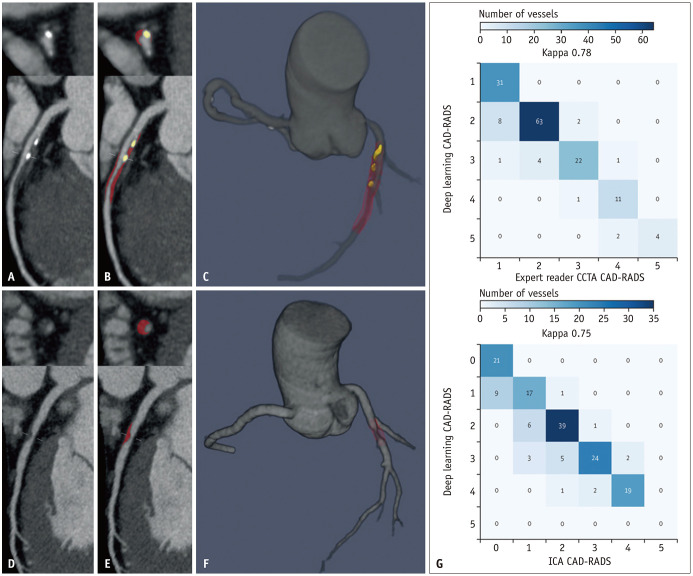
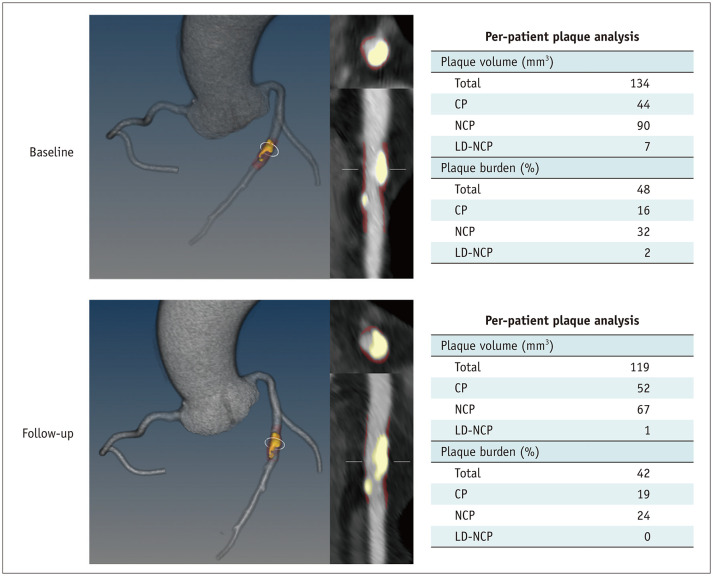
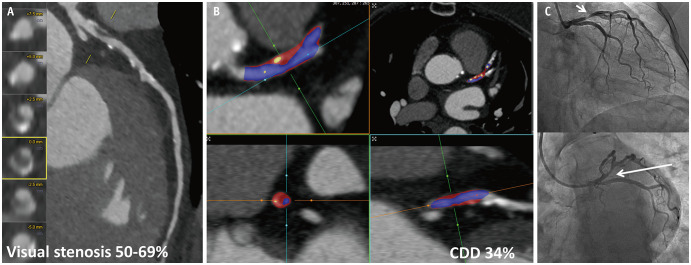
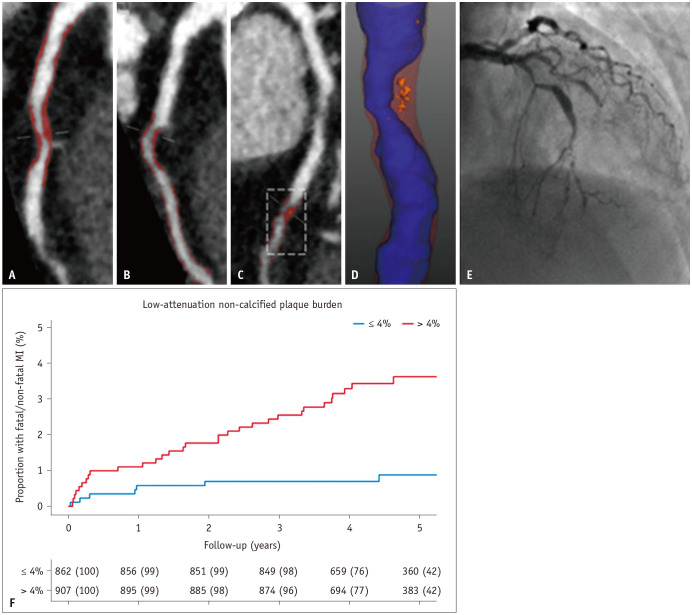
Coronary computed tomography angiography (CCTA) has emerged as a pivotal tool for diagnosing and risk-stratifying patients with suspected coronary artery disease (CAD). Recent advancements in image analysis and artificial intelligence (AI) techniques have enabled the comprehensive quantitative analysis of coronary atherosclerosis. Fully quantitative assessments of coronary stenosis and lumen attenuation have improved the accuracy of assessing stenosis severity and predicting hemodynamically significant lesions. In addition to stenosis evaluation, quantitative plaque analysis plays a crucial role in predicting and monitoring CAD progression. Studies have demonstrated that the quantitative assessment of plaque subtypes based on CT attenuation provides a nuanced understanding of plaque characteristics and their association with cardiovascular events. Quantitative analysis of serial CCTA scans offers a unique perspective on the impact of medical therapies on plaque modification. However, challenges such as time-intensive analyses and variability in software platforms still need to be addressed for broader clinical implementation. The paradigm of CCTA has shifted towards comprehensive quantitative plaque analysis facilitated by technological advancements. As these methods continue to evolve, their integration into routine clinical practice has the potential to enhance risk assessment and guide individualized patient management. This article reviews the evolving landscape of quantitative plaque analysis in CCTA and explores its applications and limitations.
冠状动脉计算机断层扫描血管造影术 (CCTA) 已成为诊断和对疑似冠状动脉疾病 (CAD) 患者进行风险分层的重要工具。图像分析和人工智能 (AI) 技术的最新进展使得对冠状动脉粥样硬化的全面定量分析成为可能。对冠状动脉狭窄和管腔衰减的全面定量评估提高了评估狭窄严重程度和预测血流动力学显著病变的准确性。除了狭窄评估外,定量斑块分析在预测和监测 CAD 进展方面起着至关重要的作用。研究表明,基于 CT 衰减的斑块亚型定量评估提供了对斑块特征及其与心血管事件关联的更深入理解。对连续 CCTA 扫描的定量分析提供了观察药物治疗对斑块改变影响的独特视角。然而,为了更广泛的临床应用,仍需要解决耗时的分析和软件平台变异性等挑战。CCTA 的模式已转向基于技术进步的全面定量斑块分析。随着这些方法的不断发展,将其整合到常规临床实践中有可能增强风险评估并指导个体化患者管理。本文综述了 CCTA 中定量斑块分析的不断发展的领域,并探讨了其应用和局限性。