Mudgal Shivangi, Shafqat Naseema, Bhardwaj Geeta, Dora Arun Kumar
Department of Obstetrics and Gynaecological Nursing College, AIIMS Bhopal, Madhya Pradesh, India.
Department of Obstetrics and Gynaecology, AIIMS Bhopal, Madhya Pradesh, India.
J Family Reprod Health. 2023 Dec;17(4):240-249. doi: 10.18502/jfrh.v17i4.14596.
Childbirth is a complex process with various dimensions including physical, psychological, emotional, social, and cultural aspects. The study intended to assess the effectiveness of Nurse led FALCI (Fear and Apprehension related to Labour or Childbirth Improving) Intervention in reducing childbirth fear among pregnant women.
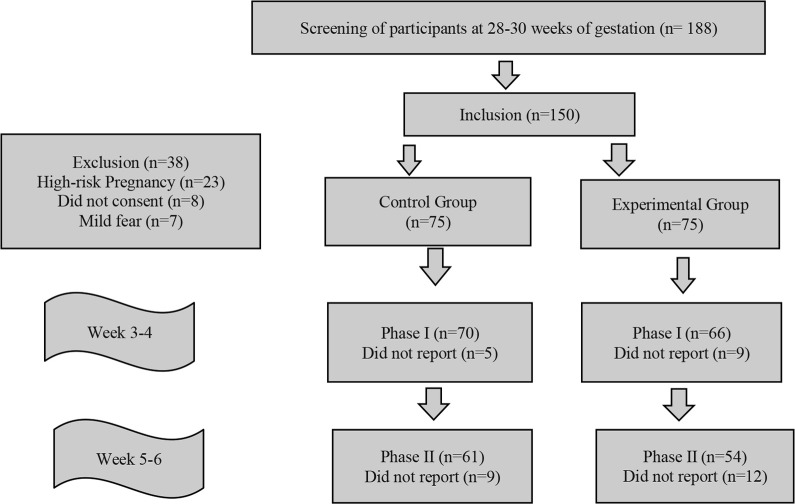
A quasi-experimental study was conducted among 115 pregnant women (selected through purposive sampling) at antenatal OPD of tertiary care hospital of Bhopal. Data was collected using Wijma Delivery Expectancy Questionnaire (DEQ) and self-structured questionnaire on socio-demographic and clinical variables. The intervention (FALCI) was carried out in two phases, each lasting for 30 minutes conducted at week 3-4 and week 5-6 and information booklet was provided for reinforcement. The data was analysed using two-way repeated measures mixed ANOVA (within group and between groups).
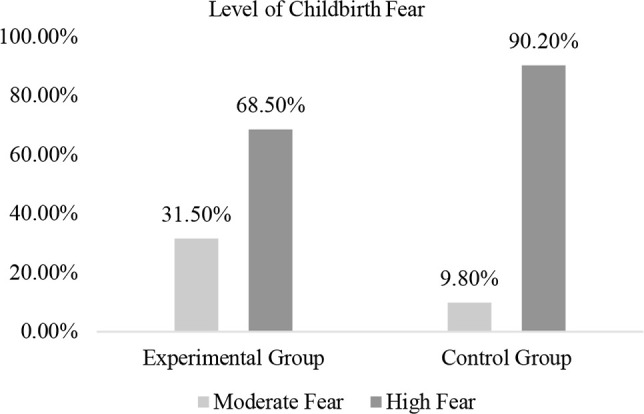
Findings revealed that most of the pregnant women in both experimental (68.5%) and control (90.2%) group had high level of childbirth fear. Post-intervention data revealed mean of pretest, posttest 1 and posttest 2 were 73.85, 46.94 and 37.90 in experimental group and the mean of pretest, posttest 1 and posttest 2 were 75.49, 72.59 and 72.67 in control group respectively and found that there is significant difference in childbirth fear (within group, F value=114.69, p<0.001 in experimental group and F =0.575, p=0.564 in control group) and between groups (F value= 81.52, p value <0.001). However, no significant association was found between childbirth fear and sociodemographic/clinical variables.
The study findings revealed that Nurse led FALCI intervention was effective in reducing childbirth fear among the pregnant women and it is recommended that such intervention must be planned at all levels and implemented as routine protocol in maternity services.
分娩是一个复杂的过程,涉及身体、心理、情感、社会和文化等多个方面。本研究旨在评估由护士主导的FALCI(与分娩恐惧相关的改善措施)干预对降低孕妇分娩恐惧的有效性。
在博帕尔三级护理医院的产前门诊对115名孕妇(通过目的抽样选择)进行了一项准实验研究。使用维伊马分娩预期问卷(DEQ)以及关于社会人口统计学和临床变量的自编问卷收集数据。干预措施(FALCI)分两个阶段进行,每个阶段持续30分钟,分别在第3 - 4周和第5 - 6周实施,并提供信息手册以加强效果。使用双向重复测量混合方差分析(组内和组间)对数据进行分析。
研究结果显示,实验组(68.5%)和对照组(90.2%)中的大多数孕妇都有较高程度的分娩恐惧。干预后的数据显示,实验组的前测、后测1和后测2的平均值分别为73.85、46.94和37.90,对照组的前测、后测1和后测2的平均值分别为75.49、72.59和72.67,且发现分娩恐惧在组内(实验组F值 = 114.69,p < 0.001;对照组F = 0.575,p = 0.564)和组间(F值 = 81.52,p值 < 0.001)均存在显著差异。然而,未发现分娩恐惧与社会人口统计学/临床变量之间存在显著关联。
研究结果表明,由护士主导的FALCI干预在降低孕妇分娩恐惧方面是有效的,建议在各级制定此类干预措施并作为产科服务的常规方案实施。