Thermochemical Energy Conversion Laboratory, Department of Applied Physics and Electronics, Umeå University, 90187, Umeå, Sweden.
Department of Forest Ecology and Management, Swedish University of Agricultural Sciences (SLU), Umeå, Sweden.
Ambio. 2024 Oct;53(10):1492-1504. doi: 10.1007/s13280-024-02037-0. Epub 2024 Jun 1.
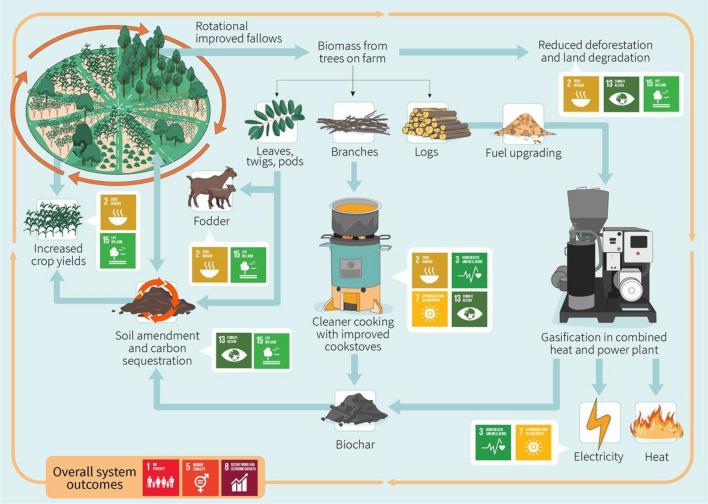
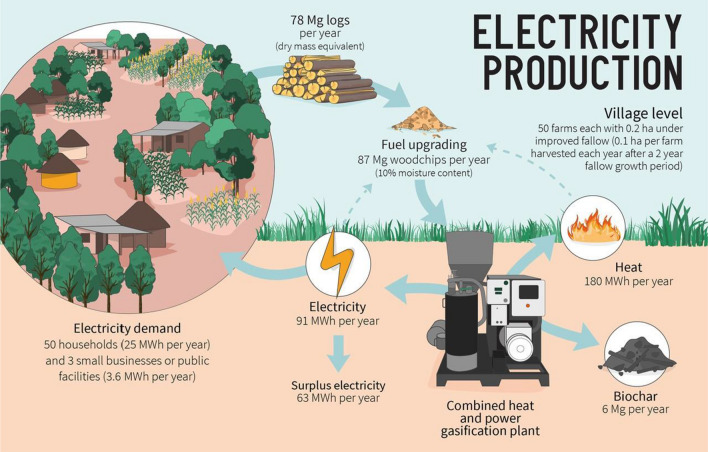
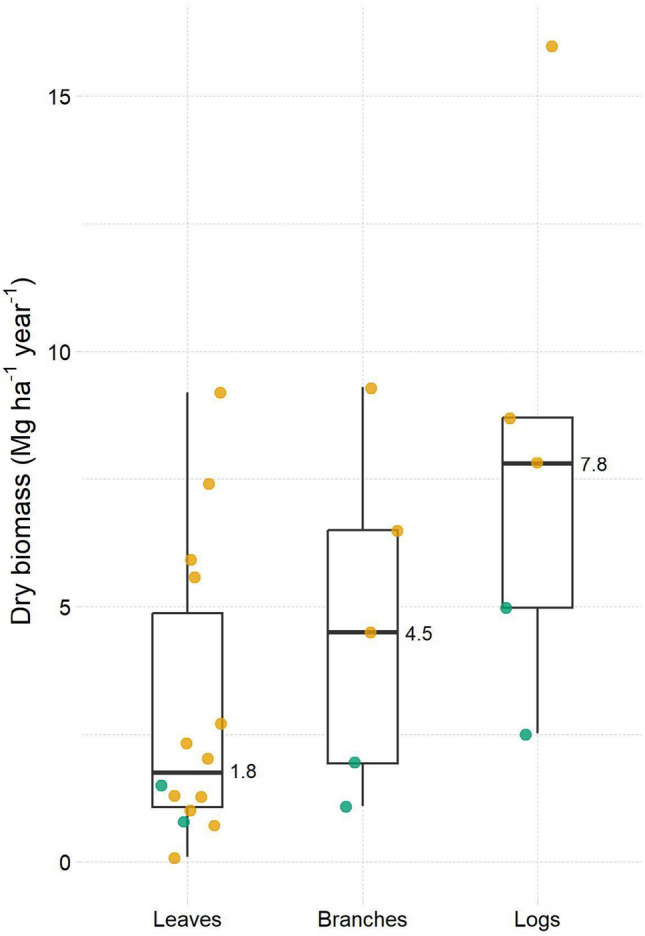
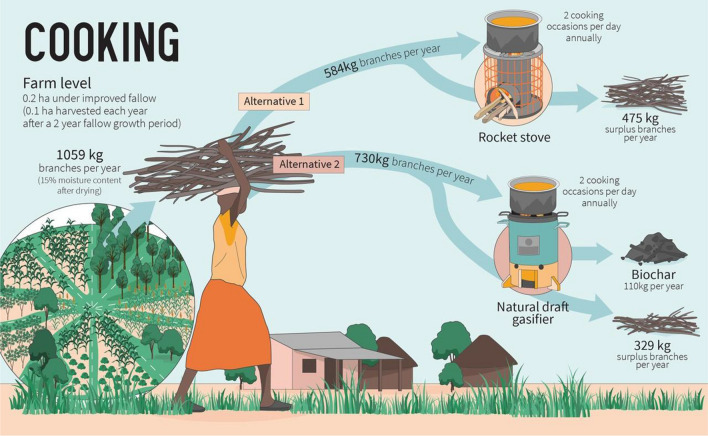
Most people in rural sub-Saharan Africa lack access to electricity and rely on traditional, inefficient, and polluting cooking solutions that have adverse impacts on both human health and the environment. Here, we propose a novel integrated agroforestry-bioenergy system that combines sustainable biomass production in sequential agroforestry systems with biomass-based cleaner cooking solutions and rural electricity production in small-scale combined heat and power plants and estimate the biophysical system outcomes. Despite conservative assumptions, we demonstrate that on-farm biomass production can cover the household's fuelwood demand for cooking and still generate a surplus of woody biomass for electricity production via gasification. Agroforestry and biochar soil amendments should increase agricultural productivity and food security. In addition to enhanced energy security, the proposed system should also contribute to improving cooking conditions and health, enhancing soil fertility and food security, climate change mitigation, gender equality, and rural poverty reduction.
大多数撒哈拉以南非洲农村地区的人民无法获得电力,他们依赖传统的、低效的、污染环境的烹饪解决方案,这对人类健康和环境都有不利影响。在这里,我们提出了一种新颖的农林生物质一体化能源系统,该系统将可持续的生物质生产与基于生物质的清洁烹饪解决方案相结合,并在小规模热电联产厂中进行农村电力生产,同时估算了该系统的生物物理成果。尽管存在保守假设,我们仍证明,农场内的生物质生产可以满足家庭烹饪的薪柴需求,并且通过气化仍能产生用于发电的木质生物质盈余。农林和生物炭土壤改良剂应能提高农业生产力和粮食安全。除了增强能源安全外,该系统还应有助于改善烹饪条件和健康状况,提高土壤肥力和粮食安全,减少气候变化,促进性别平等和农村减贫。