Neidre Daria B, Delgado Roxana E, Peacock Kimberly S, Luy Luis P, White Carole L
UT Health San Antonio, TX, USA.
J Transcult Nurs. 2025 Jan;36(1):43-56. doi: 10.1177/10436596241256328. Epub 2024 Jun 3.
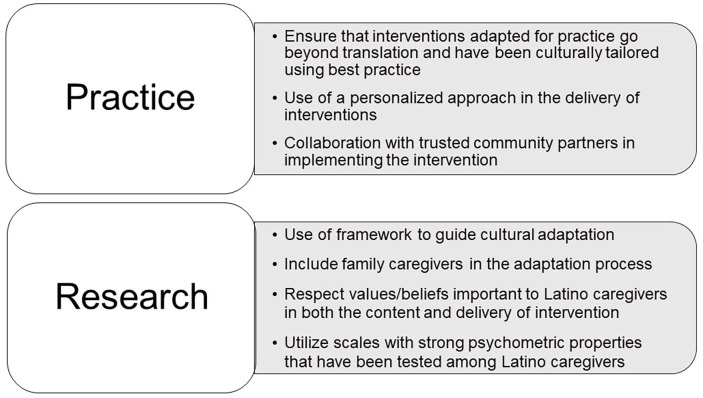
Few interventions have focused on Latino family caregivers to persons with dementia, addressing their unique needs. This review aimed to identify best practices in cultural adaptation to make recommendations for adapting interventions for Latino family caregivers of persons living with dementia.
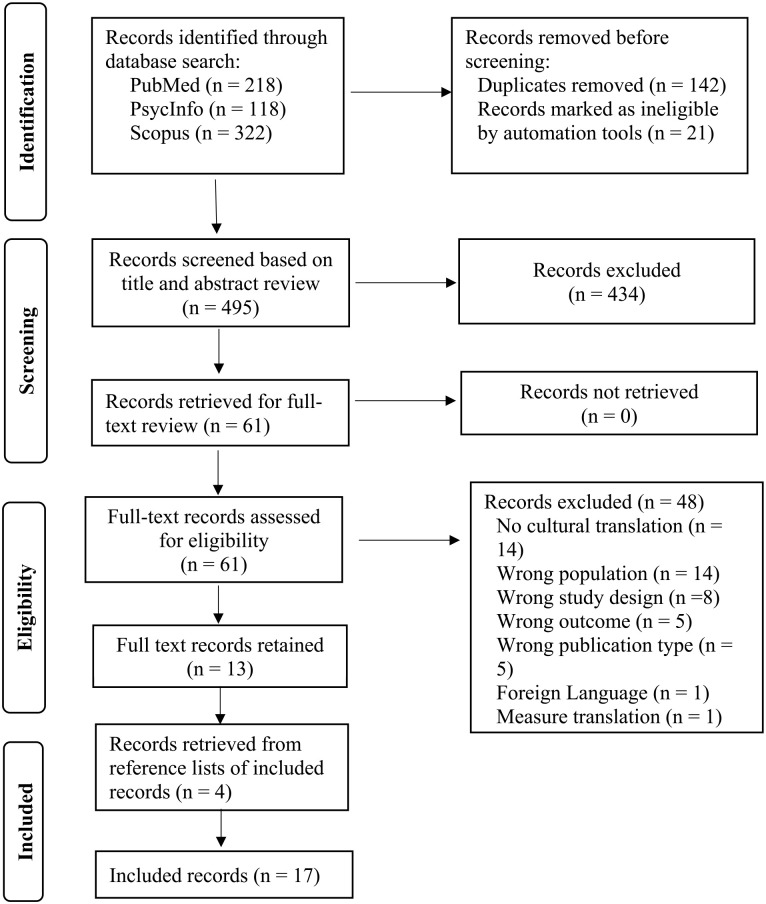
This scoping review was conducted following the Joanna Briggs Institute Scoping Review guidelines, with findings extracted and summarized from 17 studies addressing cultural adaptation.
Frameworks guiding the adaptations were comprehensive, addressing cultural values and traditions and the social context faced by Latino family caregivers. Features of the adaptations included diverse teams of researchers and community members, including Latino family caregivers, to inform the integration of cultural values into the content, mode, and place of intervention delivery.
Culturally adapting evidence-based interventions will increase the number of available interventions for Latino family caregivers to persons living with dementia, thus reducing inequities in caregiver support.
很少有干预措施关注患有痴呆症患者的拉丁裔家庭照顾者,以满足他们的独特需求。本综述旨在确定文化适应方面的最佳实践,为针对痴呆症患者的拉丁裔家庭照顾者调整干预措施提供建议。
本范围综述遵循乔安娜·布里格斯研究所范围综述指南进行,从17项涉及文化适应的研究中提取并总结结果。
指导适应的框架很全面,涉及文化价值观和传统以及拉丁裔家庭照顾者面临的社会背景。适应的特点包括由研究人员和社区成员组成的多元化团队,其中包括拉丁裔家庭照顾者,以便将文化价值观融入干预实施的内容、方式和地点。
对基于证据的干预措施进行文化适应,将增加可供患有痴呆症患者的拉丁裔家庭照顾者使用的干预措施数量,从而减少照顾者支持方面的不平等。