Quantitative Biomedical Research Center, Peter O'Donnell Jr. School of Public Health, The University of Texas Southwestern Medical Center, Dallas, TX, USA.
Department of Statistics and Data Science, Southern Methodist University, Dallas, TX, USA.
Genome Biol. 2024 Jun 6;25(1):147. doi: 10.1186/s13059-024-03289-5.
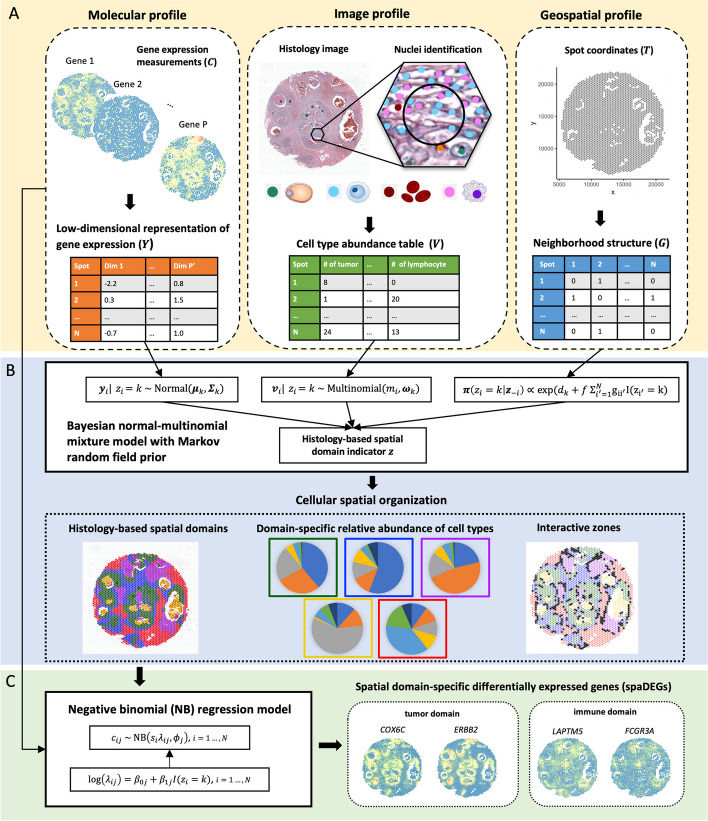
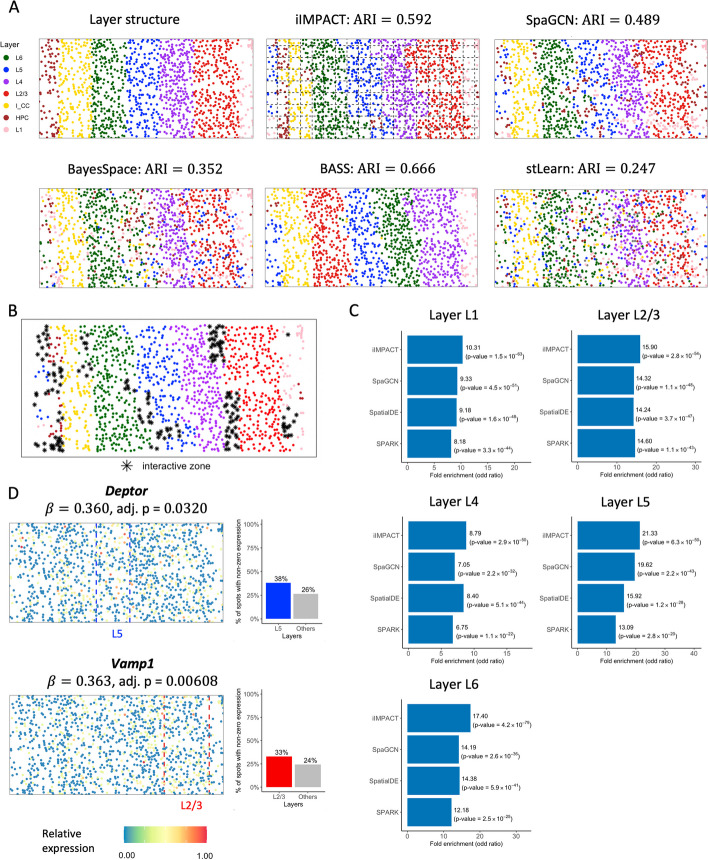
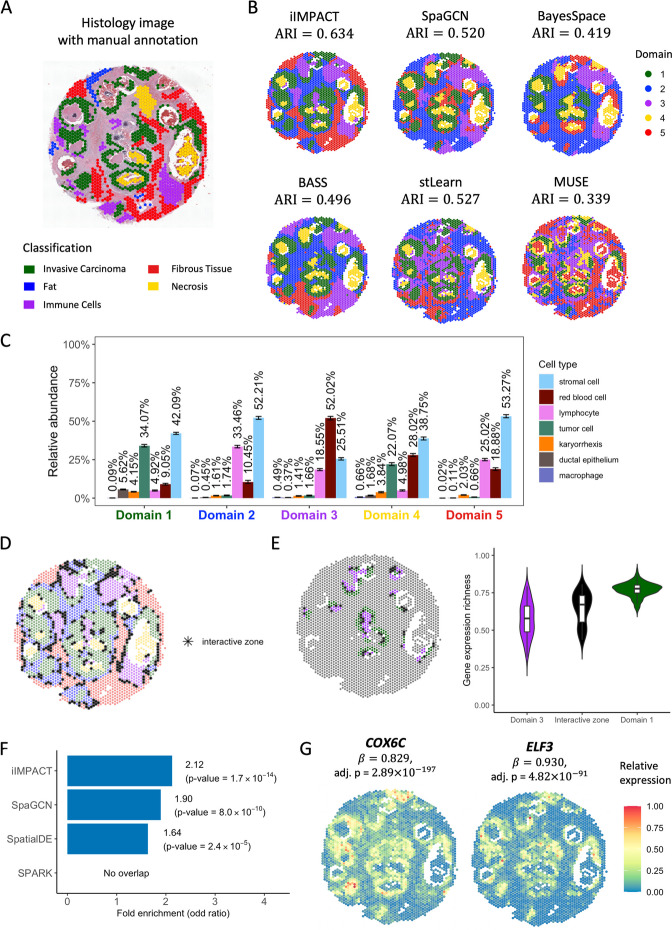
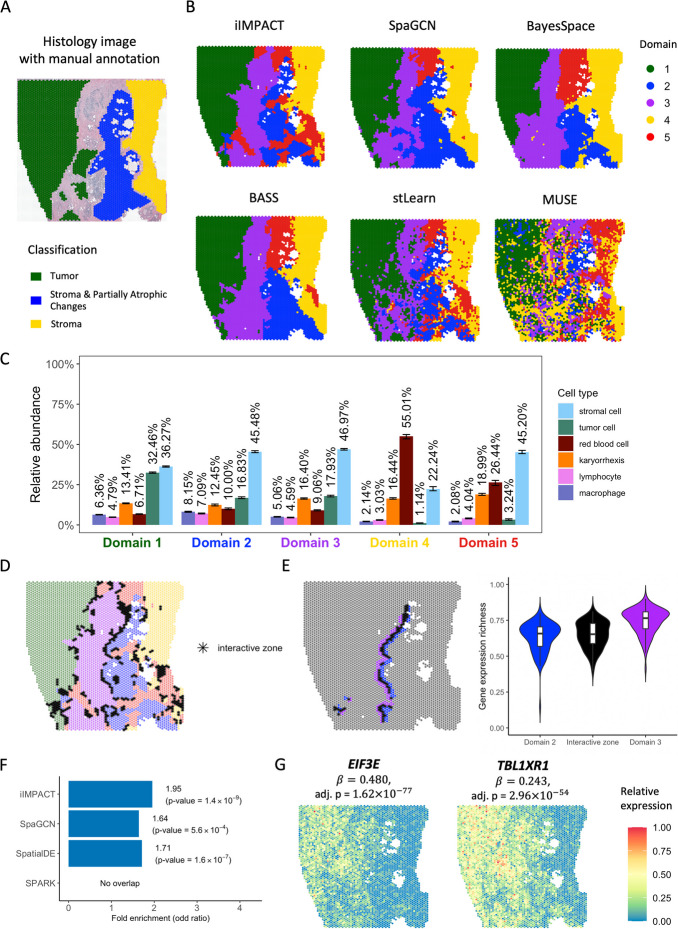
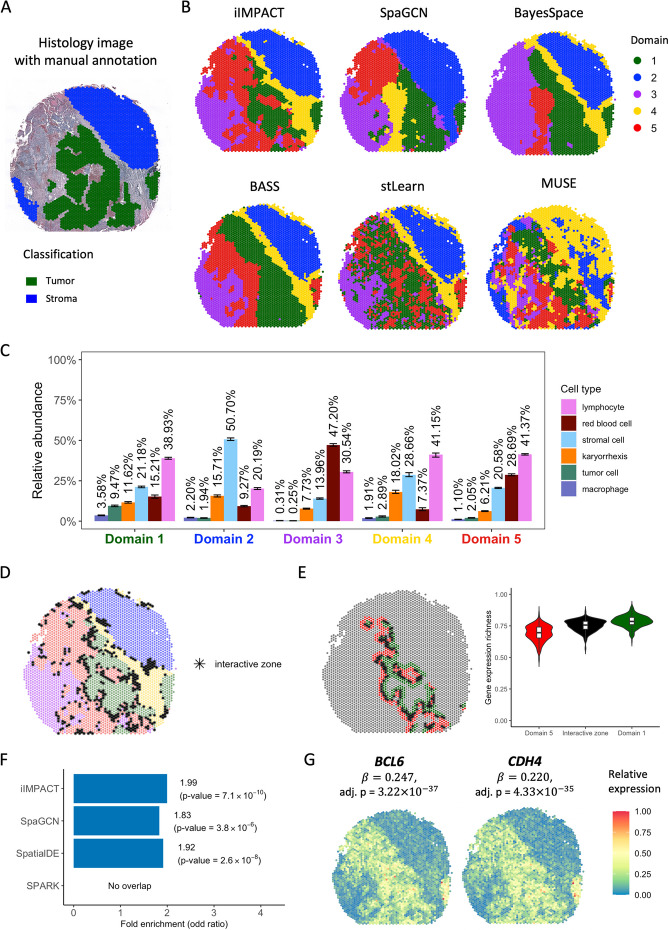
Current clustering analysis of spatial transcriptomics data primarily relies on molecular information and fails to fully exploit the morphological features present in histology images, leading to compromised accuracy and interpretability. To overcome these limitations, we have developed a multi-stage statistical method called iIMPACT. It identifies and defines histology-based spatial domains based on AI-reconstructed histology images and spatial context of gene expression measurements, and detects domain-specific differentially expressed genes. Through multiple case studies, we demonstrate iIMPACT outperforms existing methods in accuracy and interpretability and provides insights into the cellular spatial organization and landscape of functional genes within spatial transcriptomics data.
目前,空间转录组学数据的聚类分析主要依赖于分子信息,未能充分利用组织学图像中的形态特征,导致准确性和可解释性受损。为了克服这些限制,我们开发了一种称为 iIMPACT 的多阶段统计方法。它基于 AI 重建的组织学图像和基因表达测量的空间上下文,识别和定义基于组织学的空间域,并检测特定于域的差异表达基因。通过多个案例研究,我们证明 iIMPACT 在准确性和可解释性方面优于现有方法,并提供了对空间转录组学数据中细胞空间组织和功能基因景观的深入了解。