Public Health Departments, College of Health Science, Mattu Univeristy, Mattu, Ethiopia.
Gambella Hospital, Gambella Region Health Bureau, Gambella, Ethiopia.
Front Public Health. 2024 May 27;12:1412788. doi: 10.3389/fpubh.2024.1412788. eCollection 2024.
Intimate partner violence is defined as any behavior by a current or past male intimate partner during marriage, cohabitation, or any other formal or informal union that causes physical, sexual, or psychological harm. Men are the most common perpetrators of this against women. It affects almost one-third of all women worldwide.
This study aimed to assess the prevalence, consequences, and factors associated with intimate partner violence among partnered women in Gambella town.
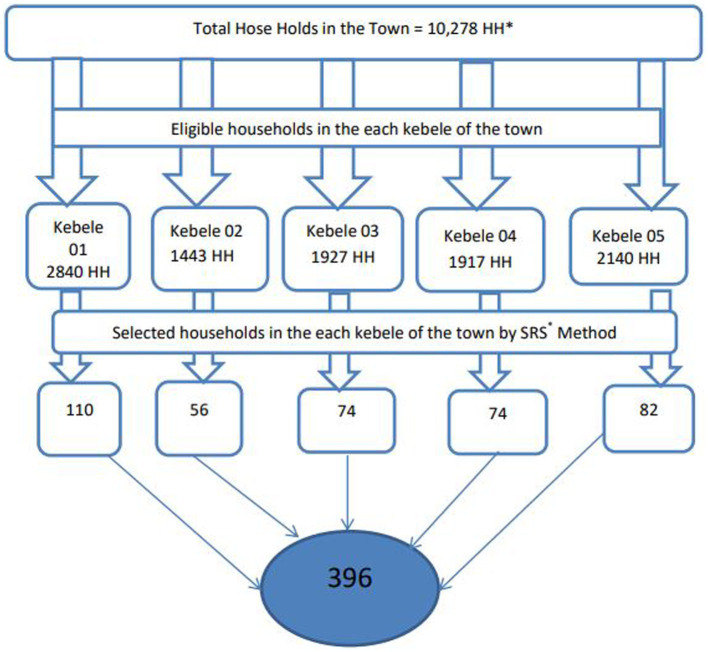
A community-based, cross-sectional study design was employed. A systematic random sampling technique was used to select the study participants. Data was collected using a pretested, structured questionnaire. The data were entered and analyzed using SPSS software version 25. The bivariate and multivariate logistic regression method was used to identify factors associated with intimate partner violence. Variables with a -value <0.05 were considered significantly associated with intimate partner violence.
The overall prevalence of intimate partner violence in the lifetime and the last 12 months was 58.8, 95% CI (54.0, 63.6), and 51.8, 95% CI (46.7, 56.8), respectively. More than half (53.3%) of the violence resulted in physical injury, while 32.9% were separated from their partners whereas, mother's history of exposure to IPV [AOR: 1.8, 95% CI (1.03-3.27), < 0.05], respondent's age [AOR: 3.4, 95% CI (1.8, 6.5), < 0.001], substance use [AOR:2.5, 95% CI (1.5-4.1), < 0.001], disagreement on sexual intercourse [AOR:3.2, 95% CI (1.8-5.7), < 0.01], monthly family income [AOR:0.32, 95% CI: (0.16-0.63), < 0.01] and family size [AOR:2.8, 95% CI: (1.6-4.8), < 0.01] were significantly associated with IPV.
The study indicated that the prevalence of intimate partner violence was very high. Age of the woman, family size, substance use, economic status, were among factors significantly associated with intimate partner violence. Therefore, responsible stakeholders should respond to the deep-rooted and highly complicated gender inequality by implementing preventive measures.
亲密伴侣暴力是指当前或过去的男性亲密伴侣在婚姻、同居或任何其他正式或非正式关系中实施的行为,这些行为会导致身体、性或心理伤害。男性是对女性实施这种暴力的最常见者。它几乎影响了全世界三分之一的女性。
本研究旨在评估甘贝拉镇已婚或同居女性中亲密伴侣暴力的流行率、后果和相关因素。
采用社区为基础的横断面研究设计。采用系统随机抽样技术选择研究参与者。使用经过预测试的结构化问卷收集数据。使用 SPSS 软件版本 25 输入和分析数据。采用双变量和多变量逻辑回归方法确定与亲密伴侣暴力相关的因素。具有 - 值<0.05 的变量被认为与亲密伴侣暴力显著相关。
终身和过去 12 个月内亲密伴侣暴力的总患病率分别为 58.8%,95%置信区间(54.0,63.6)和 51.8%,95%置信区间(46.7,56.8)。超过一半(53.3%)的暴力行为导致身体受伤,而 32.9%的女性与伴侣分居,而母亲曾遭受亲密伴侣暴力的经历 [比值比(AOR):1.8,95%置信区间(1.03-3.27),<0.05]、受访者年龄 [AOR:3.4,95%置信区间(1.8-6.5),<0.001]、物质使用 [AOR:2.5,95%置信区间(1.5-4.1),<0.001]、性观念不合 [AOR:3.2,95%置信区间(1.8-5.7),<0.01]、每月家庭收入 [AOR:0.32,95%置信区间:(0.16-0.63),<0.01]和家庭规模 [AOR:2.8,95%置信区间:(1.6-4.8),<0.01]与亲密伴侣暴力显著相关。
本研究表明,亲密伴侣暴力的流行率非常高。女性的年龄、家庭规模、物质使用、经济状况等都是与亲密伴侣暴力显著相关的因素。因此,相关责任方应通过实施预防措施来应对深层次且复杂的性别不平等问题。