Dyczko Dagmara, Krysmann Alicja, Kolanek Aleksandra, Borczyk Bartosz, Kiewra Dorota
Department of Microbial Ecology and Acaroentomology, Faculty of Biological Sciences, University of Wrocław, Przybyszewskiego 63/77, Wrocław, 51-148, Poland.
Faculty of Chemistry, Biotechnology and Food Science, Norwegian University of Life Sciences, NMBU, Ås, Norway.
Exp Appl Acarol. 2024 Aug;93(2):409-420. doi: 10.1007/s10493-024-00927-2. Epub 2024 Jun 13.
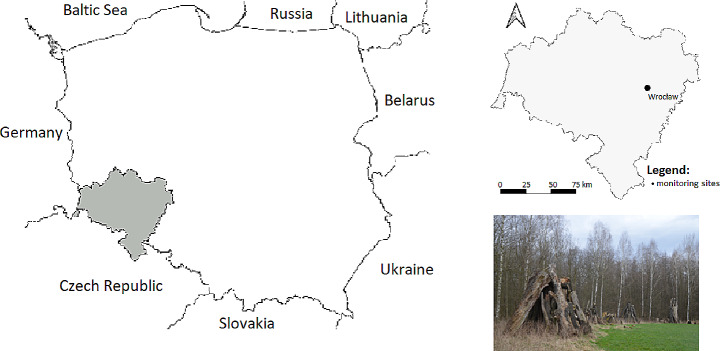
The aim of this study was to determine the level of infection of Ixodes ricinus ticks with pathogens (Borrelia spp., Rickettsia spp., and Anaplasma spp.) collected from Lacerta agilis and Zootoca vivipara lizards in the urban areas of Wrocław (SW Poland). The study was carried out in July-August 2020. Lizards were caught by a noose attached to a pole or by bare hands, identified by species, and examined for the presence of ticks. Each lizard was then released at the site of capture. Ticks were removed with tweezers, identified by species using keys, and molecular tests were performed for the presence of pathogens. From 28 lizards (17 specimens of Z. vivipara and 11 specimens of L. agilis) a total of 445 ticks, including 321 larvae and 124 nymphs, identified as I. ricinus were collected. A larger number of ticks were obtained from L. agilis compared to Z. vivipara. Molecular tests for the presence of pathogens were performed on 445 specimens of I. ricinus. The nested PCR method for the fla gene allowed the detection of Borrelia spp. in 9.4% of ticks, and it was higher in ticks from L. agilis (12.0%) than from Z. vivipara (1.0%). The RFLP method showed the presence of three species, including two belonging to the B. burgdorferi s.l. complex (B. lusitaniae and B. afzelii), and B. miyamotoi. The overall level of infection of Rickettsia spp. was 19.3%, including 27.2% in ticks collected from Z. vivipara and 17.0% from L. agilis. Sequencing of randomly selected samples confirmed the presence of R. helvetica. DNA of Anaplasma spp. was detected only in one pool of larvae collected from L. agilis, and sample sequencing confirmed the presence of (A) phagocytophilum. The research results indicate the important role of lizards as hosts of ticks and their role in maintaining pathogens in the environment including urban agglomeration as evidenced by the first recorded presence of (B) miyamotoi and (A) phagocytophilum in I. ricinus ticks collected from L. agilis. However, confirmation of the role of sand lizards in maintaining (B) miyamotoi and A. phagocytophilum requires more studies and sampling of lizard tissue.
本研究的目的是确定从弗罗茨瓦夫市区(波兰西南部)的敏捷蜥蜴(Lacerta agilis)和胎生蜥蜴(Zootoca vivipara)身上采集的蓖麻硬蜱(Ixodes ricinus)感染病原体(伯氏疏螺旋体属、立克次体属和无形体属)的水平。研究于2020年7月至8月进行。蜥蜴通过系在杆子上的套索或徒手捕获,按物种进行鉴定,并检查是否有蜱虫。然后将每只蜥蜴放归捕获地点。用镊子取下蜱虫,使用检索表按物种进行鉴定,并对病原体的存在进行分子检测。从28只蜥蜴(17只胎生蜥蜴标本和11只敏捷蜥蜴标本)身上共采集到445只蜱虫,包括321只幼虫和124只若虫,均鉴定为蓖麻硬蜱。与胎生蜥蜴相比,从敏捷蜥蜴身上获得的蜱虫数量更多。对445只蓖麻硬蜱标本进行了病原体存在的分子检测。针对fla基因的巢式PCR方法在9.4%的蜱虫中检测到伯氏疏螺旋体属,且在来自敏捷蜥蜴的蜱虫中(12.0%)高于来自胎生蜥蜴的蜱虫(1.0%)。RFLP方法显示存在三种物种,包括两种属于伯氏疏螺旋体狭义种复合体(伯氏卢西塔尼亚疏螺旋体和阿氏疏螺旋体)以及伯氏宫本疏螺旋体。立克次体属的总体感染水平为19.3%,包括从胎生蜥蜴采集的蜱虫中为27.2%,从敏捷蜥蜴采集的蜱虫中为17.0%。对随机选择的样本进行测序证实存在瑞士立克次体。无形体属的DNA仅在从敏捷蜥蜴采集的一组幼虫中检测到,样本测序证实存在嗜吞噬细胞无形体。研究结果表明蜥蜴作为蜱虫宿主的重要作用以及它们在包括城市集聚区在内的环境中维持病原体的作用,这一点由首次记录到从敏捷蜥蜴采集的蓖麻硬蜱中存在伯氏宫本疏螺旋体和嗜吞噬细胞无形体所证明。然而,要证实沙蜥在维持伯氏宫本疏螺旋体和嗜吞噬细胞无形体方面的作用,还需要更多关于蜥蜴组织的研究和采样。