Berthon Antonin, Wernisch Lorenz, Stoukidi Myrta, Thornton Michael, Tessier-Lariviere Olivier, Fortier-Poisson Pascal, Mamen Jorin, Pinkney Max, Lee Susannah, Sarkans Elvijs, Annecchino Luca, Appleton Ben, Garsed Philip, Patterson Bret, Gonshaw Samuel, Jakopec Matjaz, Shunmugam Sudhakaran, Edwards Tristan, Tukiainen Aleksi, Jennings Joel, Lajoie Guillaume, Hewage Emil, Armitage Oliver
BIOS Health Ltd., Cambridge, UK.
Université de Montréal and Mila-Quebec AI Institute, Montréal, Canada.
Bioelectron Med. 2024 Jun 17;10(1):15. doi: 10.1186/s42234-024-00147-4.
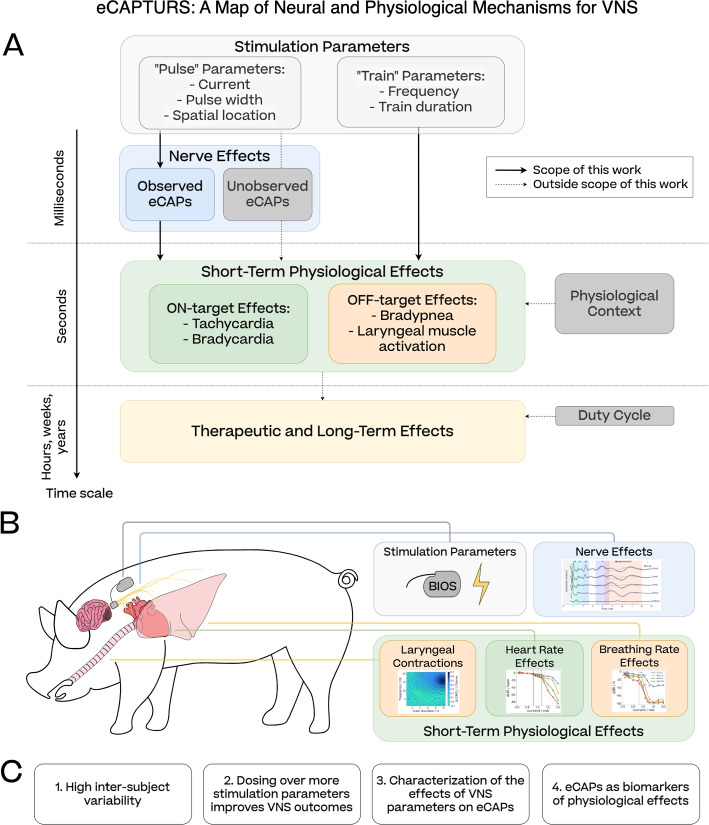
Vagus nerve stimulation (VNS) is an established therapy for treating a variety of chronic diseases, such as epilepsy, depression, obesity, and for stroke rehabilitation. However, lack of precision and side-effects have hindered its efficacy and extension to new conditions. Achieving a better understanding of the relationship between VNS parameters and neural and physiological responses is therefore necessary to enable the design of personalized dosing procedures and improve precision and efficacy of VNS therapies.
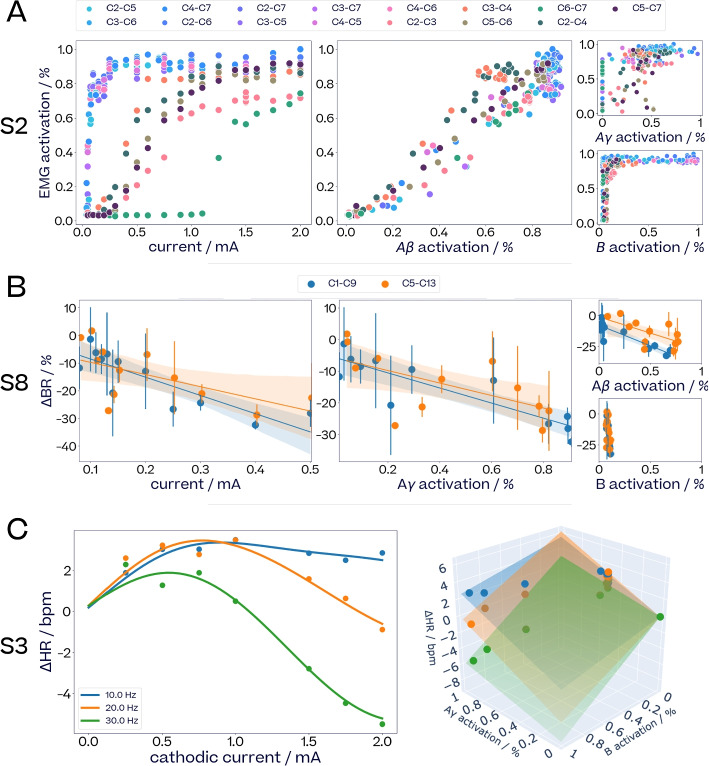
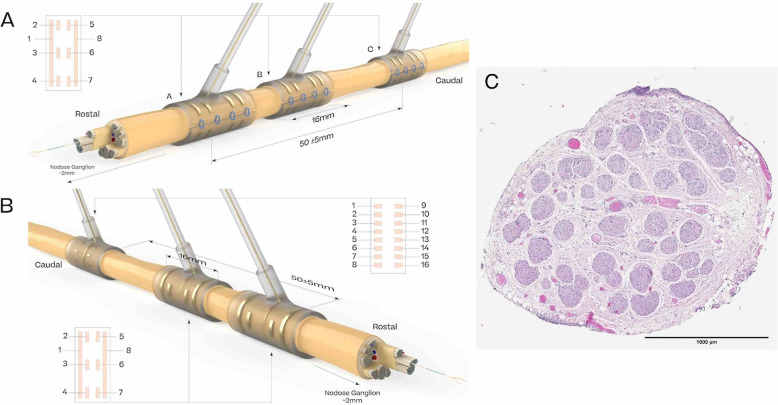
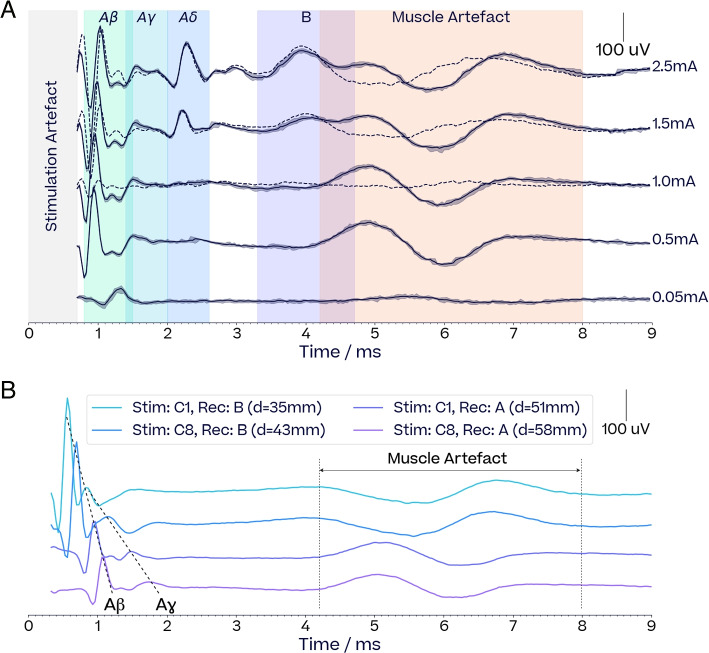
We used biomarkers from recorded evoked fiber activity and short-term physiological responses (throat muscle, cardiac and respiratory activity) to understand the response to a wide range of VNS parameters in anaesthetised pigs. Using signal processing, Gaussian processes (GP) and parametric regression models we analyse the relationship between VNS parameters and neural and physiological responses.
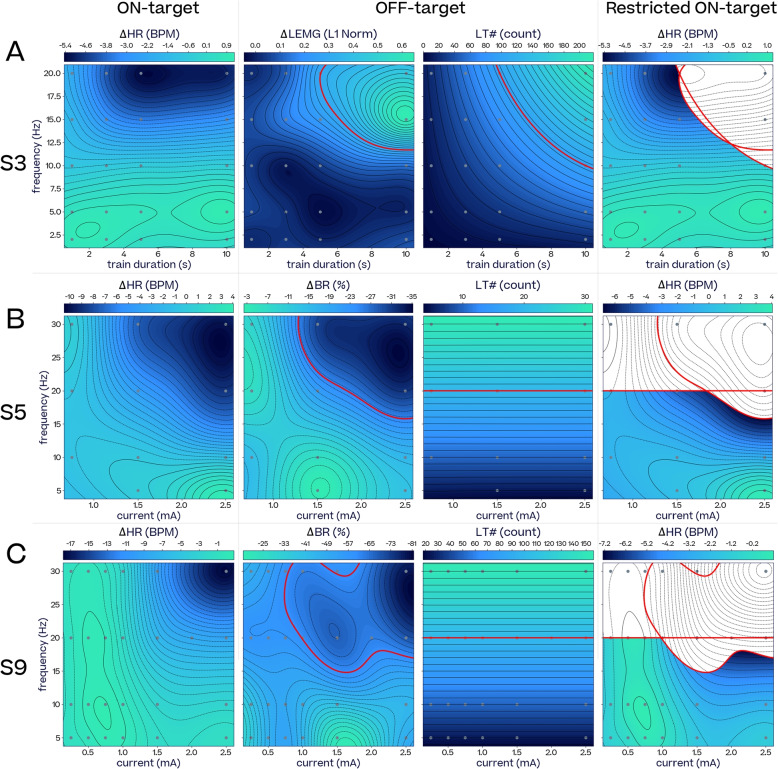
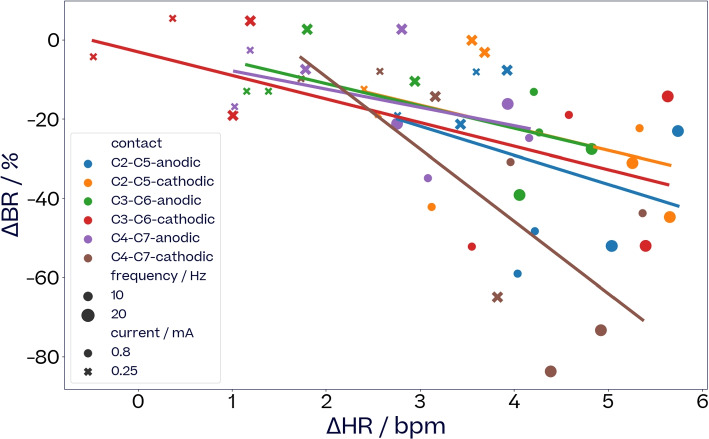
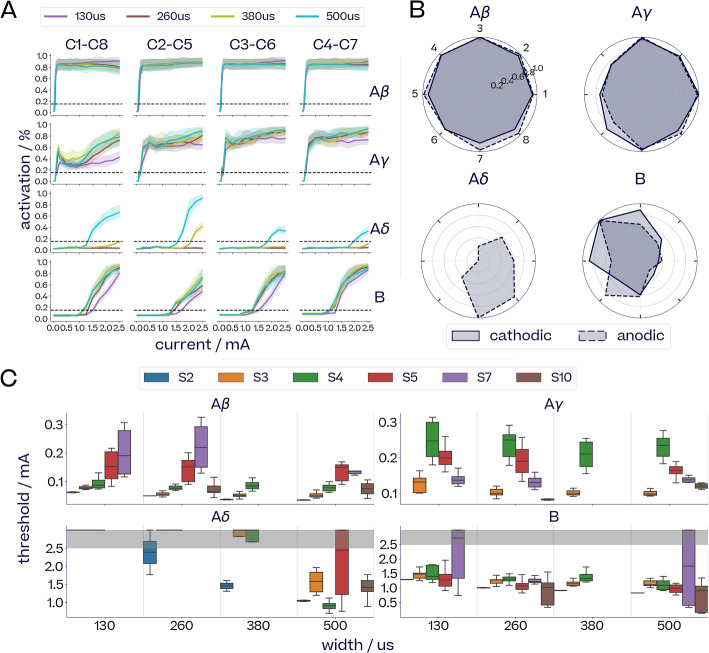
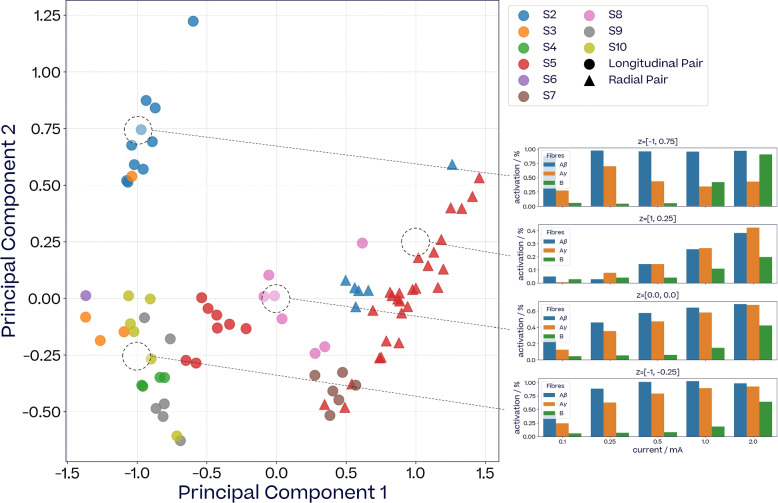
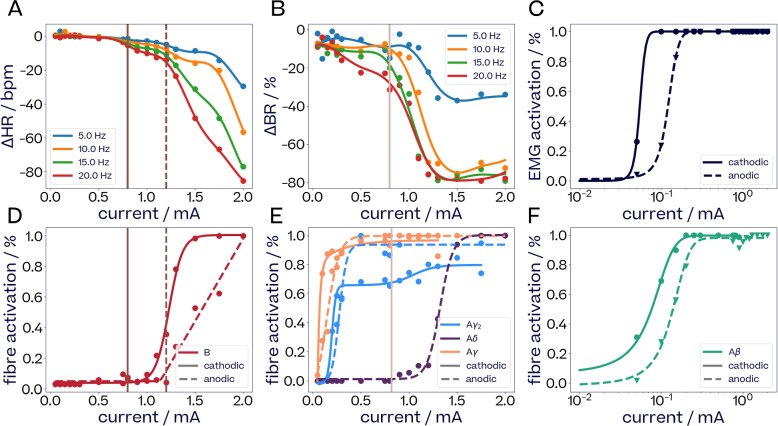
Firstly, we illustrate how considering multiple stimulation parameters in VNS dosing can improve the efficacy and precision of VNS therapies. Secondly, we describe the relationship between different VNS parameters and the evoked fiber activity and show how spatially selective electrodes can be used to improve fiber recruitment. Thirdly, we provide a detailed exploration of the relationship between the activations of neural fiber types and different physiological effects. Finally, based on these results, we discuss how recordings of evoked fiber activity can help design VNS dosing procedures that optimize short-term physiological effects safely and efficiently.
Understanding of evoked fiber activity during VNS provide powerful biomarkers that could improve the precision, safety and efficacy of VNS therapies.
迷走神经刺激(VNS)是一种已确立的治疗多种慢性疾病的方法,如癫痫、抑郁症、肥胖症以及用于中风康复。然而,缺乏精确性和副作用阻碍了其疗效以及在新病症中的应用拓展。因此,有必要更好地理解VNS参数与神经和生理反应之间的关系,以实现个性化给药方案的设计,并提高VNS治疗的精确性和疗效。
我们利用记录的诱发纤维活动和短期生理反应(咽喉肌肉、心脏和呼吸活动)的生物标志物,来了解麻醉猪对广泛VNS参数的反应。通过信号处理、高斯过程(GP)和参数回归模型,我们分析了VNS参数与神经和生理反应之间的关系。
首先,我们阐述了在VNS给药中考虑多个刺激参数如何能提高VNS治疗的疗效和精确性。其次,我们描述了不同VNS参数与诱发纤维活动之间的关系,并展示了如何使用空间选择性电极来改善纤维募集。第三,我们详细探讨了神经纤维类型的激活与不同生理效应之间的关系。最后,基于这些结果,我们讨论了诱发纤维活动的记录如何有助于设计安全有效地优化短期生理效应的VNS给药方案。
了解VNS期间的诱发纤维活动可提供强大的生物标志物,从而提高VNS治疗的精确性、安全性和疗效。