Kim Tae Hoon, Krichen Moez, Ojo Stephen, Alamro Meznah A, Sampedro Gabriel Avelino
School of Information and Electronic Engineering, Zhejiang University of Science and Technology, No. 318, Hangzhou 310023, China.
ReDCAD Laboratory, University of Sfax, Sfax 3038, Tunisia.
Diagnostics (Basel). 2024 Jun 1;14(11):1174. doi: 10.3390/diagnostics14111174.
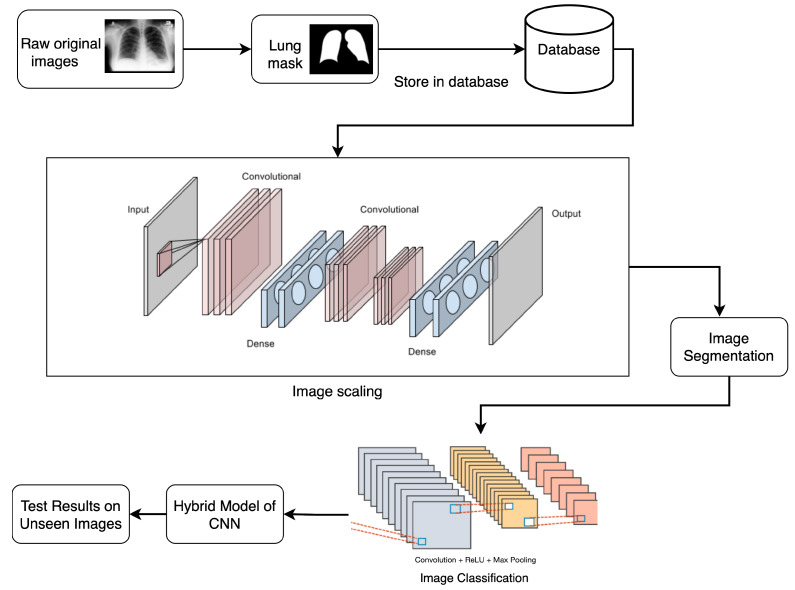
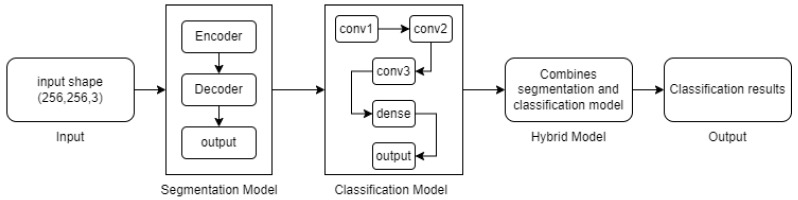
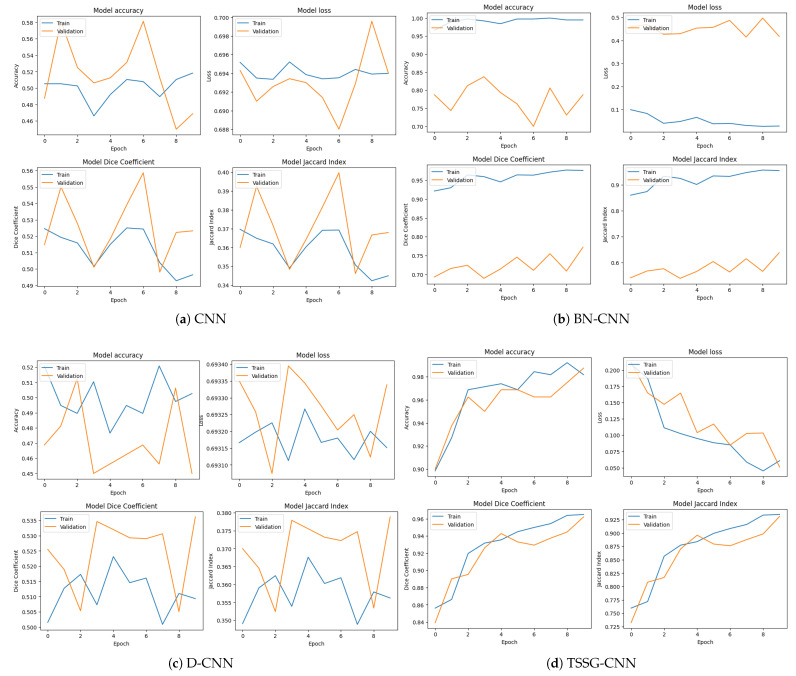
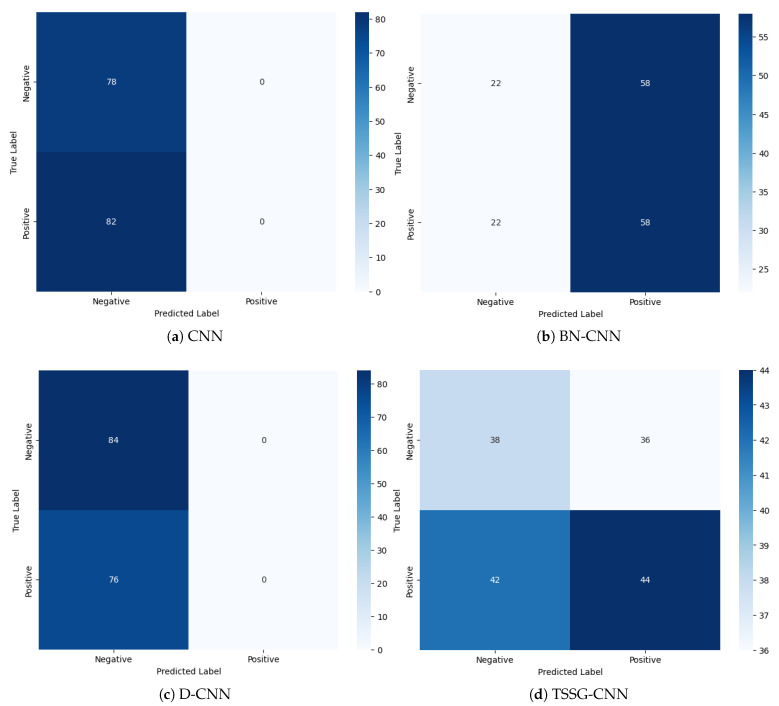
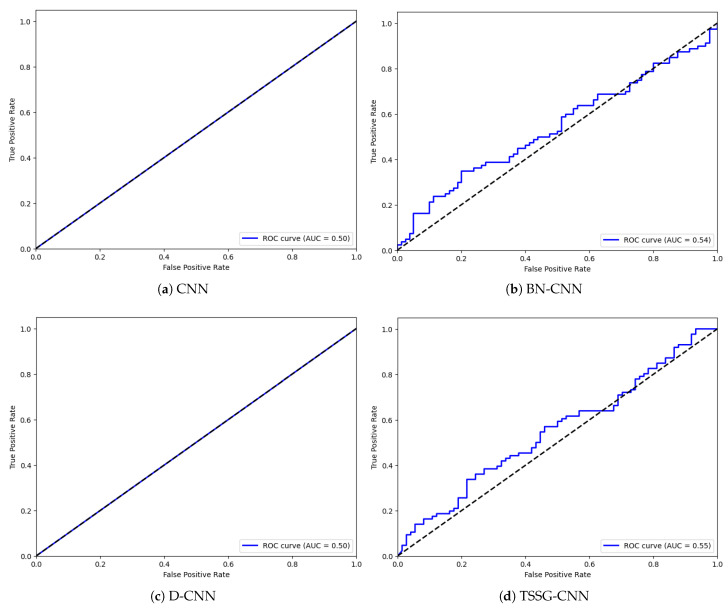
Tuberculosis (TB) is an infectious disease caused by Mycobacterium. It primarily impacts the lungs but can also endanger other organs, such as the renal system, spine, and brain. When an infected individual sneezes, coughs, or speaks, the virus can spread through the air, which contributes to its high contagiousness. The goal is to enhance detection recognition with an X-ray image dataset. This paper proposed a novel approach, named the Tuberculosis Segmentation-Guided Diagnosis Model (TSSG-CNN) for Detecting Tuberculosis, using a combined semantic segmentation and adaptive convolutional neural network (CNN) architecture. The proposed approach is distinguished from most of the previously proposed approaches in that it uses the combination of a deep learning segmentation model with a follow-up classification model based on CNN layers to segment chest X-ray images more precisely as well as to improve the diagnosis of TB. It contrasts with other approaches like ILCM, which is optimized for sequential learning, and explainable AI approaches, which focus on explanations. Moreover, our model is beneficial for the simplified procedure of feature optimization from the perspectives of approach using the Mayfly Algorithm (MA). Other models, including simple CNN, Batch Normalized CNN (BN-CNN), and Dense CNN (DCNN), are also evaluated on this dataset to evaluate the effectiveness of the proposed approach. The performance of the TSSG-CNN model outperformed all the models with an impressive accuracy of 98.75% and an F1 score of 98.70%. The evaluation findings demonstrate how well the deep learning segmentation model works and the potential for further research. The results suggest that this is the most accurate strategy and highlight the potential of the TSSG-CNN Model as a useful technique for precise and early diagnosis of TB.
结核病(TB)是一种由分枝杆菌引起的传染病。它主要影响肺部,但也可能危及其他器官,如肾脏系统、脊柱和大脑。当受感染的个体打喷嚏、咳嗽或说话时,病毒会通过空气传播,这导致其具有高度传染性。目标是通过X射线图像数据集提高检测识别能力。本文提出了一种新颖的方法,名为用于检测结核病的结核分割引导诊断模型(TSSG-CNN),它使用了语义分割和自适应卷积神经网络(CNN)架构相结合的方式。所提出的方法与大多数先前提出的方法不同之处在于,它使用深度学习分割模型与基于CNN层的后续分类模型相结合,以更精确地分割胸部X射线图像,并改善结核病的诊断。它与其他方法形成对比,如针对序列学习进行优化的ILCM,以及专注于解释的可解释人工智能方法。此外,从使用蜉蝣算法(MA)的方法角度来看,我们的模型有利于简化特征优化过程。其他模型,包括简单CNN、批归一化CNN(BN-CNN)和密集CNN(DCNN),也在这个数据集上进行了评估,以评估所提出方法的有效性。TSSG-CNN模型的性能优于所有模型,准确率达到了令人印象深刻的98.75%,F1分数为98.70%。评估结果证明了深度学习分割模型的良好效果以及进一步研究的潜力。结果表明这是最准确的策略,并突出了TSSG-CNN模型作为一种用于结核病精确早期诊断的有用技术的潜力。