Li Tuo, Borg Annika J E, Krammer Leo, Weber Hansjörg, Breinbauer Rolf, Nidetzky Bernd
Institute of Biotechnology and Biochemical Engineering, Graz University of Technology, NAWI Graz, Petersgasse 12/1, 8010, Graz, Austria.
Institute of Organic Chemistry, Graz University of Technology, NAWI Graz, Stremayrgasse 9, 8010, Graz, Austria.
Commun Chem. 2024 Jun 28;7(1):147. doi: 10.1038/s42004-024-01231-1.
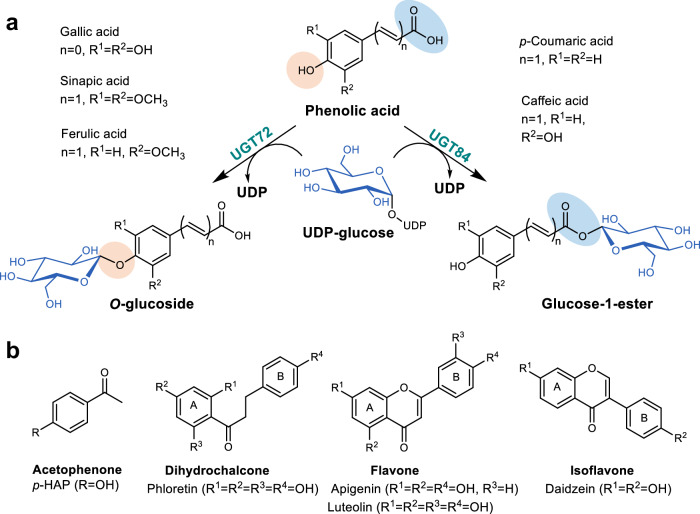
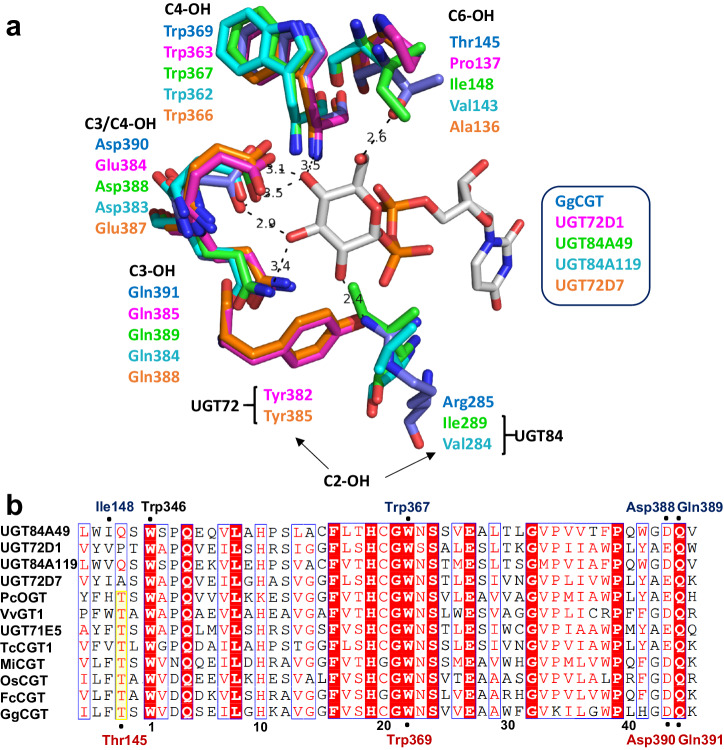
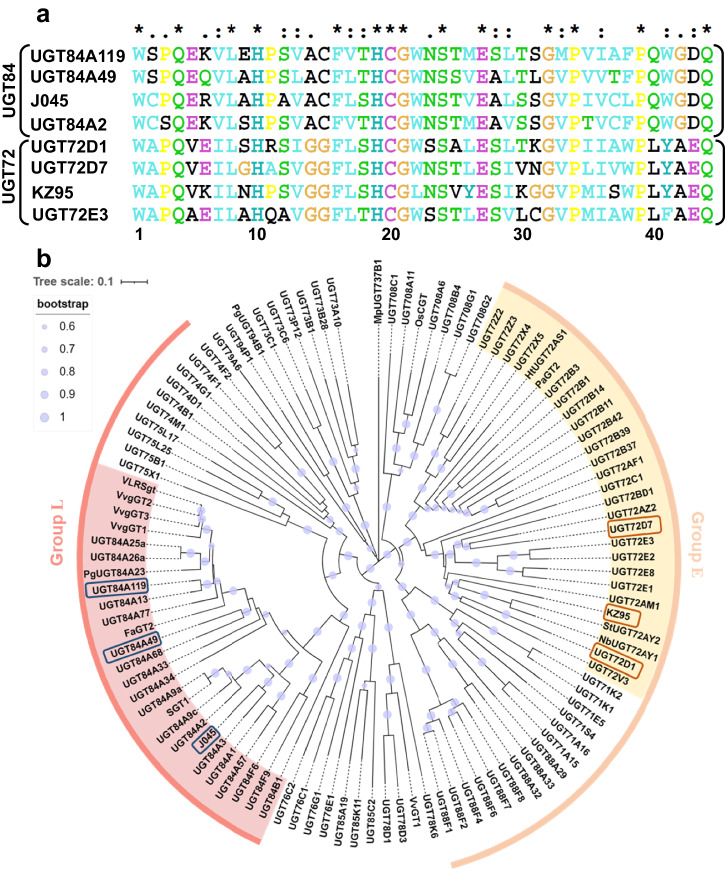
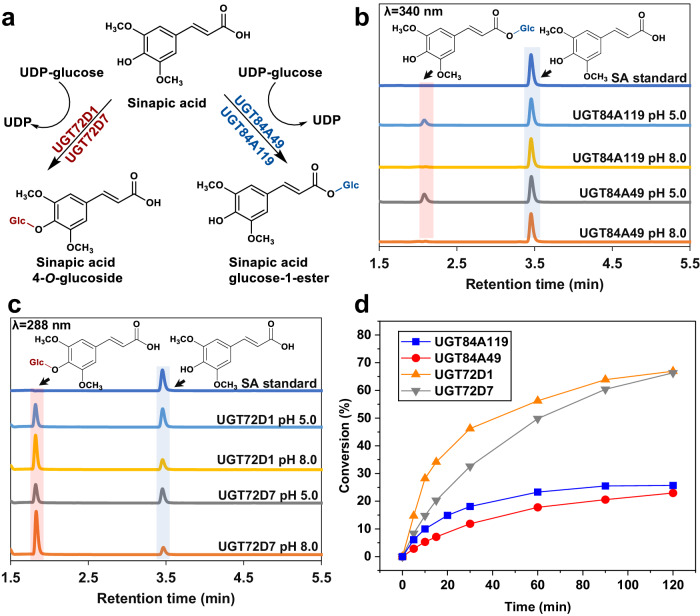
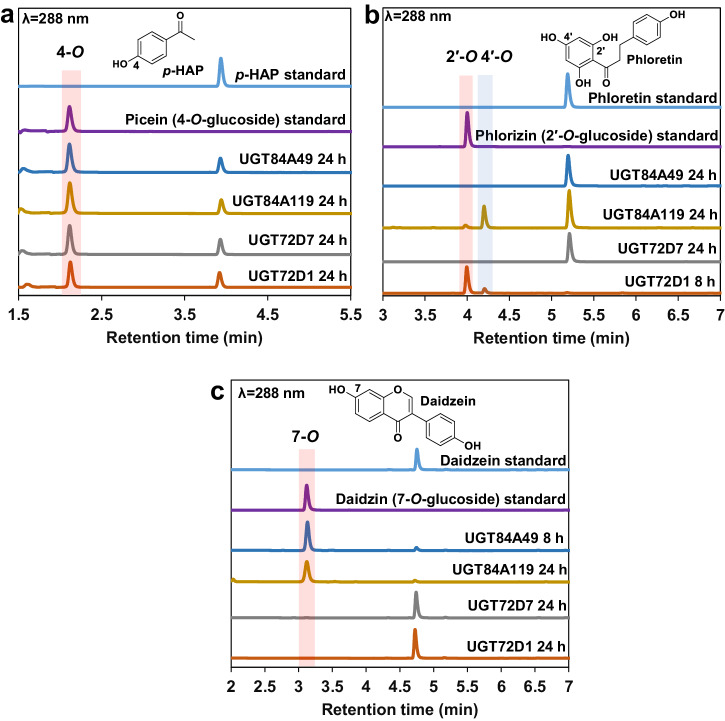
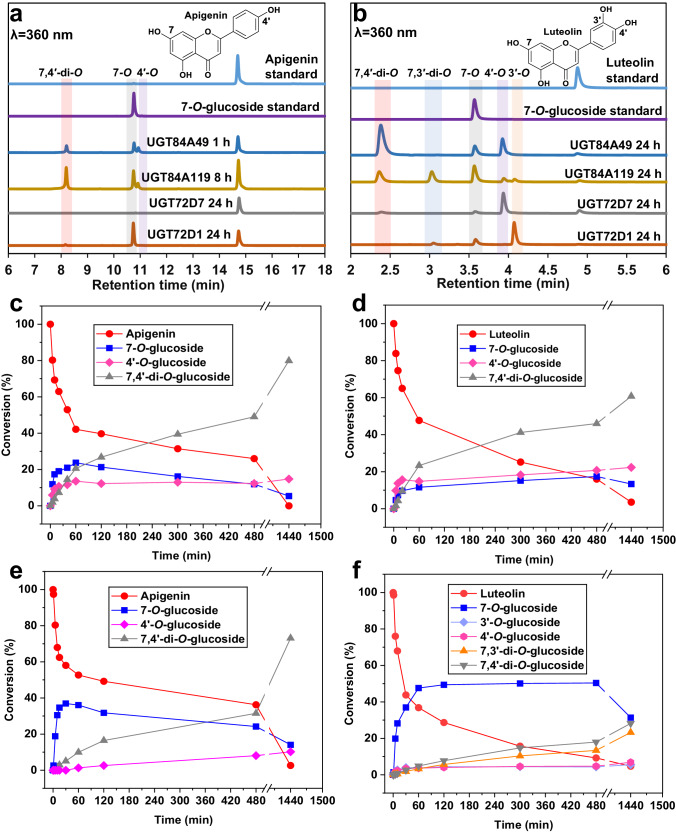
Glycosylated derivatives of natural product polyphenols display a spectrum of biological activities, rendering them critical for both nutritional and pharmacological applications. Their enzymatic synthesis by glycosyltransferases is frequently constrained by the limited repertoire of characterized enzyme-catalyzed transformations. Here, we explore the glycosylation capabilities and substrate preferences of newly identified plant uridine diphosphate (UDP)-dependent glycosyltransferases (UGTs) within the UGT72 and UGT84 families, with particular focus on natural polyphenol glycosylation from UDP-glucose. Four UGTs are classified according to their phylogenetic relationships and reaction products, identifying them as biocatalysts for either glucoside (UGT72 enzymes) or glucose ester (UGT84 members) formation from selected phenylpropanoid compounds. Detailed kinetic evaluations expose the unique attributes of these enzymes, including their specific activities and regio-selectivities towards diverse polyphenolic substrates, with product characterizations validating the capacity of UGT84 family members to perform di-O-glycosylation on flavones. Sequence analysis coupled with structural predictions through AlphaFold reveal an unexpected absence of a conserved threonine residue across all four enzymes, a trait previously linked to pentosyltransferases. This comparative analysis broadens the understood substrate specificity range for UGT72 and UGT84 enzymes, enhancing our understanding of their utility in the production of natural phenolic glycosides. The findings from this in-depth characterization provide valuable insights into the functional versatility of UGT-mediated reactions.
天然产物多酚的糖基化衍生物具有一系列生物活性,使其在营养和药理学应用中都至关重要。糖基转移酶对其进行酶促合成常常受到已表征的酶催化转化种类有限的限制。在此,我们探索了新鉴定的UGT72和UGT84家族中植物尿苷二磷酸(UDP)依赖性糖基转移酶(UGT)的糖基化能力和底物偏好,特别关注从UDP-葡萄糖进行天然多酚糖基化。根据系统发育关系和反应产物对四种UGT进行分类,确定它们为从选定的苯丙烷类化合物形成葡糖苷(UGT72酶)或葡萄糖酯(UGT84成员)的生物催化剂。详细的动力学评估揭示了这些酶的独特特性,包括它们对不同多酚底物的比活性和区域选择性,产物表征证实了UGT84家族成员对黄酮进行二-O-糖基化的能力。通过AlphaFold进行的序列分析与结构预测相结合,发现所有四种酶中意外地没有保守的苏氨酸残基,这一特征先前与戊糖基转移酶有关。这种比较分析拓宽了对UGT72和UGT84酶底物特异性范围的理解,增强了我们对它们在天然酚类糖苷生产中效用的认识。这一深入表征的结果为UGT介导反应的功能多样性提供了有价值的见解。