Division of Cardiovascular Sciences, School of Medical Sciences, Faculty of Biology, Medicine and Health, Manchester Academic Health Science Centre, University of Manchester, Oxford Road, Manchester, M13 9PL, UK.
Manchester University NHS Foundation Trust, Southmoor Road, Wythenshawe, Manchester, M23 9LT, UK.
BMC Cardiovasc Disord. 2024 Jul 5;24(1):343. doi: 10.1186/s12872-024-03987-9.
Heart failure (HF) with preserved or mildly reduced ejection fraction includes a heterogenous group of patients. Reclassification into distinct phenogroups to enable targeted interventions is a priority. This study aimed to identify distinct phenogroups, and compare phenogroup characteristics and outcomes, from electronic health record data.
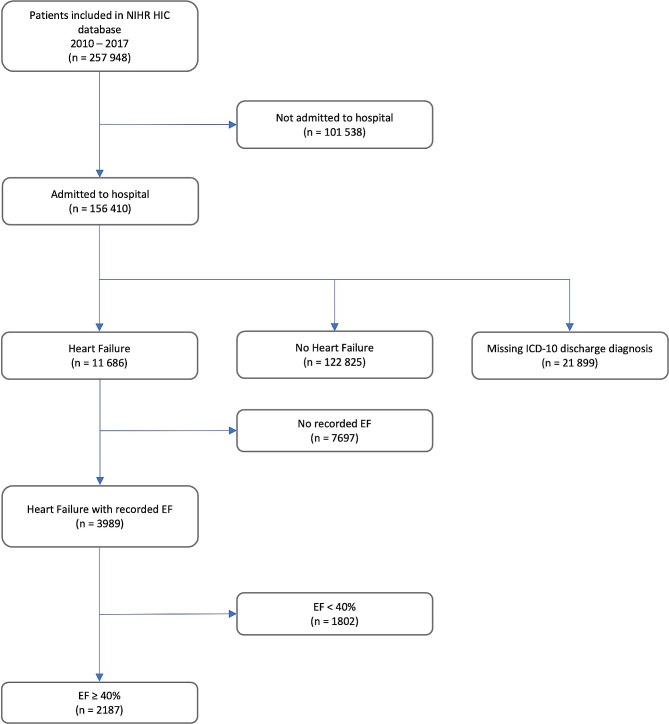
2,187 patients admitted to five UK hospitals with a diagnosis of HF and a left ventricular ejection fraction ≥ 40% were identified from the NIHR Health Informatics Collaborative database. Partition-based, model-based, and density-based machine learning clustering techniques were applied. Cox Proportional Hazards and Fine-Gray competing risks models were used to compare outcomes (all-cause mortality and hospitalisation for HF) across phenogroups.
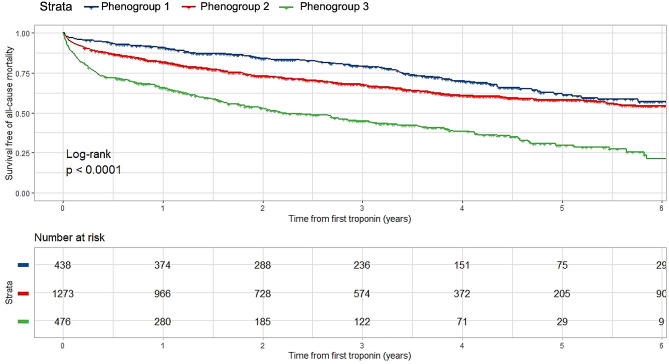
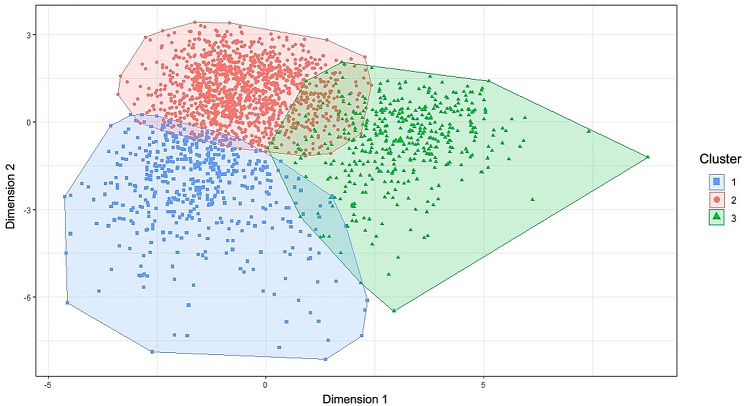
Three phenogroups were identified: (1) Younger, predominantly female patients with high prevalence of cardiometabolic and coronary disease; (2) More frail patients, with higher rates of lung disease and atrial fibrillation; (3) Patients characterised by systemic inflammation and high rates of diabetes and renal dysfunction. Survival profiles were distinct, with an increasing risk of all-cause mortality from phenogroups 1 to 3 (p < 0.001). Phenogroup membership significantly improved survival prediction compared to conventional factors. Phenogroups were not predictive of hospitalisation for HF.
Applying unsupervised machine learning to routinely collected electronic health record data identified phenogroups with distinct clinical characteristics and unique survival profiles.
射血分数保留或轻度降低的心衰(HF)包括一组异质性患者。将其重新分类为不同的表型组以实现靶向干预是当务之急。本研究旨在从电子健康记录数据中确定不同的表型组,并比较表型组的特征和结局。
从 NIHR 健康信息学合作数据库中确定了 2187 名因 HF 诊断且左心室射血分数≥40%而入住五家英国医院的患者。应用基于分区、基于模型和基于密度的机器学习聚类技术。Cox 比例风险和 Fine-Gray 竞争风险模型用于比较表型组之间的结局(全因死亡率和 HF 住院)。
确定了三个表型组:(1)年轻、主要为女性患者,患心血管代谢和冠状动脉疾病的患病率较高;(2)更虚弱的患者,肺病和心房颤动的发生率较高;(3)以全身炎症和高糖尿病和肾功能障碍为特征的患者。生存情况明显不同,从表型组 1 到表型组 3,全因死亡率的风险逐渐增加(p<0.001)。表型组成员资格与传统因素相比显著提高了生存预测。表型组不能预测 HF 住院。
应用无监督机器学习对常规电子健康记录数据进行分析,确定了具有不同临床特征和独特生存模式的表型组。