Department of Animal, Poultry and Environmental Hygiene, Faculty of Veterinary Medicine, Assiut University, Asyut, 71515, Egypt.
Department of Infectious Diseases, Faculty of Veterinary Medicine, New Valley University, El-Kharga, 1062001, New Valley, Egypt.
BMC Vet Res. 2024 Jul 6;20(1):297. doi: 10.1186/s12917-024-04138-0.
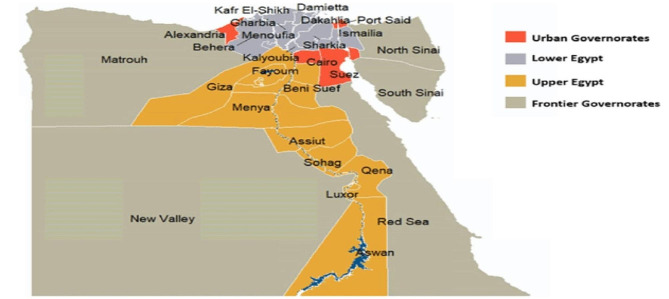
Listeriosis is a global health threat to both animals and humans, especially in developing countries. This study was designed to isolate Listeria monocytogenes from faeces; environmental samples; and cow, sheep and goat milk, as well as human stool, to study its molecular characteristics and antibiotic sensitivity in the New Valley and Beheira Governorates, Egypt. The isolation and identification of L. monocytogenes were carried out using traditional culture and biochemical methods, followed by antibiography, genus confirmation of some isolates and detection and sequencing of InlB genes via PCR.
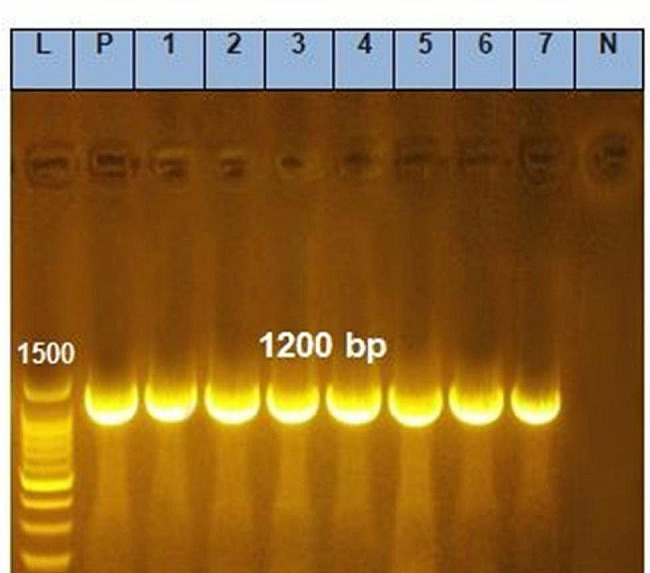
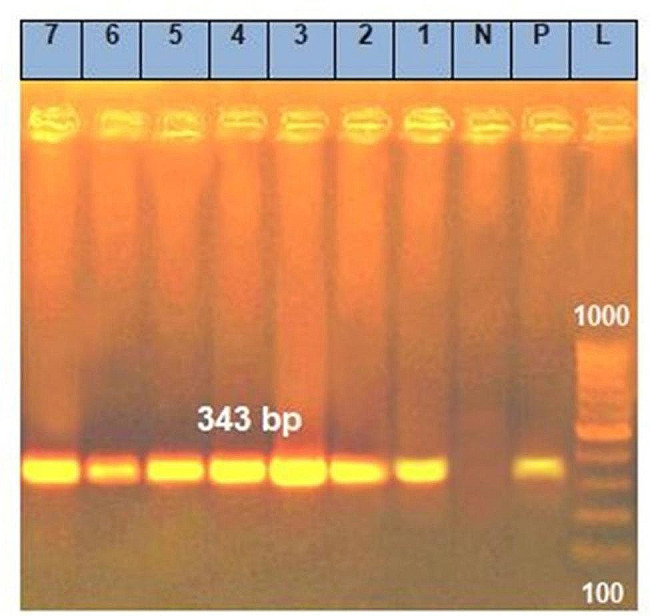
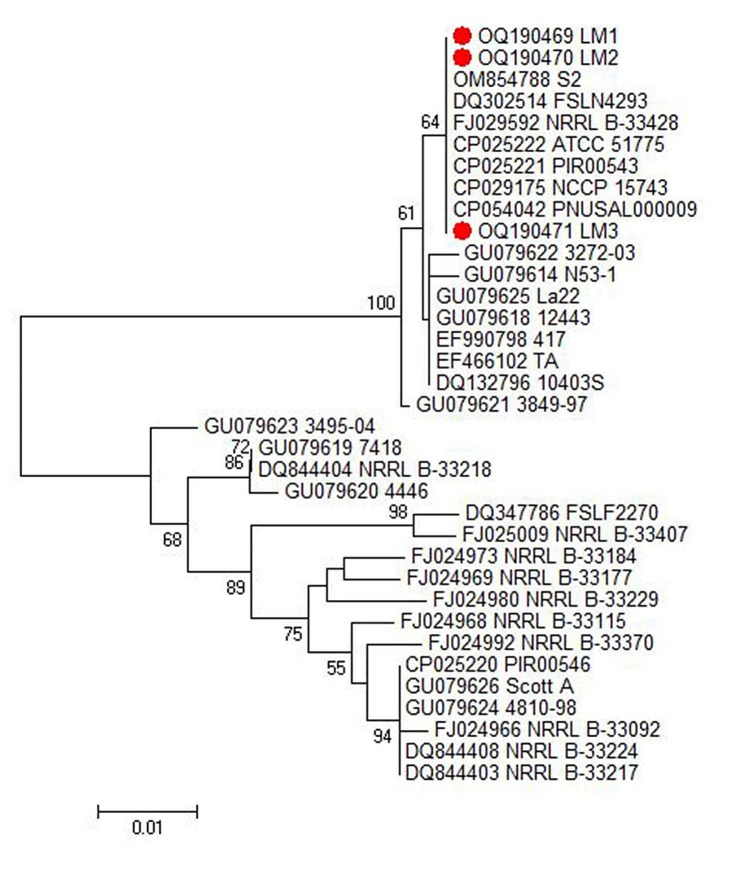
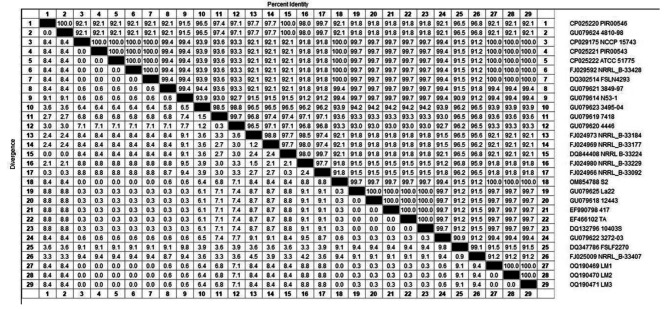
Out of 2097 examined samples, the prevalence of L. monocytogenes was 13.4% in animals; the prevalence was 9.2%, 2.4%, 25.4%, 4%, 42.4%, and 6.4% in cattle faeces, cattle milk, sheep faeces, sheep milk, goat faeces, and goat milk, respectively. However, the prevalence of L. monocytogenes was 8.3% in human samples. Both animal and human isolates showed 100% resistance to trimethoprim-sulfamethoxazole, and the isolates showed the highest sensitivity to flumequine (100%), amikacin (99.2%), gentamicin (97.6%), and levofloxacin (94.6%). Multidrug resistance (MDR) was detected in 86.9% of the tested isolates. The 16 S rRNA and inlB genes were detected in 100% of the randomly selected L. monocytogenes isolates. Phylogenetic analysis of three isolates based on the inlB gene showed 100% identity between faecal, milk and human stool isolates.
Faeces and milk are major sources of listeriosis, and the high degree of genetic similarity between animal and human isolates suggests the possibility of zoonotic circulation. The high prevalence of MDR L. monocytogenes in both animal and human samples could negatively impact the success of prevention and treatments for animal and human diseases, thereby imposing serious risks to public health.
李斯特菌病对动物和人类都是全球性的健康威胁,特别是在发展中国家。本研究旨在从粪便、环境样本以及牛、绵羊和山羊奶以及人类粪便中分离李斯特菌单核细胞增生李斯特菌,以研究其在埃及新河谷和贝尼苏韦夫省的分子特征和抗生素敏感性。使用传统的培养和生化方法进行李斯特菌单核细胞增生李斯特菌的分离和鉴定,然后进行药敏试验,对一些分离株进行属确认,并通过 PCR 检测和测序 InlB 基因。
在检查的 2097 个样本中,动物中李斯特菌单核细胞增生李斯特菌的流行率为 13.4%;牛粪便、牛牛奶、绵羊粪便、绵羊牛奶、山羊粪便和山羊牛奶中的流行率分别为 9.2%、2.4%、25.4%、4%、42.4%和 6.4%。然而,人类样本中李斯特菌单核细胞增生李斯特菌的流行率为 8.3%。动物和人类分离株均对甲氧苄啶-磺胺甲恶唑 100%耐药,对氟喹诺酮类(100%)、阿米卡星(99.2%)、庆大霉素(97.6%)和左氧氟沙星(94.6%)的敏感性最高。检测到 86.9%的测试分离株为多药耐药(MDR)。随机选择的 100%李斯特菌单核细胞增生李斯特菌分离株均检测到 16S rRNA 和 inlB 基因。基于 inlB 基因的 3 个分离株的系统发育分析显示,粪便、牛奶和人类粪便分离株之间完全一致。
粪便和牛奶是李斯特菌病的主要来源,动物和人类分离株之间存在高度的遗传相似性,表明存在人畜共患循环的可能性。动物和人类样本中 MDR 李斯特菌的高流行率可能会对动物和人类疾病的预防和治疗的成功产生负面影响,从而对公共健康造成严重威胁。