Department of Dermatology and Venereology, the Second Affiliated Hospital of Anhui Medical University, Hefei, China.
The First Clinical College of Anhui Medical University, Hefei, China.
Skin Res Technol. 2024 Jul;30(7):e13850. doi: 10.1111/srt.13850.
Current treatment options for Malassezia folliculitis (MF) are limited. Recent research has demonstrated the inhibitory effect of cold atmospheric plasma (CAP) on the growth of Malassezia pachydermatis in vitro, suggesting CAP as a potential therapeutic approach for managing MF.
The objective of our study is to assess the in vitro antifungal susceptibility of Malassezia yeasts to CAP. Additionally, we aim to evaluate the efficacy and tolerability of CAP in treating patients with MF.
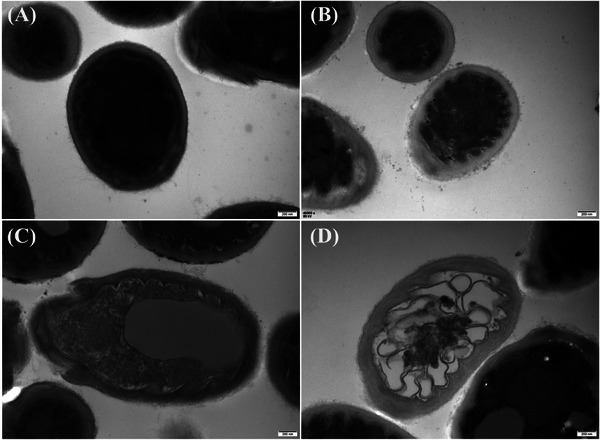
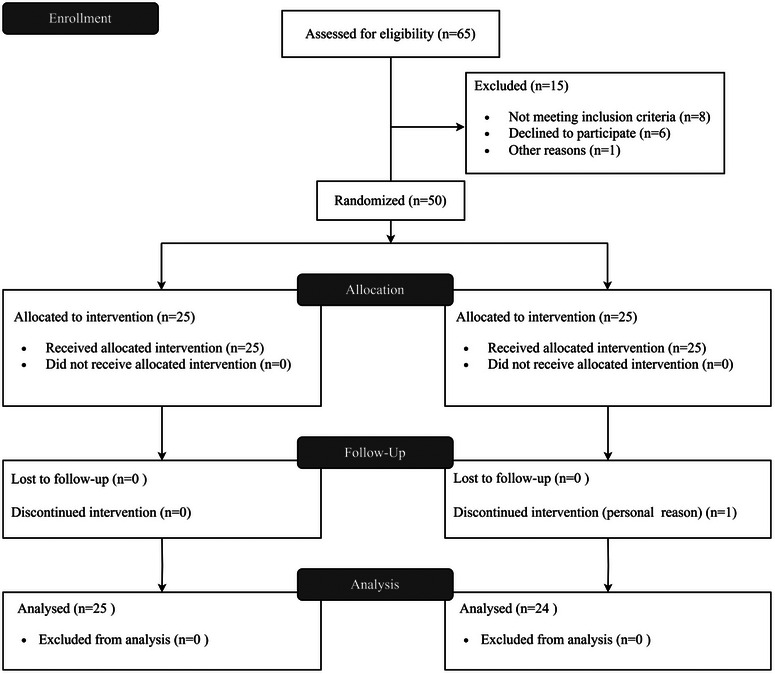
We initially studied the antifungal effect of CAP on planktonic and biofilm forms of Malassezia yeasts, using well-established techniques such as zone of inhibition, transmission electron microscopy, colony count assay and 2,3-bis(2-methoxy-4-nitro-5-sulfophenyl)-2H-tetrazolium-5-carboxanilide salt assay. Subsequently, a randomized (1:1 ratio), active comparator-controlled, observer-blind study was conducted comparing daily CAP therapy versus itraconazole 200 mg/day for 2 weeks in 50 patients with MF. Efficacy outcomes were measured by success rate, negative microscopy rate and changes in Dermatology Life Quality Index (DLQI) and Global Aesthetic Improvement Scale (GAIS) scores. Safety was assessed by monitoring adverse events (AEs) and local tolerability.
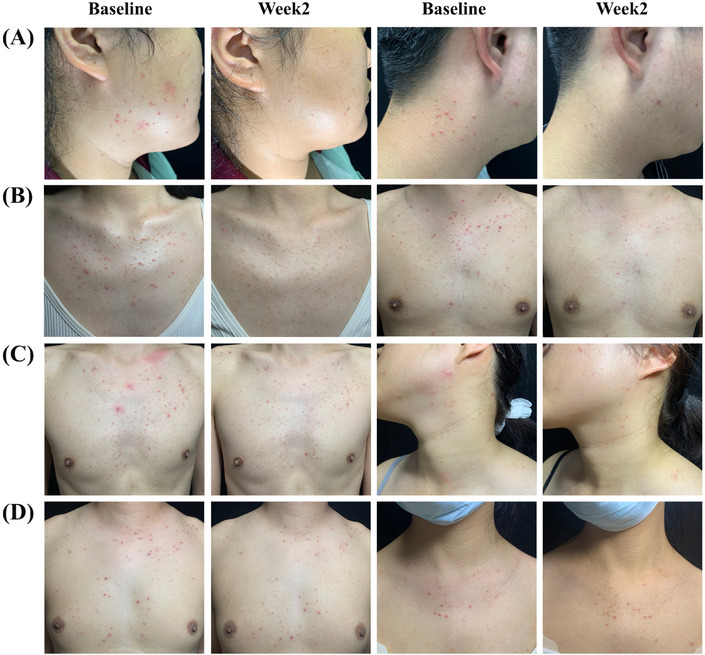
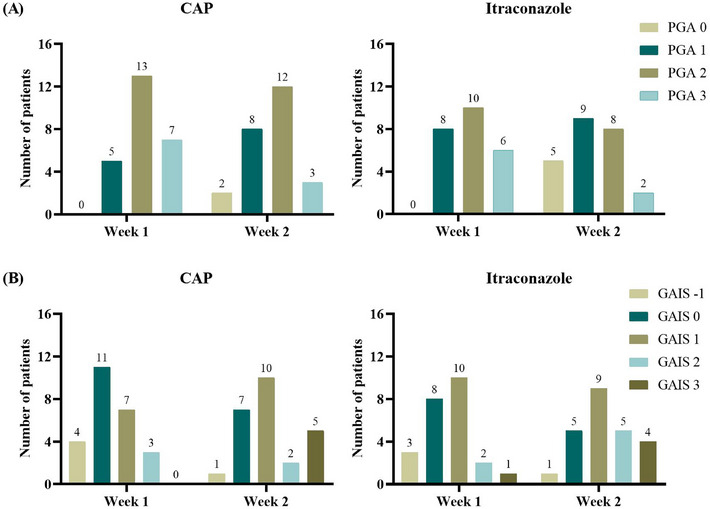
In laboratory investigations, CAP time-dependently inhibited the growth of Malassezia yeasts in both planktonic and biofilm forms. Forty-nine patients completed the clinical study. At week 2, success was achieved by 40.0% of subjects in the CAP group versus 58.3% in the itraconazole group (p = 0.199). The negative direct microscopy rates of follicular samples were 56.0% in the CAP group versus 66.7% in the itraconazole group (p = 0.444). No significant differences were found in the proportion of subjects achieving DLQI scores of 0/1 (p = 0.456) or in the GAIS responder rates (p = 0.588) between the two groups. Three patients in the CAP group and one patient in the itraconazole group reported mild AEs.
CAP demonstrated significant antifungal activity against Malassezia yeasts in vitro and exhibited comparable efficacy to itraconazole in treating MF patients. Without the associated adverse effects of oral antifungal drugs, CAP can be considered a promising and safe treatment modality for MF.
目前治疗马拉色菌毛囊炎(MF)的方法有限。最近的研究表明,冷等离子体(CAP)对体外糠秕马拉色菌的生长具有抑制作用,提示 CAP 可能是治疗 MF 的一种潜在方法。
本研究旨在评估 CAP 对马拉色菌属酵母菌的体外抗真菌敏感性。此外,我们还旨在评估 CAP 治疗 MF 患者的疗效和耐受性。
我们首先使用抑菌圈、透射电子显微镜、菌落计数和 2,3-双(2-甲氧基-4-硝基-5-磺苯基)-2H-四唑-5-羧基苯胺盐测定法等成熟技术研究了 CAP 对浮游和生物膜形式的马拉色菌属酵母菌的抗真菌作用。随后,我们进行了一项随机(1:1 比例)、阳性对照药物对照、观察者盲法研究,比较了 50 例 MF 患者每日 CAP 治疗与伊曲康唑 200mg/天治疗 2 周的疗效。通过成功率、阴性显微镜率以及皮肤病生活质量指数(DLQI)和整体美学改善量表(GAIS)评分的变化来评估疗效。通过监测不良反应(AE)和局部耐受性来评估安全性。
在实验室研究中,CAP 时间依赖性地抑制了浮游和生物膜形式的马拉色菌属酵母菌的生长。49 例患者完成了临床研究。第 2 周时,CAP 组的成功率为 40.0%,伊曲康唑组为 58.3%(p=0.199)。CAP 组的毛囊样本直接阴性显微镜率为 56.0%,伊曲康唑组为 66.7%(p=0.444)。两组患者中达到 DLQI 评分 0/1 的比例(p=0.456)或 GAIS 应答率(p=0.588)均无显著差异。CAP 组有 3 例患者和伊曲康唑组有 1 例患者报告了轻度 AE。
CAP 对体外马拉色菌属酵母菌具有显著的抗真菌活性,并且在治疗 MF 患者方面与伊曲康唑具有相当的疗效。由于没有口服抗真菌药物的相关不良反应,CAP 可被视为 MF 的一种有前途且安全的治疗方法。