Janssen Daalen Jules M, van den Bergh Robin, Prins Eva M, Moghadam Mahshid Sadat Chenarani, van den Heuvel Rudie, Veen Jeroen, Mathur Soania, Meijerink Hannie, Mirelman Anat, Darweesh Sirwan K L, Evers Luc J W, Bloem Bastiaan R
Radboud university medical center, Donders Institute for Brain, Cognition and Behaviour, Department of Neurology, Center of Expertise for Parkinson & Movement Disorders, Nijmegen, The Netherlands.
HAN University of Applied Sciences, School of Engineering and Automotive, Health Concept Lab, Arnhem, The Netherlands.
NPJ Digit Med. 2024 Jul 11;7(1):186. doi: 10.1038/s41746-024-01144-2.
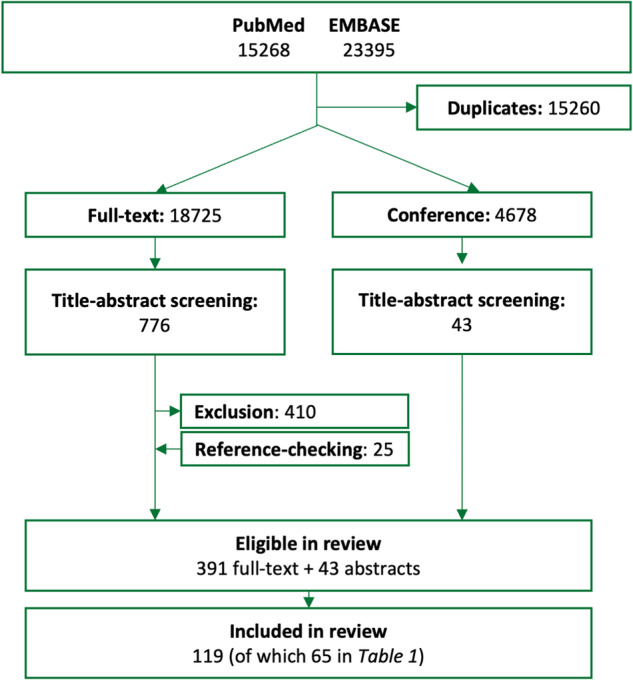
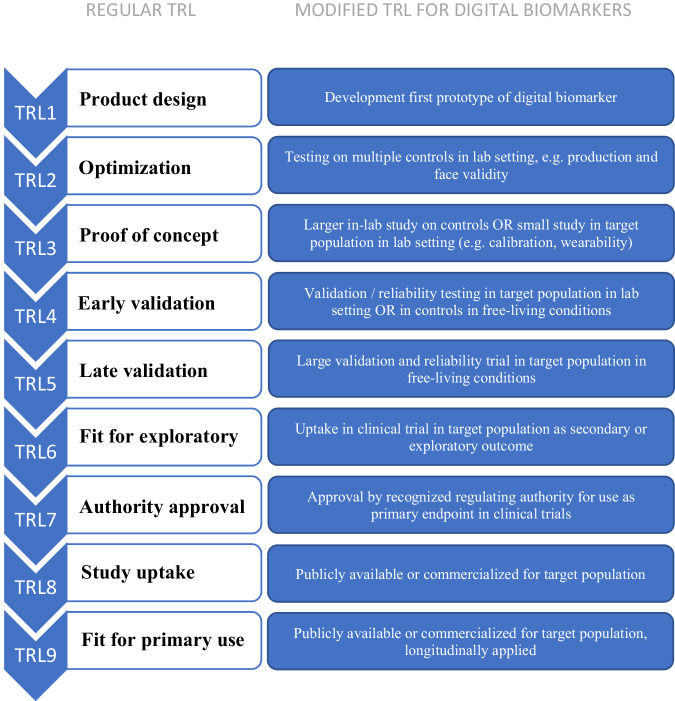
Digital biomarkers that remotely monitor symptoms have the potential to revolutionize outcome assessments in future disease-modifying trials in Parkinson's disease (PD), by allowing objective and recurrent measurement of symptoms and signs collected in the participant's own living environment. This biomarker field is developing rapidly for assessing the motor features of PD, but the non-motor domain lags behind. Here, we systematically review and assess digital biomarkers under development for measuring non-motor symptoms of PD. We also consider relevant developments outside the PD field. We focus on technological readiness level and evaluate whether the identified digital non-motor biomarkers have potential for measuring disease progression, covering the spectrum from prodromal to advanced disease stages. Furthermore, we provide perspectives for future deployment of these biomarkers in trials. We found that various wearables show high promise for measuring autonomic function, constipation and sleep characteristics, including REM sleep behavior disorder. Biomarkers for neuropsychiatric symptoms are less well-developed, but show increasing accuracy in non-PD populations. Most biomarkers have not been validated for specific use in PD, and their sensitivity to capture disease progression remains untested for prodromal PD where the need for digital progression biomarkers is greatest. External validation in real-world environments and large longitudinal cohorts remains necessary for integrating non-motor biomarkers into research, and ultimately also into daily clinical practice.
能够远程监测症状的数字生物标志物,有望通过在参与者自身生活环境中对症状和体征进行客观且反复的测量,给未来帕金森病(PD)疾病修饰治疗试验中的疗效评估带来变革。这个生物标志物领域在评估PD运动特征方面发展迅速,但在非运动领域却滞后了。在此,我们系统回顾并评估正在研发的用于测量PD非运动症状的数字生物标志物。我们还会考虑PD领域之外的相关进展。我们聚焦于技术就绪水平,并评估所确定的数字非运动生物标志物是否有潜力测量疾病进展,涵盖从疾病前驱期到晚期的各个阶段。此外我们还为这些生物标志物未来在试验中的应用提供了展望。我们发现,各种可穿戴设备在测量自主神经功能、便秘和睡眠特征(包括快速眼动睡眠行为障碍)方面显示出很高的前景。用于神经精神症状的生物标志物发展程度较低,但在非PD人群中的准确性不断提高。大多数生物标志物尚未针对在PD中的特定用途进行验证,对于前驱期PD(对数字进展生物标志物需求最大的阶段),其捕捉疾病进展的敏感性仍未得到测试。要将非运动生物标志物纳入研究,并最终纳入日常临床实践,在现实环境和大型纵向队列中进行外部验证仍然是必要的。