Hou Xu, Zhang Yu Shrike, Trujillo-de Santiago Grissel, Alvarez Mario Moisés, Ribas João, Jonas Steven J, Weiss Paul S, Andrews Anne M, Aizenberg Joanna, Khademhosseini Ali
Biomaterials Innovation Research Center, Division of Engineering in Medicine, Department of Medicine, Brigham and Women's Hospital, Harvard Medical School, Cambridge, Massachusetts 02139, USA.
Harvard-MIT Division of Health Sciences and Technology, Cambridge, Massachusetts 02139, USA.
Nat Rev Mater. 2017 May;2(5). doi: 10.1038/natrevmats.2017.16. Epub 2017 Apr 20.
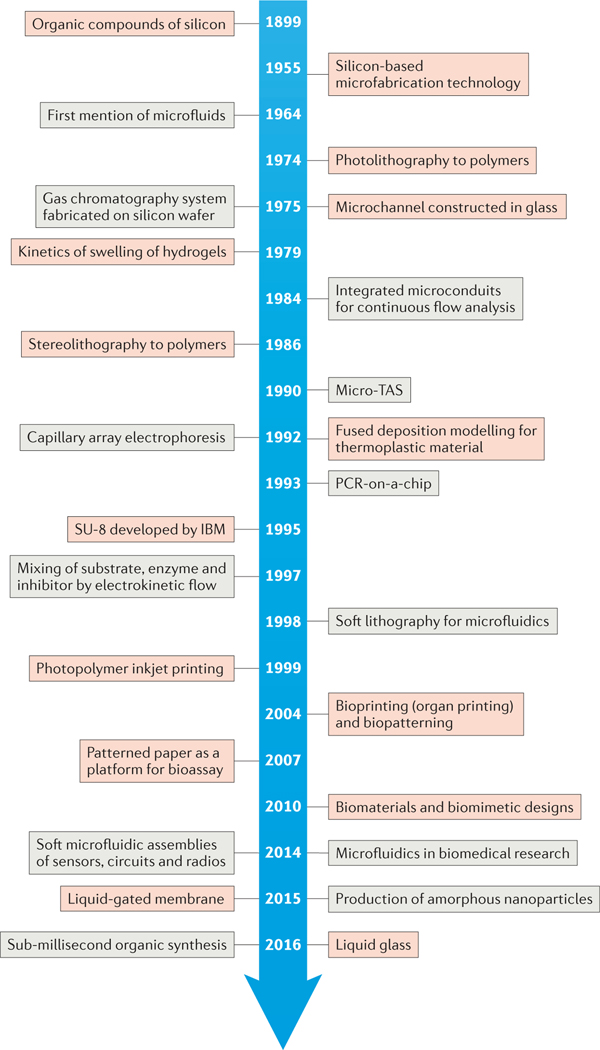
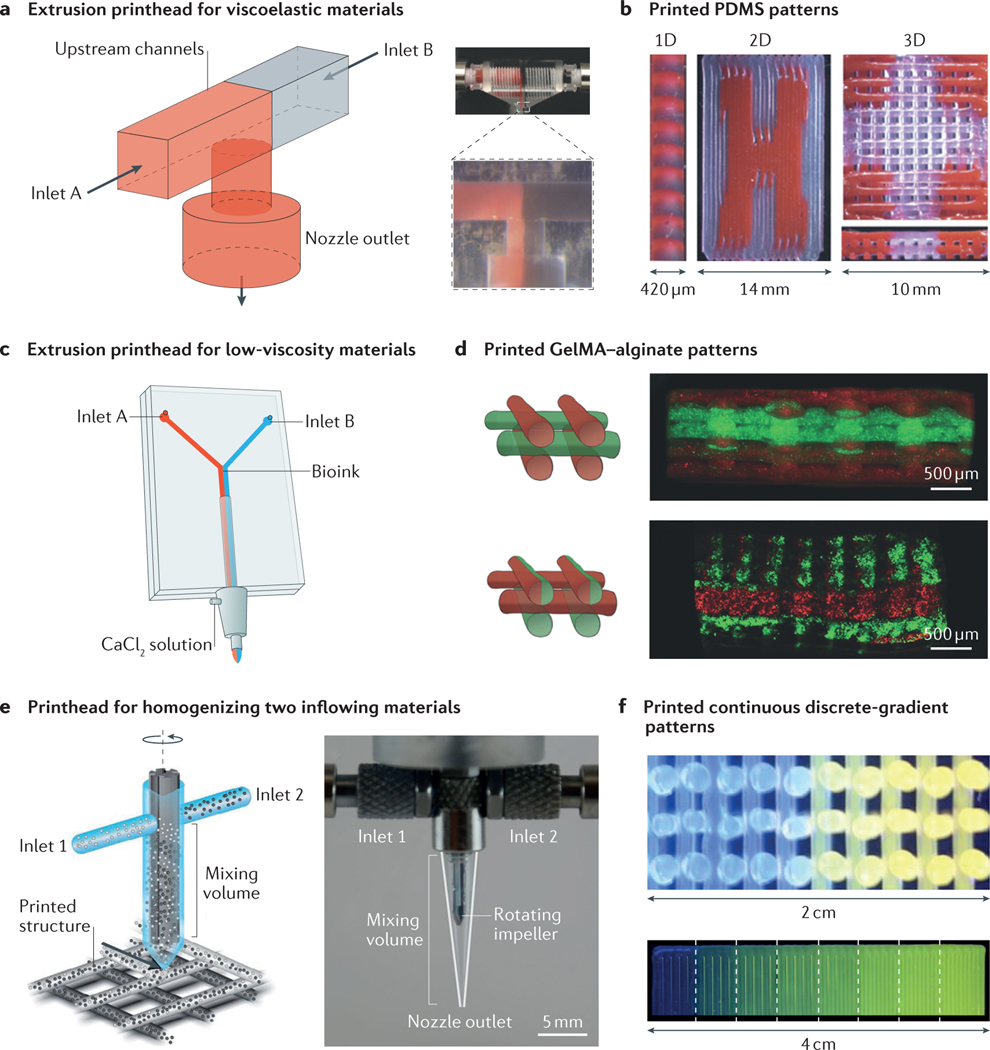
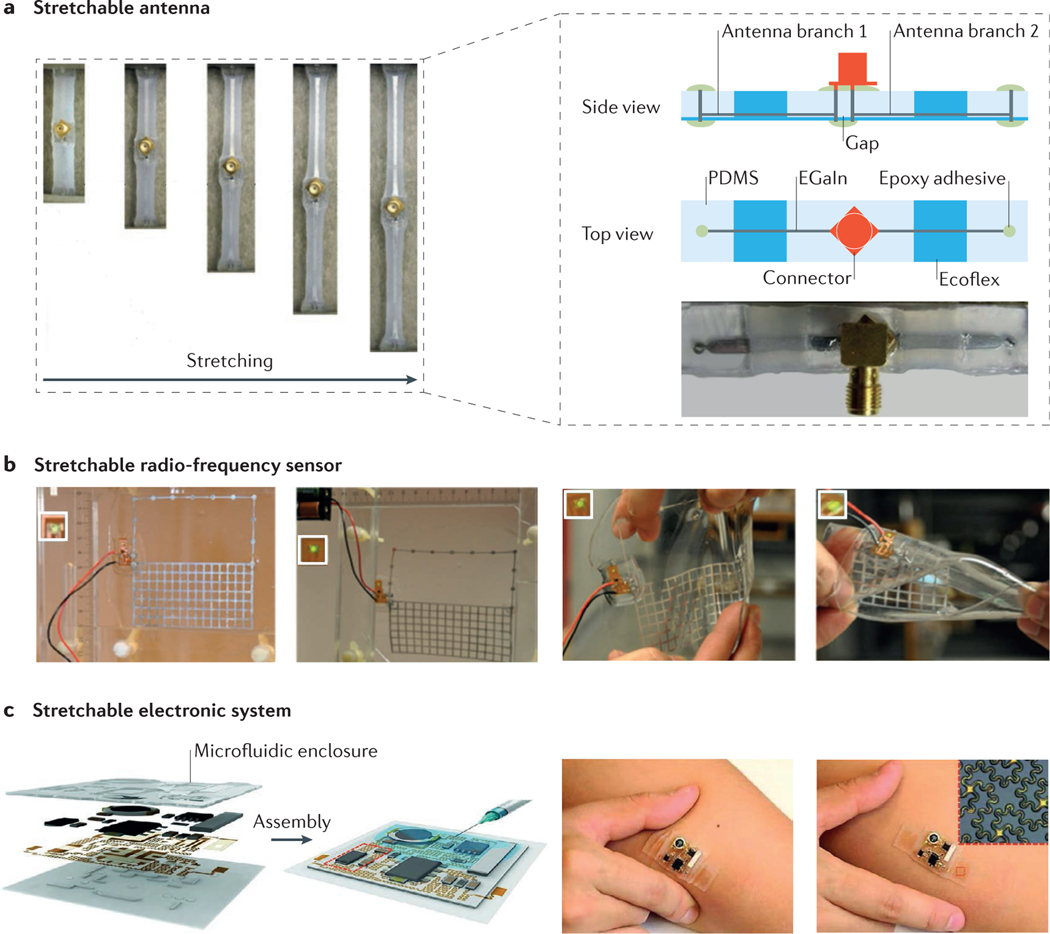
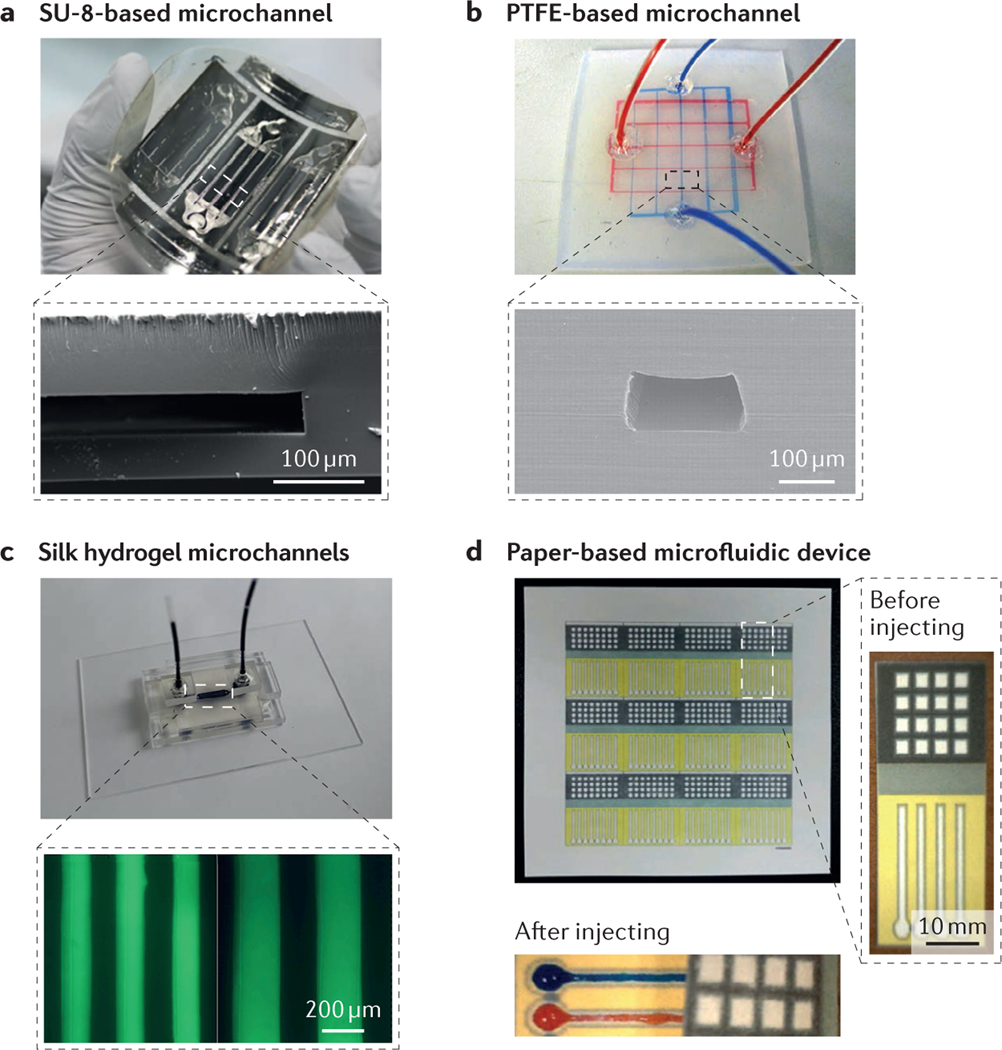
Developments in the field of microfluidics have triggered technological revolutions in many disciplines, including chemical synthesis, electronics, diagnostics, single-cell analysis, micro- and nanofabrication, and pharmaceutics. In many of these areas, rapid growth is driven by the increasing synergy between fundamental materials development and new microfluidic capabilities. In this Review, we critically evaluate both how recent advances in materials fabrication have expanded the frontiers of microfluidic platforms and how the improved microfluidic capabilities are, in turn, furthering materials design. We discuss how various inorganic and organic materials enable the fabrication of systems with advanced mechanical, optical, chemical, electrical and biointerfacial properties - in particular, when these materials are combined into new hybrids and modular configurations. The increasing sophistication of microfluidic techniques has also expanded the range of resources available for the fabrication of new materials, including particles and fibres with specific functionalities, 3D (bio)printed composites and organoids. Together, these advances lead to complex, multifunctional systems, which have many interesting potential applications, especially in the biomedical and bioengineering domains. Future exploration of the interactions between materials science and microfluidics will continue to enrich the diversity of applications across engineering as well as the physical and biomedical sciences.
微流控领域的发展引发了许多学科的技术革命,包括化学合成、电子学、诊断学、单细胞分析、微纳制造和制药学。在这些领域中的许多方面,快速发展是由基础材料开发与新的微流控能力之间日益增强的协同作用所驱动的。在本综述中,我们批判性地评估了材料制造方面的最新进展如何拓展了微流控平台的前沿领域,以及改进后的微流控能力又是如何反过来推动材料设计的。我们讨论了各种无机和有机材料如何实现具有先进机械、光学、化学、电学和生物界面特性的系统的制造,特别是当这些材料被组合成新的复合材料和模块化配置时。微流控技术日益复杂,也扩大了可用于制造新材料的资源范围,包括具有特定功能的颗粒和纤维、3D(生物)打印复合材料和类器官。这些进展共同促成了复杂的多功能系统,它们具有许多有趣的潜在应用,尤其是在生物医学和生物工程领域。材料科学与微流控之间相互作用的未来探索将继续丰富工程以及物理和生物医学科学领域的应用多样性。