Leung Chit K, Bernal Joshua D K, Yu Angus P, Recchia Francesco, Tam Bjorn T, Fong Daniel Y T, Chan Derwin K C, Ngai Heidi H, Lee Chi H, Yung Patrick S H, Wong Stephen H S, Gibala Martin, Siu Parco M
Division of Kinesiology, School of Public Health, The University of Hong Kong, Hong Kong, China.
Department of Sport, Physical Education and Health, Faculty of Social Sciences, Hong Kong Baptist University, Hong Kong, China.
J Exerc Sci Fit. 2024 Oct;22(4):329-340. doi: 10.1016/j.jesf.2024.05.001. Epub 2024 Jun 14.
This study aims to examine the comparative effects of 75 min of volume-matched once-weekly and thrice-weekly high-intensity interval training (HIIT) on body adiposity in adults with central obesity.
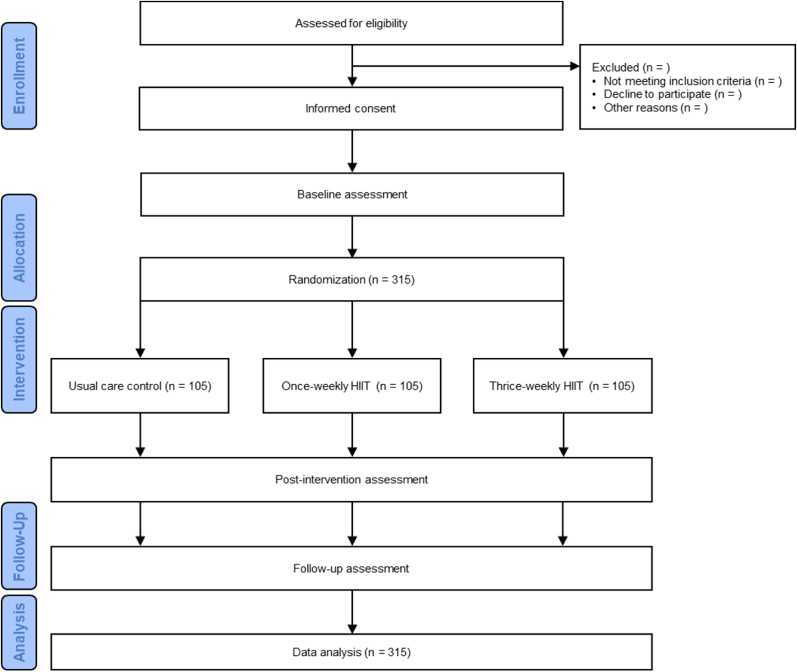
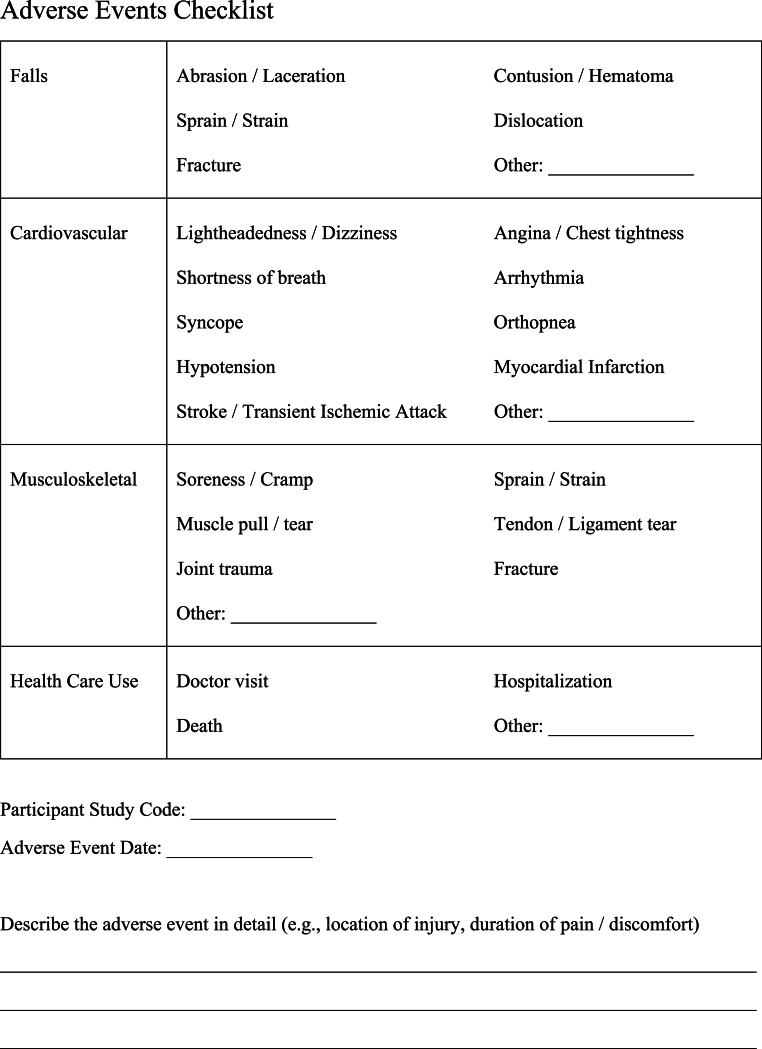
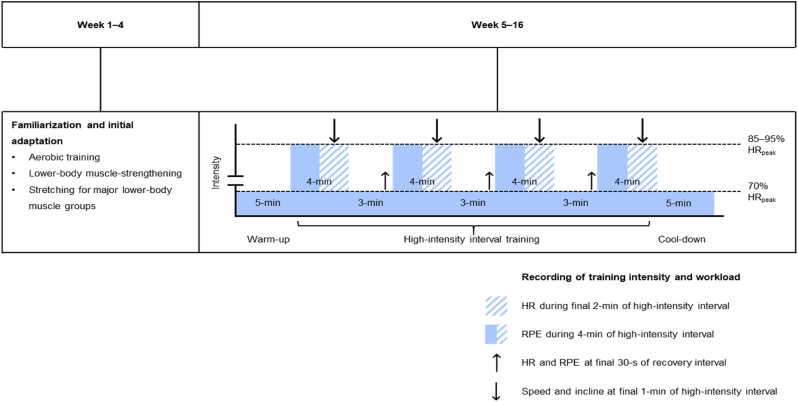
This assessor-blinded, three-arm, randomized controlled trial will recruit 315 physically inactive adults with central obesity (aged ≥18 years, body mass index ≥23, waist circumference ≥90 cm for men and ≥80 cm for women). Participants will be randomly allocated to the once-weekly HIIT, thrice-weekly HIIT or usual care control group. Participants in the HIIT groups will receive weekly exercise training sessions for 16 weeks, prescribed either once or three times weekly. Each HIIT session will consist of a supervised program of four 4-min high-intensity intervals at 85%-95% peak heart rate (HR) interspersed with 3-min active recovery intervals at 50%-70% HR. Participants in the once-weekly HIIT group will perform the 25-min HIIT bout three times with a break between each 25-min HIIT bout. The usual care control group will receive bi-weekly health education classes. The outcome assessments will be conducted at baseline, 16 weeks (post-intervention) and 32 weeks (follow-up). The primary outcome will be total body adiposity assessed by dual-energy X-ray absorptiometry (DXA). The secondary outcome measures will include markers of cardiovascular and metabolic health (body composition, cardiorespiratory fitness, blood pressure, and blood lipids), mental health, cognitive performance, health-related quality of life, sleep quality, habitual physical activity, diet, medication, adverse events and adherence to the intervention.
The findings from this study are expected to consolidate the therapeutic efficacy of HIIT for the management of central obesity and inform the comparative compliance, feasibility and suitability of once-weekly and thrice-weekly HIIT as exercise strategies to manage obesity. In particular, the present study is expected to provide a novel perspective on the utility of low-frequency HIIT (i.e., once-weekly) as an effective and sustainable exercise strategy to tackle the obesity pandemic. The anticipated findings will hold substantial translational value by informing public health policies and enhancing exercise compliance in the physically inactive obese population.
ClinicalTrials.gov (NCT04887454).
本研究旨在探讨每周一次、每次75分钟与每周三次、每次75分钟的高强度间歇训练(HIIT)对中心性肥胖成年人身体肥胖程度的比较效果。
本评估者盲法、三臂、随机对照试验将招募315名身体活动不足的中心性肥胖成年人(年龄≥18岁,体重指数≥23,男性腰围≥90厘米,女性腰围≥80厘米)。参与者将被随机分配到每周一次HIIT组、每周三次HIIT组或常规护理对照组。HIIT组的参与者将接受为期16周的每周一次或三次的运动训练课程。每次HIIT课程将包括一个有监督的项目,即四个4分钟的高强度间歇,心率达到峰值心率(HR)的85%-95%,其间穿插3分钟的主动恢复间歇,心率为50%-70%HR。每周一次HIIT组的参与者将进行三次25分钟的HIIT训练,每次25分钟的HIIT训练之间有休息时间。常规护理对照组将接受每两周一次的健康教育课程。结果评估将在基线、16周(干预后)和32周(随访)进行。主要结果将是通过双能X线吸收法(DXA)评估的全身肥胖程度。次要结果指标将包括心血管和代谢健康指标(身体成分、心肺适能、血压和血脂)、心理健康、认知表现、健康相关生活质量、睡眠质量、习惯性身体活动、饮食、药物治疗、不良事件以及对干预的依从性。
本研究的结果有望巩固HIIT对中心性肥胖管理的治疗效果,并为每周一次和每周三次HIIT作为管理肥胖的运动策略的比较依从性、可行性和适用性提供信息。特别是,本研究有望为低频HIIT(即每周一次)作为一种有效且可持续的运动策略来应对肥胖流行提供新的视角。预期的研究结果将通过为公共卫生政策提供信息并提高身体活动不足的肥胖人群的运动依从性而具有重大的转化价值。
ClinicalTrials.gov(NCT04887454)。