Department of Endocrinology and Diabetology, University Medical Center Maribor, 2000 Maribor, Slovenia.
Faculty of Medicine, University of Maribor, 2000 Maribor, Slovenia.
Int J Mol Sci. 2024 Jul 4;25(13):7342. doi: 10.3390/ijms25137342.
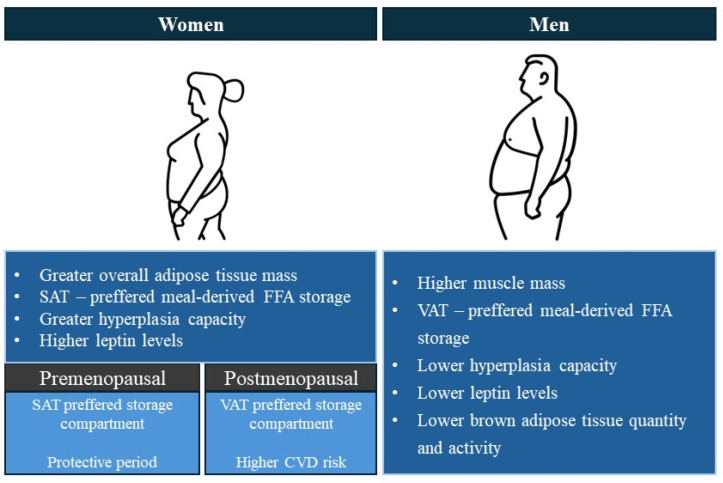
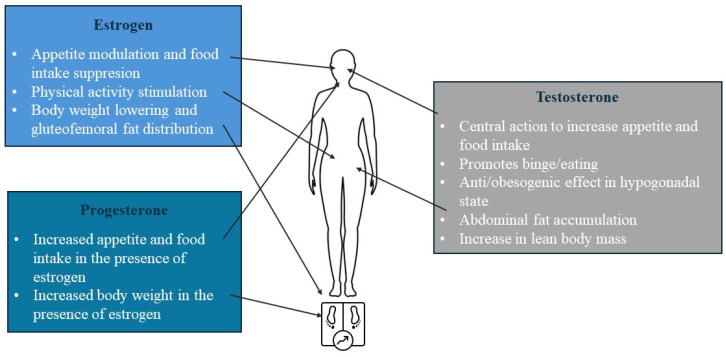
Obesity, primarily characterized by excessive fat accumulation, is a multifactorial chronic disease with an increasing global prevalence. Despite the well-documented epidemiology and significant advances in understanding its pathophysiology and clinical implications, the impact of sex is typically overlooked in obesity research. Worldwide, women have a higher likelihood to become obese compared to men. Although women are offered weight loss interventions more often and at earlier stages than men, they are more vulnerable to psychopathology. Men, on the other hand, are less likely to pursue weight loss intervention and are more susceptible to the metabolic implications of obesity. In this narrative review, we comprehensively explored sex- and gender-specific differences in the development of obesity, focusing on a variety of biological variables, such as body composition, fat distribution and energy partitioning, the impact of sex steroid hormones and gut microbiota diversity, chromosomal and genetic variables, and behavioural and sociocultural variables influencing obesity development in men and women. Sex differences in obesity-related comorbidities and varying effectiveness of different weight loss interventions are also extensively discussed.
肥胖主要表现为脂肪过度堆积,是一种多因素的慢性疾病,其全球患病率呈上升趋势。尽管肥胖症的流行病学已得到充分证实,其病理生理学和临床意义也有了显著的研究进展,但在肥胖症研究中,性别因素通常被忽视。在全球范围内,女性肥胖的可能性高于男性。尽管女性比男性更常接受减肥干预,而且更早接受减肥干预,但她们更容易出现精神病理学问题。另一方面,男性不太可能寻求减肥干预,而且更容易受到肥胖的代谢影响。在这篇叙述性综述中,我们全面探讨了肥胖发展过程中的性别特异性差异,重点关注了多种生物学变量,如身体成分、脂肪分布和能量分配、性激素和肠道微生物多样性的影响、染色体和遗传变量,以及影响男性和女性肥胖发展的行为和社会文化变量。我们还广泛讨论了肥胖相关并发症的性别差异以及不同减肥干预措施的有效性差异。