Gandhi Utsav H, Benjamin Amit, Gajjar Shreya, Hirani Tanvi, Desai Khushboo, Suhagia Bansariben B, Ahmad Rahnuma, Sinha Susmita, Haque Mainul, Kumar Santosh
Department of Periodontology, School of Dentistry, Karnavati University, Gandhinagar, IND.
Department of Periodontology, Ahmedabad Dental College and Hospital, Gujarat University, Ahmedabad, IND.
Cureus. 2024 Jun 12;16(6):e62270. doi: 10.7759/cureus.62270. eCollection 2024 Jun.
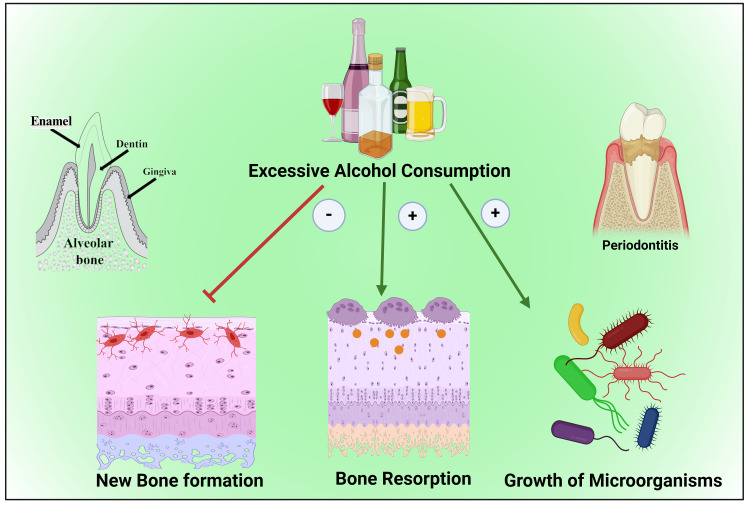
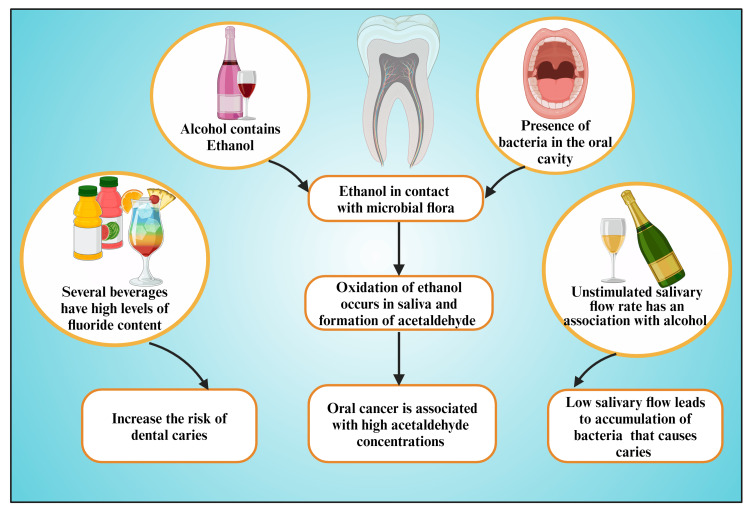
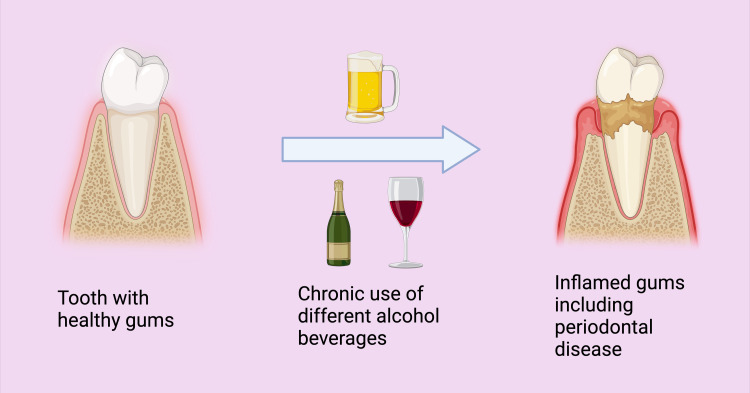
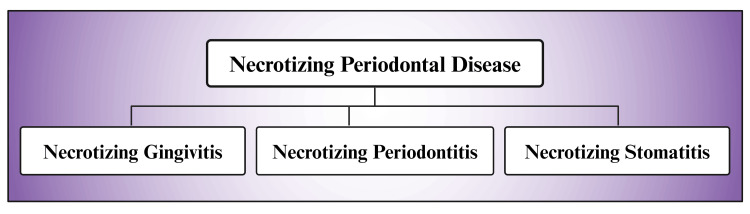
The scientific literature dealing with alcohol and alcoholic beverages revealed that these drinks possess an adverse impact on periodontal tissues. Additionally, other principal risk factors include tobacco, smoking, poor oral hygiene, etc. It has been observed that among chronic alcoholics, there are further issues, such as mental, social, and physical effects, that promote alcoholism. These people may have weak immunity for defense against pathogenic organisms and bacteria. Thus, chances of gingival bleeding, swollen gums, bad breath, and increased bone loss are there. Different alcoholic beverages in the market cause less salivation; these beverages contain sugars that promote acid production in the oral cavity by pathogens that demineralize the enamel and damage gum and teeth. This chronic alcohol consumption can progress into different types of oral disorders, including cancer, halitosis, and caries, and is also associated with tobacco and smoking. Chronic alcohol consumption can cause alteration of the oral microbiome and increase oral pathogens, which lead to periodontal disease and an environment of inflammation created in the body due to malnutrition, diminished immunity, altered liver condition, brain damage, and gut microbiota alteration. Heavily colored alcoholic beverages produce staining on teeth and, due to less saliva, may cause other toxic effects on the periodontium. Over-dependency on alcohol leads to necrotizing lesions such as necrotizing gingivitis, necrotizing periodontitis, and necrotizing stomatitis. These pathological impairments instigate severe damage to oral structures. Therefore, proper counseling by the attending dental surgeon and related health professionals is urgently required for the patient on the basis that the individual case needs to go away from the regular heavy consumption of alcohol.
关于酒精和酒精饮料的科学文献表明,这些饮品会对牙周组织产生不利影响。此外,其他主要风险因素包括烟草、吸烟、口腔卫生不良等。据观察,在慢性酗酒者中,还存在如精神、社会和身体影响等进一步的问题,这些问题会助长酗酒行为。这些人抵御致病生物和细菌的免疫力可能较弱。因此,存在牙龈出血、牙龈肿胀、口臭和骨质流失增加的可能性。市场上不同的酒精饮料会导致唾液分泌减少;这些饮料含有糖分,会促使口腔中的病原体产生酸,使牙釉质脱矿,损害牙龈和牙齿。长期饮酒会发展成不同类型的口腔疾病,包括癌症、口臭和龋齿,还与烟草和吸烟有关。长期饮酒会导致口腔微生物群改变,增加口腔病原体,进而引发牙周病,并因营养不良、免疫力下降、肝脏状况改变、脑损伤和肠道微生物群改变在体内营造出炎症环境。颜色较深的酒精饮料会使牙齿染色,并且由于唾液分泌减少,可能会对牙周组织产生其他毒性作用。过度依赖酒精会导致坏死性病变,如坏死性牙龈炎、坏死性牙周炎和坏死性口炎。这些病理损害会对口腔结构造成严重破坏。因此,鉴于个体情况需要戒除经常大量饮酒的习惯,主治牙科医生和相关健康专业人员迫切需要为患者提供适当的咨询。