Schoenbeck Clara M, Solsona-Berga Alba, Franks Peter J S, Frasier Kaitlin E, Trickey Jennifer S, Aguilar Catalina, Schroeder Isaac D, Širović Ana, Bograd Steven J, Gopalakrishnan Ganesh, Baumann-Pickering Simone
Scripps Institution of Oceanography University of California San Diego, La Jolla California USA.
National Oceanic and Atmospheric Administration Pacific Islands Fisheries Science Center Honolulu Hawaii USA.
Ecol Evol. 2024 Jul 14;14(7):e11708. doi: 10.1002/ece3.11708. eCollection 2024 Jul.
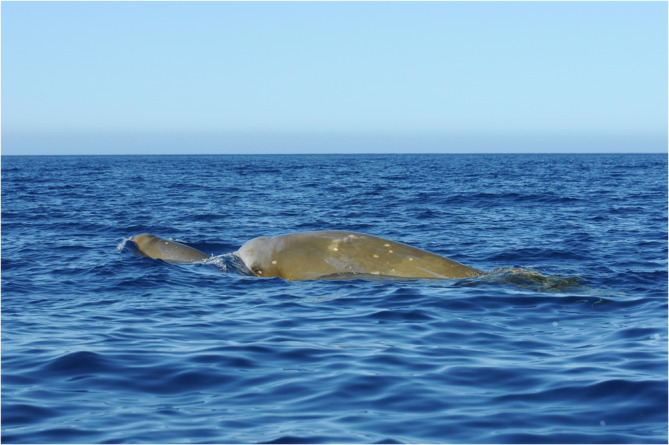
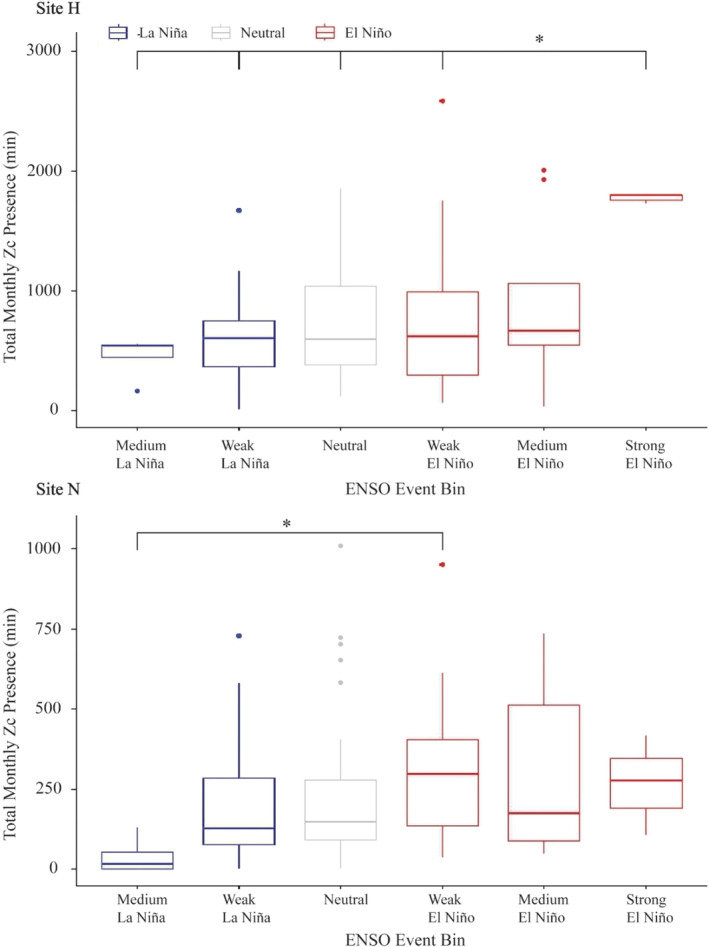
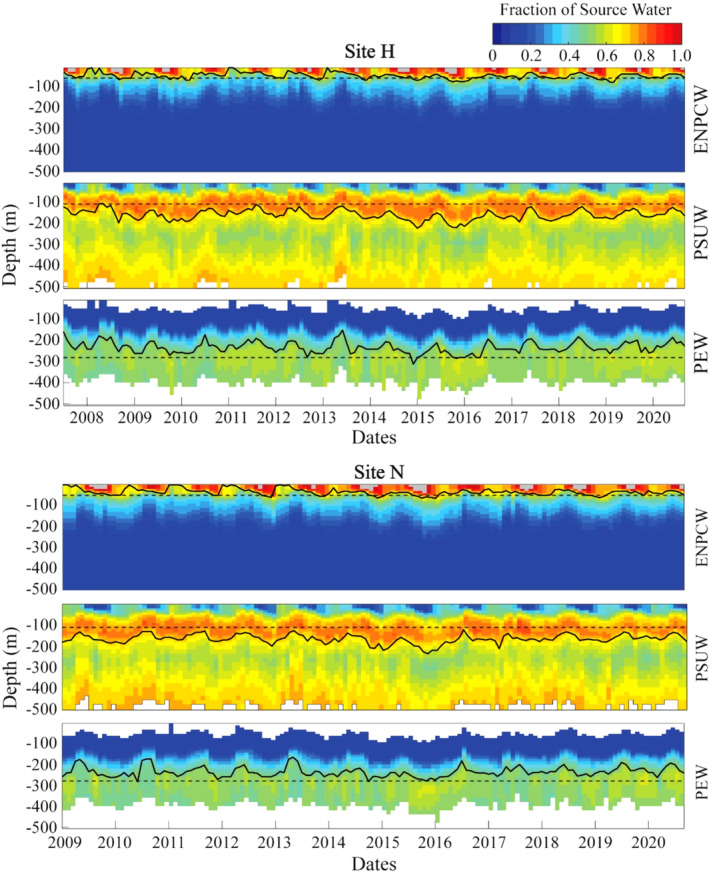
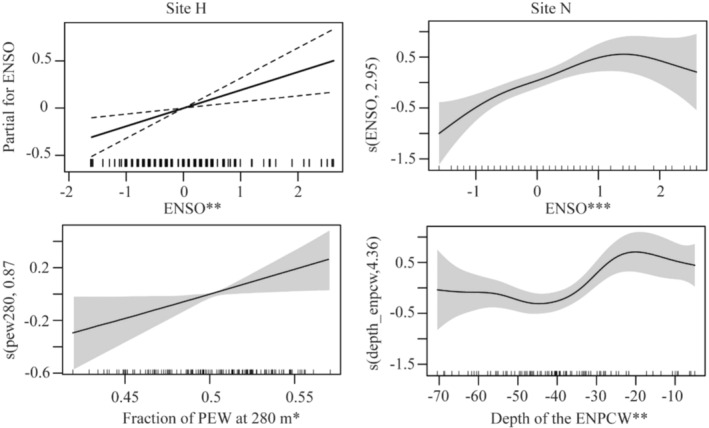
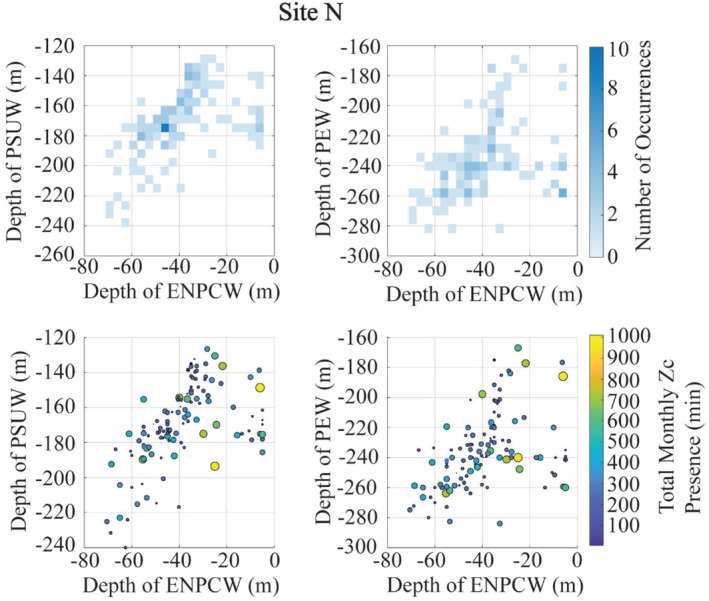
The oceanographic conditions of the Southern California Bight (SCB) dictate the distribution and abundance of prey resources and therefore the presence of mobile predators, such as goose-beaked whales (). Goose-beaked whales are deep-diving odontocetes that spend a majority of their time foraging at depth. Due to their cryptic behavior, little is known about how they respond to seasonal and interannual changes in their environment. This study utilizes passive acoustic data recorded from two sites within the SCB to explore the oceanographic conditions that goose-beaked whales appear to favor. Utilizing optimum multiparameter analysis, modeled temperature and salinity data are used to identify and quantify these source waters: Pacific Subarctic Upper Water (PSUW), Pacific Equatorial Water (PEW), and Eastern North Pacific Central Water (ENPCW). The interannual and seasonal variability in goose-beaked whale presence was related to the variability in El Niño Southern Oscillation events and the fraction and vertical distribution of the three source waters. Goose-beaked whale acoustic presence was highest during the winter and spring and decreased during the late summer and early fall. These seasonal increases occurred at times of increased fractions of PEW in the California Undercurrent and decreased fractions of ENPCW in surface waters. Interannual increases in goose-beaked whale presence occurred during El Niño events. These results establish a baseline understanding of the oceanographic characteristics that correlate with goose-beaked whale presence in the SCB. Furthering our knowledge of this elusive species is key to understanding how anthropogenic activities impact goose-beaked whales.
南加利福尼亚湾(SCB)的海洋学条件决定了猎物资源的分布和丰度,进而决定了诸如鹅喙鲸等游动性捕食者的出现。鹅喙鲸是深潜齿鲸,大部分时间都在深海觅食。由于它们的隐秘行为,人们对它们如何应对环境的季节性和年际变化知之甚少。本研究利用从SCB内两个地点记录的被动声学数据,探索鹅喙鲸似乎偏好的海洋学条件。利用最优多参数分析,通过模拟温度和盐度数据来识别和量化这些源水:太平洋亚北极上层水(PSUW)、太平洋赤道水(PEW)和东太平洋中部水(ENPCW)。鹅喙鲸出现的年际和季节变化与厄尔尼诺南方涛动事件的变化以及三种源水的比例和垂直分布有关。鹅喙鲸的声学出现率在冬季和春季最高,在夏末和初秋下降。这些季节性增加发生在加利福尼亚潜流中PEW比例增加以及表层水中ENPCW比例下降的时候。鹅喙鲸出现的年际增加发生在厄尔尼诺事件期间。这些结果建立了对与SCB中鹅喙鲸出现相关的海洋学特征的基线认识。加深我们对这种难以捉摸的物种的了解是理解人为活动如何影响鹅喙鲸的关键。