Ribeiro Laura Raquel Rios, Sans Elaine Cristina de Oliveira, Santos Ricardo Martins, Taconelli Cesar Augusto, de Farias Roberta, Molento Carla Forte Maiolino
Animal Welfare Laboratory, Department of Animal Science, Federal University of Paraná, Curitiba, Brazil.
National Animal Defense Forum, Curitiba, Brazil.
Front Vet Sci. 2024 Jul 2;11:1384802. doi: 10.3389/fvets.2024.1384802. eCollection 2024.
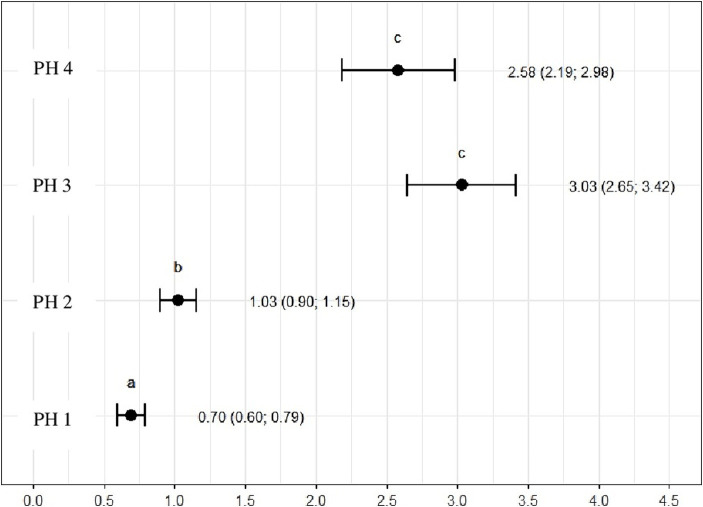
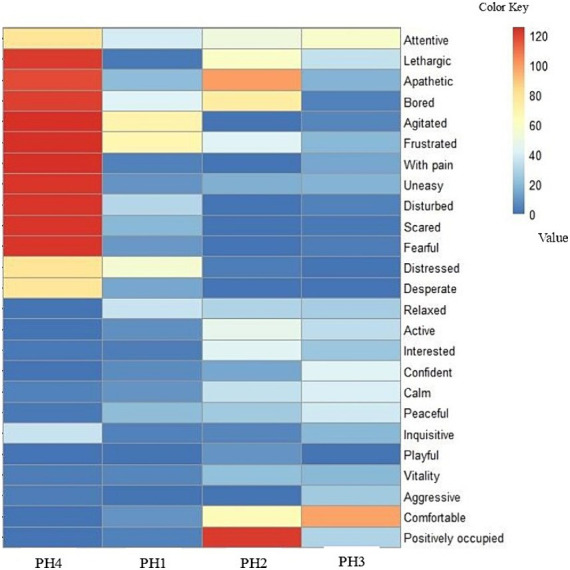
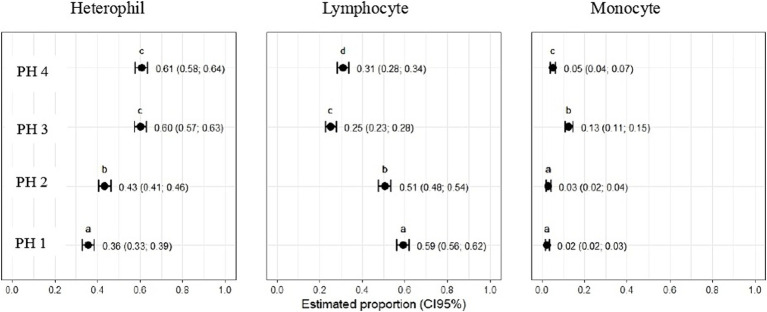
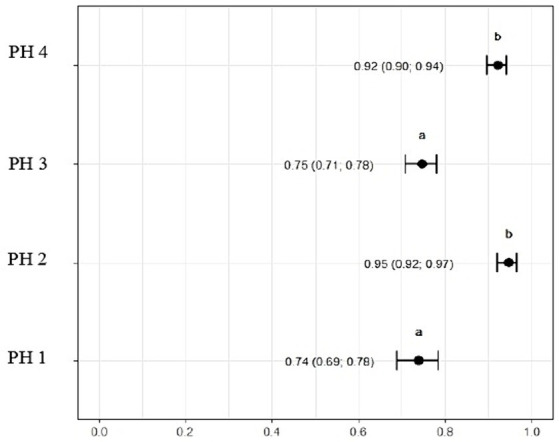
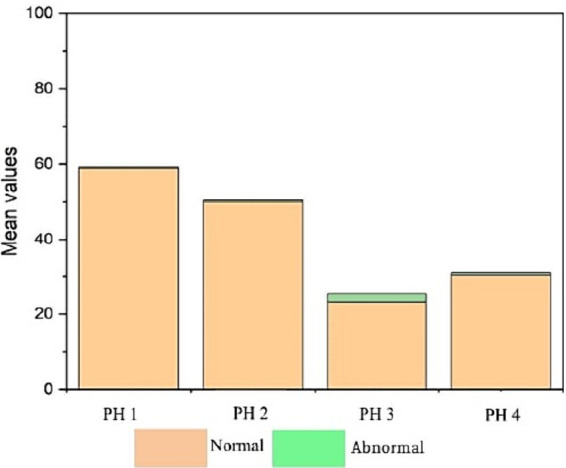
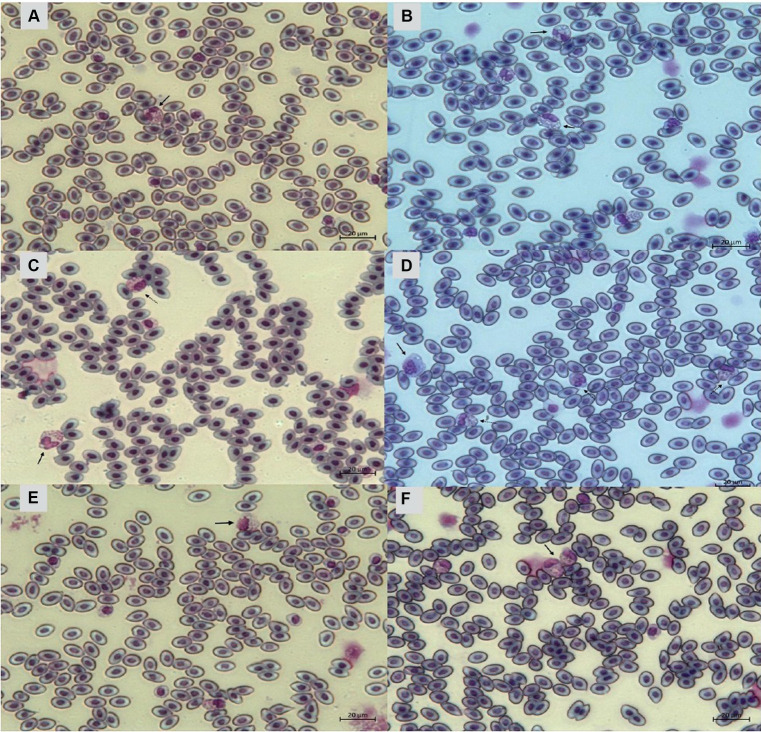
This study assessed qualitative and quantitative leukocyte evaluation as potential broiler chicken welfare indicators, contributing to the limited literature on white blood cell (WBC) morphology as a diagnostic tool for welfare. Broiler chicken welfare within four poultry houses (PH) 1 to 4, each on a different farm, was assessed using on-field indicators of affective states and health, and WBC morphology was examined. Affective states were evaluated using the Qualitative Behavior Assessment (QBA), with 25 behavioral expressions scored on a visual analogue scale (VAS) and grouped into two categories. Health indicators included assessments of lameness, footpad dermatitis, dermatitis on the breast and abdominal areas, hock burn, and feather cleaning. Blood samples were collected, differential leukocyte counts were performed, and a cell score was created for the recognition, classification, and interpretation of morphologic diversity of heterophils and lymphocytes. The heterophil to lymphocyte ratio (H/L) was also determined. Descriptive statistics and generalized linear models for binomial responses were used to analyze the results. PH4 differed from the other farms, showing a higher frequency of birds within QBA group 1 ('Attentive'to 'Desperate'), while birds in PH1, PH2, and PH3 were more frequent in QBA group 2 ('Relaxed' to 'Positively occupied'). Elevated proportions of heterophils in birds from PH4 (0.61, CI95%: 0.58; 0.64) and PH3 (0.60, CI95%: 0.57; 0.63) suggested higher stress levels and inflammatory responses. Birds in PH2 and PH4 exhibited higher frequencies of health issues such as dermatitis and lameness, and higher proportions of abnormalities in WBC number and morphology. PH3 and PH4 exhibited higher H/L ratios of 3.03 and 2.58, respectively, consistent with the on-field health and behavioral indicators. Blood samples from birds in PH2 and PH4 showed a proportion of 90% toxic change in heterophils, while in PH1 and PH3 it was 70%, indicating high levels of abnormal WBC morphology across all PHs. The findings emphasize the multifactorial nature of welfare impairments, including environmental conditions, health, and affective states. This highlights the need for indicators that reflect multiple welfare impacts, such as WBC counts and morphological alterations, which can serve as powerful tools in the complex task of assessing animal welfare.
本研究评估了定性和定量白细胞评估作为肉鸡福利指标的可能性,为关于白细胞(WBC)形态作为福利诊断工具的有限文献做出了贡献。对四个家禽舍(PH)1至4(每个位于不同农场)内的肉鸡福利进行了评估,使用了情感状态和健康的现场指标,并检查了白细胞形态。使用定性行为评估(QBA)评估情感状态,对25种行为表现按视觉模拟量表(VAS)评分,并分为两类。健康指标包括对跛行、脚垫皮炎、胸部和腹部皮炎、跗关节灼伤以及羽毛清洁的评估。采集血样,进行白细胞分类计数,并创建细胞评分以识别、分类和解释嗜异性粒细胞和淋巴细胞的形态多样性。还确定了嗜异性粒细胞与淋巴细胞比率(H/L)。使用描述性统计和二项式反应的广义线性模型分析结果。PH4与其他农场不同,在QBA第1组(“专注”至“绝望”)中的鸡只频率较高,而PH1、PH2和PH3中的鸡只在QBA第2组(“放松”至“积极活动”)中更为频繁。PH4(0.61,CI95%:0.58;0.64)和PH3(0.60,CI95%:0.57;0.63)的鸡只中嗜异性粒细胞比例升高表明压力水平和炎症反应较高。PHB2和PH4中的鸡只出现皮炎和跛行等健康问题的频率较高,白细胞数量和形态异常的比例也较高。PH3和PH4的H/L比率分别较高,为3.03和2.58,与现场健康和行为指标一致。PH2和PH4中鸡只的血样显示嗜异性粒细胞有毒性变化的比例为90%,而PH1和PH3中为70%,表明所有家禽舍中白细胞形态异常水平较高。研究结果强调了福利受损的多因素性质,包括环境条件、健康和情感状态。这突出了需要反映多种福利影响的指标,如白细胞计数和形态改变,这些指标可作为评估动物福利这一复杂任务中的有力工具。