Department of Computational Physiology, Simula Research Laboratory, Oslo, Norway.
NPJ Syst Biol Appl. 2024 Jul 23;10(1):79. doi: 10.1038/s41540-024-00406-9.
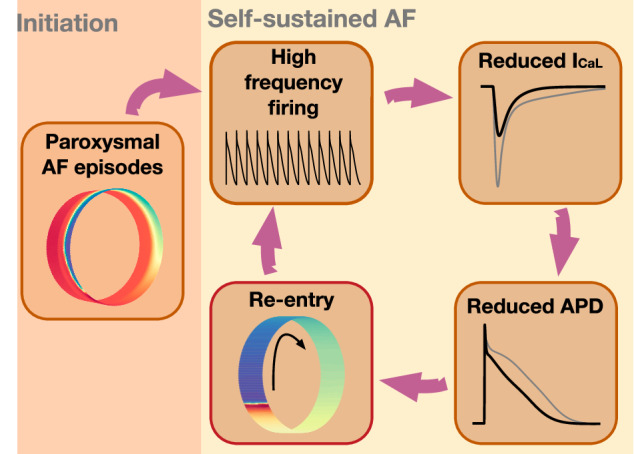
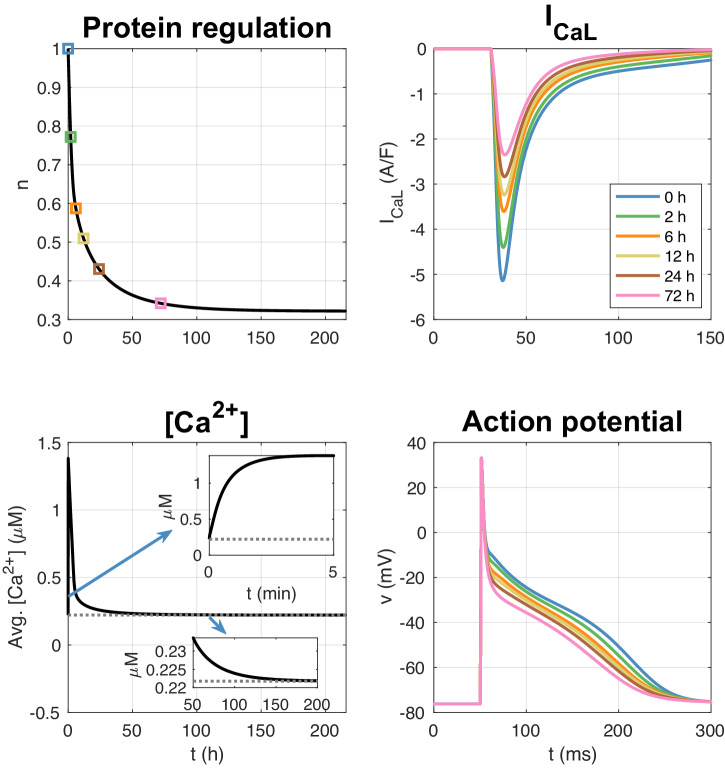
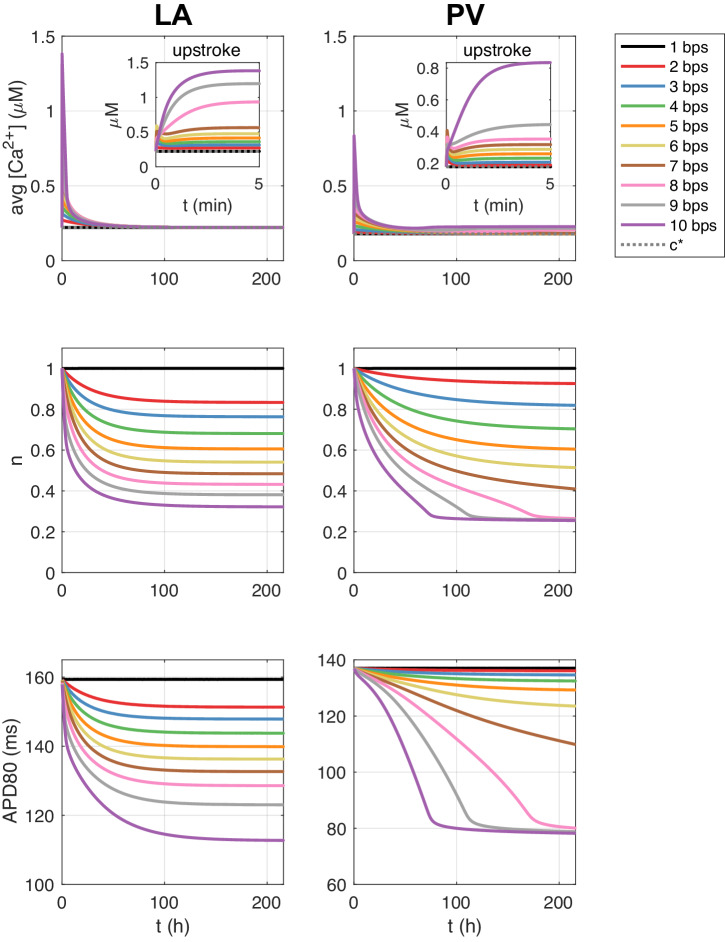
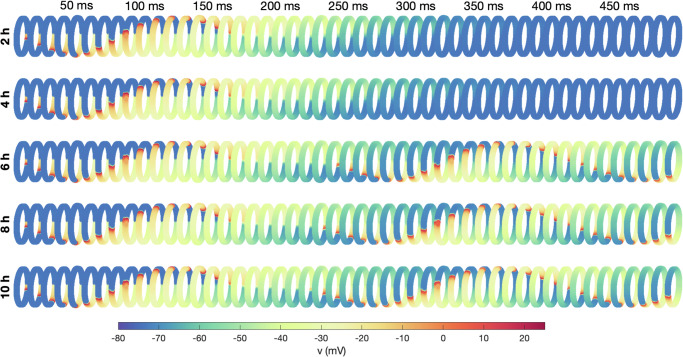
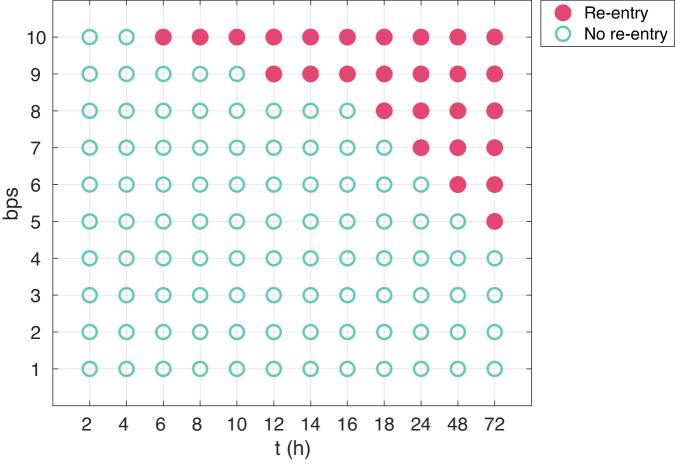
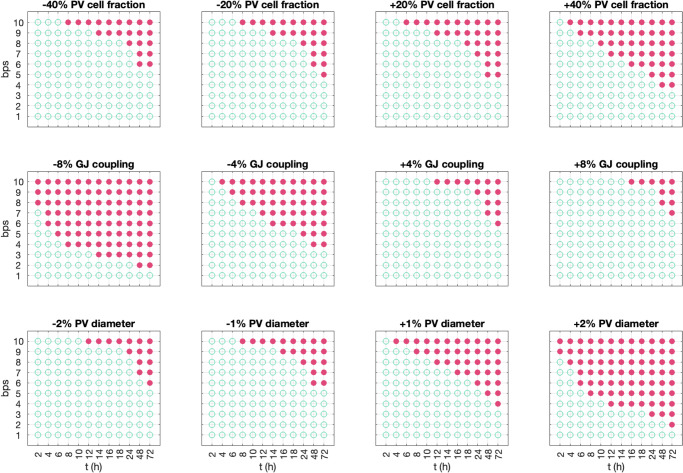
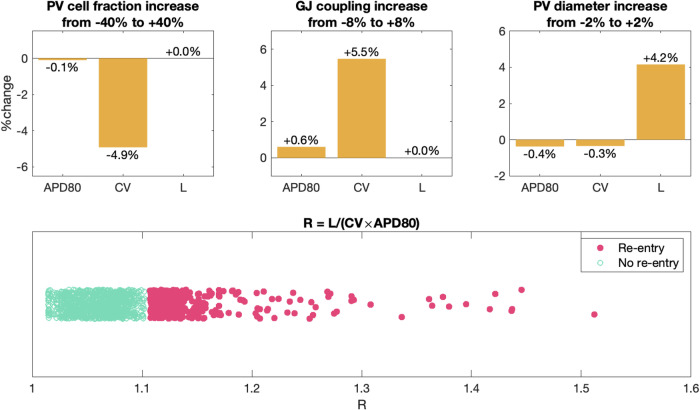
Atrial fibrillation (AF) is the most common form of cardiac arrhythmia, often evolving from paroxysmal episodes to persistent stages over an extended timeframe. While various factors contribute to this progression, the precise biophysical mechanisms driving it remain unclear. Here we explore how rapid firing of cardiomyocytes at the outlet of the pulmonary vein of the left atria can create a substrate for a persistent re-entry wave. This is grounded in a recently formulated mathematical model of the regulation of calcium ion channel density by intracellular calcium concentration. According to the model, the number of calcium channels is controlled by the intracellular calcium concentration. In particular, if the concentration increases above a certain target level, the calcium current is weakened to restore the target level of calcium. During rapid pacing, the intracellular calcium concentration of the cardiomyocytes increases leading to a substantial reduction of the calcium current across the membrane of the myocytes, which again reduces the action potential duration. In a spatially resolved cell-based model of the outlet of the pulmonary vein of the left atria, we show that the reduced action potential duration can lead to re-entry. Initiated by rapid pacing, often stemming from paroxysmal AF episodes lasting several days, the reduction in calcium current is a critical factor. Our findings illustrate how such episodes can foster a conducive environment for persistent AF through electrical remodeling, characterized by diminished calcium currents. This underscores the importance of promptly addressing early AF episodes to prevent their progression to chronic stages.
心房颤动(AF)是最常见的心律失常形式,通常从阵发性发作逐渐发展为持续性发作,持续时间较长。虽然有多种因素导致这种进展,但驱动它的确切生物物理机制仍不清楚。在这里,我们探讨了左心房肺静脉出口处的心肌细胞快速放电如何为持续性折返波创造基质。这是基于最近提出的一个关于细胞内钙离子浓度调节钙离子通道密度的数学模型。根据该模型,钙离子通道的数量由细胞内钙离子浓度控制。特别是,如果浓度增加到超过某个目标水平,钙电流就会减弱,以恢复钙离子的目标水平。在快速起搏时,心肌细胞的细胞内钙离子浓度增加,导致跨心肌细胞膜的钙电流显著减少,这再次缩短了动作电位持续时间。在左心房肺静脉出口处的基于细胞的空间分辨模型中,我们表明,动作电位持续时间的缩短可导致折返。折返由快速起搏引发,通常源自持续数天的阵发性 AF 发作,钙电流的减少是一个关键因素。我们的研究结果表明,这些发作如何通过电重构促进持续性 AF 的有利环境,其特征是钙电流减少。这凸显了及时处理早期 AF 发作以防止其进展为慢性阶段的重要性。