Enrich-Essvein Tattiana, González-López Santiago, Rodríguez-Navarro Alejandro B, Cifuentes-Jiménez Carolina, Maravic Tatjana, Mazzitelli Claudia, Checchi Vittorio, Josic Uros, Mazzoni Annalisa, Breschi Lorenzo
Department of Operative Dentistry, School of Dentistry, University of Granada, Campus de Cartuja, Colegio Maximo s/n, Granada, E-18071, Spain.
Department of Mineralogy and Petrology, Faculty of Sciences, University of Granada, Granada, Spain.
Clin Oral Investig. 2024 Jul 24;28(8):444. doi: 10.1007/s00784-024-05836-7.
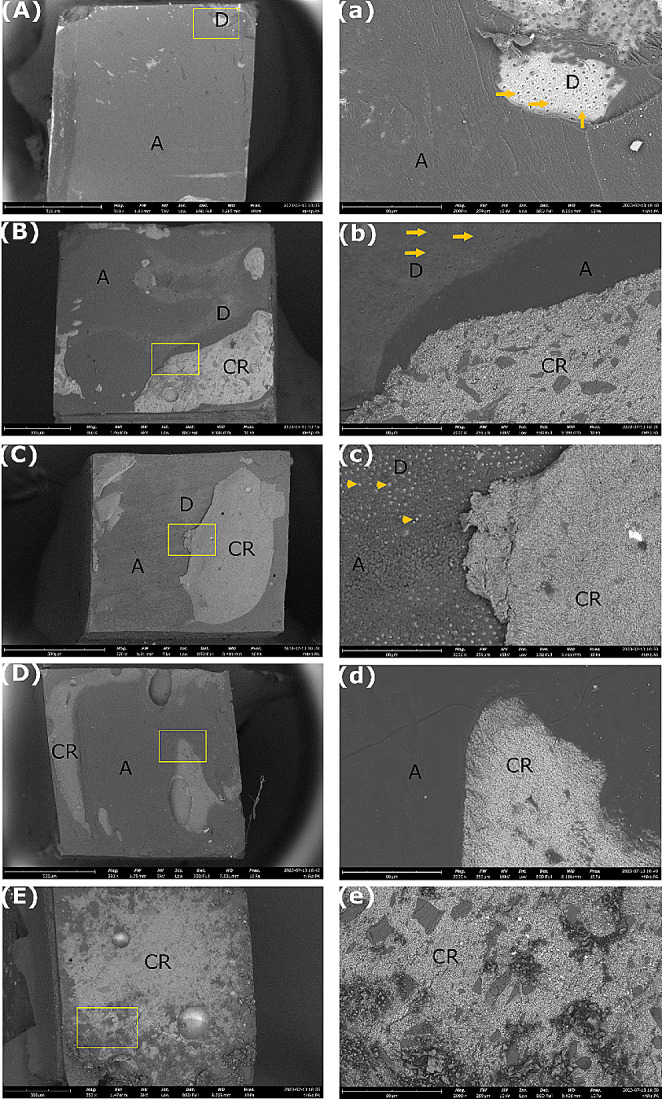
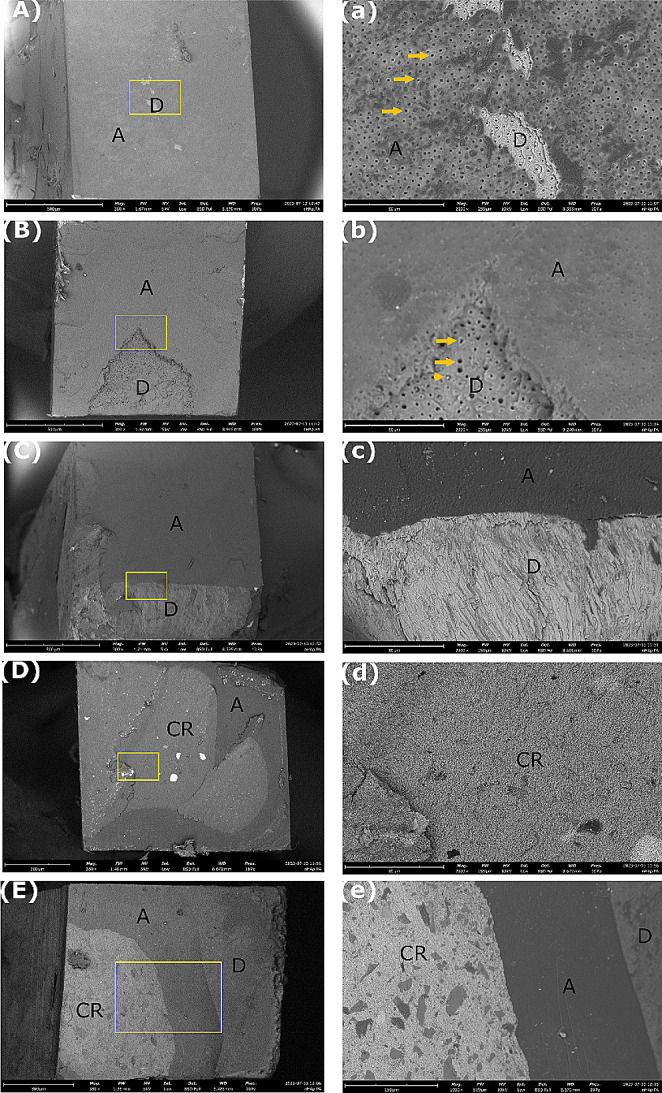
To evaluate the effect of proanthocyanidin-functionalized hydroxyapatite nanoparticles (nHAp_PA) used as pretreatment at different concentrations on the microtensile bond strength (µTBS) and endogenous enzymatic activity (MMPs) on pH-cycled dentin after 24 h and 6 months of artificial aging.
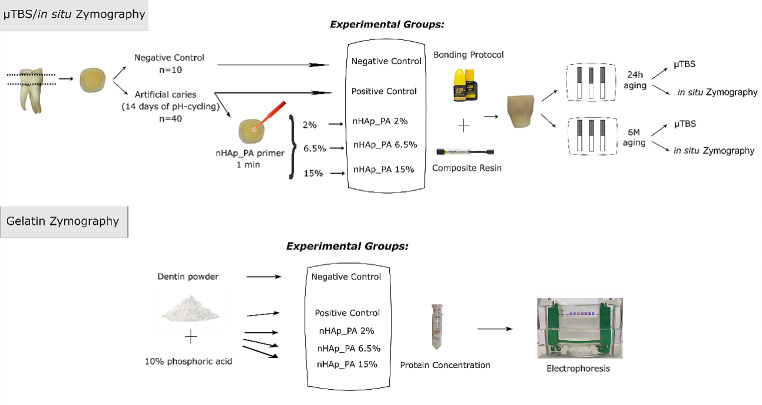
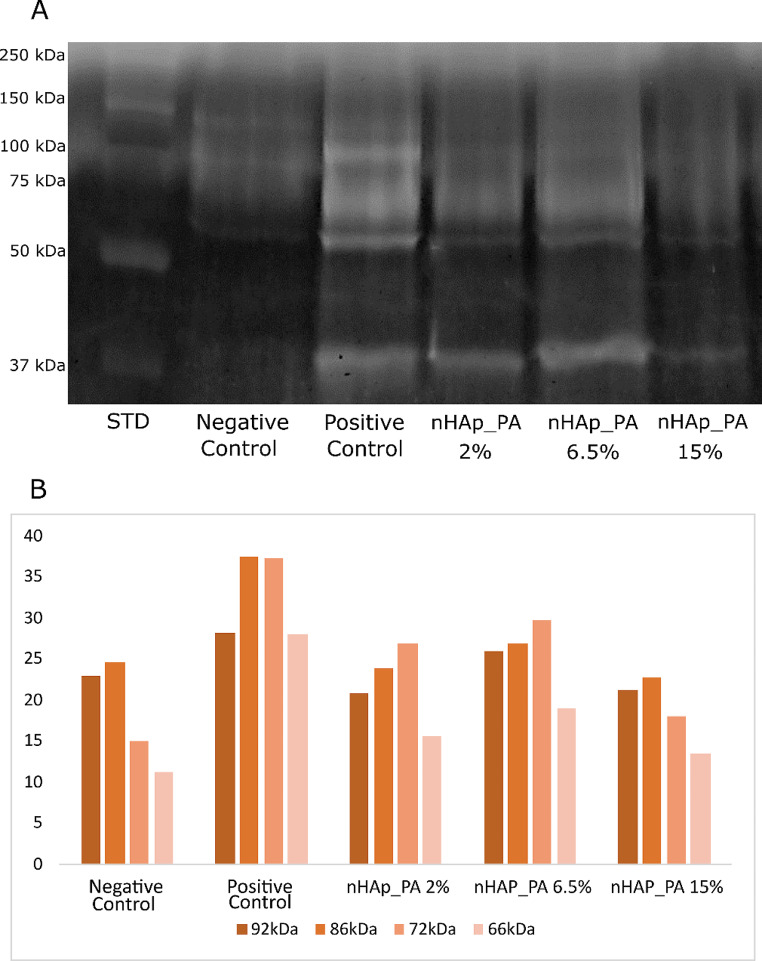
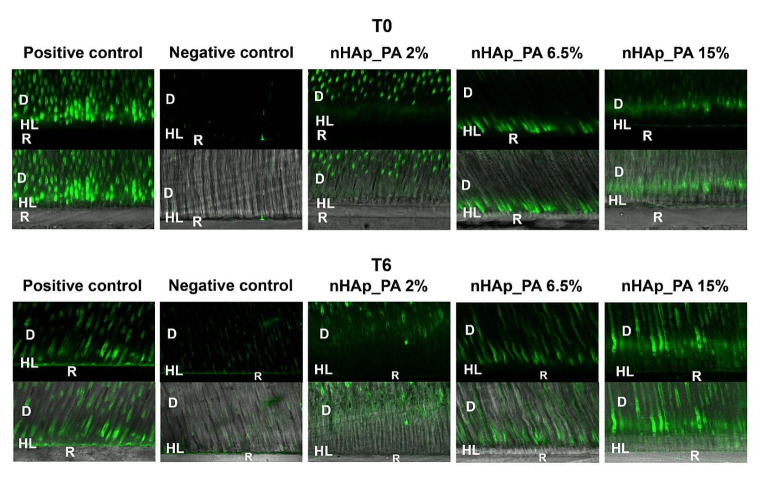
Fifty human sound dentin blocks were randomly assigned to 5 groups (n = 10): (i) negative control (no treatment); (ii) positive control (pH-cycling); (iii) pH-cycling + 2% nHAp_PA for 60s; (iv) pH-cycling + 6.5% nHAp_PA for 60s; (v) pH-cycling + 15% nHAp_PA for 60s. A self-etch adhesive was used for bonding procedures before resin composite build-ups. Specimens were tested with the µTBS test after 24 h and 6 months of laboratory storage. The proteolytic activity in each group was evaluated with gelatin zymography and in situ zymography. Data were statistically analyzed (p < 0.05).
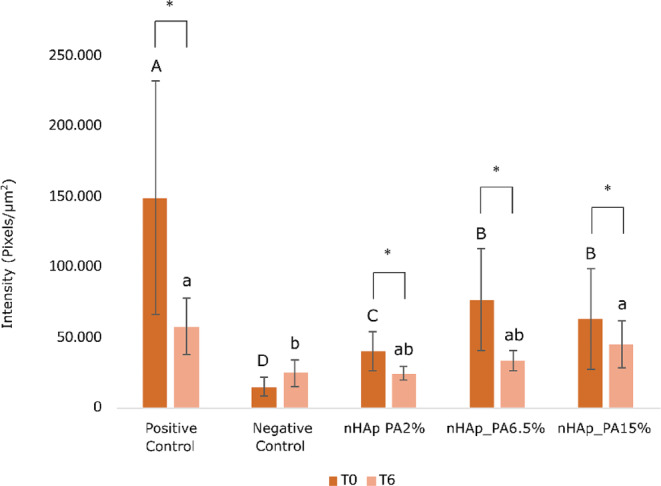
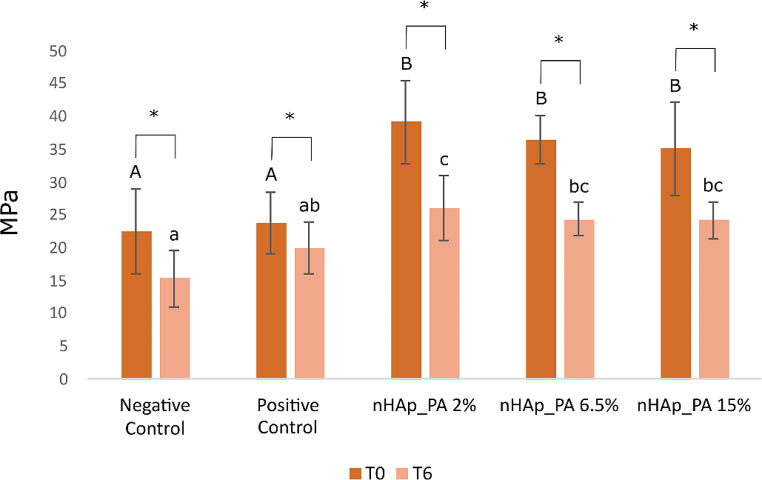
At 24 h, the µTBS of the experimental groups were significantly higher than the controls (p ≤ 0.001), and no differences were observed between different concentrations (p > 0.05). Artificial aging significantly decreased bond strength in all groups (p ≤ 0.008); however, nHAp_PA 2% still yielded higher bonding values than controls (p ≤ 0.007). The groups pretreated with nHAp_PA exhibited lower MMP-9 and MMP-2 activities compared to the positive control group and almost the same enzymatic activity as the negative control group. In situ zymography showed that after 6 months of aging, nHAp_PA 2% and nHAp_PA 6,5% decreased enzymatic activity as well as the negative control.
Dentin pretreatment with nHAp_PA increased the bonding performance of a self-etch adhesive and decreased MMP-2 and MMP-9 activities after 6 months.
评估不同浓度的原花青素功能化羟基磷灰石纳米颗粒(nHAp_PA)作为预处理剂,在人工老化24小时和6个月后,对pH循环处理的牙本质的微拉伸粘结强度(µTBS)和内源性酶活性(基质金属蛋白酶,MMPs)的影响。
将50个人类健康牙本质块随机分为5组(n = 10):(i)阴性对照组(未处理);(ii)阳性对照组(pH循环处理);(iii)pH循环处理 + 2% nHAp_PA处理60秒;(iv)pH循环处理 + 6.5% nHAp_PA处理60秒;(v)pH循环处理 + 15% nHAp_PA处理60秒。在树脂复合材料堆积前,使用自酸蚀粘结剂进行粘结操作。在实验室储存24小时和6个月后,用µTBS试验对标本进行测试。用明胶酶谱法和原位酶谱法评估每组的蛋白水解活性。数据进行统计学分析(p < 0.05)。
在24小时时,实验组的µTBS显著高于对照组(p≤0.001),不同浓度之间未观察到差异(p > 0.05)。人工老化显著降低了所有组的粘结强度(p≤0.008);然而,2%的nHAp_PA仍产生高于对照组的粘结值(p≤0.007)。与阳性对照组相比,用nHAp_PA预处理的组表现出较低的MMP - 9和MMP - 2活性,且酶活性与阴性对照组几乎相同。原位酶谱法显示,老化6个月后,2%和6.5%的nHAp_PA降低了酶活性,与阴性对照组相当。
用nHAp_PA对牙本质进行预处理可提高自酸蚀粘结剂的粘结性能,并在6个月后降低MMP - 2和MMP - 9的活性。