Department of Medicine, University of Massachusetts Chan Medical School, Worcester, MA, United States of America.
Department of Pathology and Laboratory Medicine, Warren Alpert Medical School, Brown University, Providence, RI, United States of America.
PLoS One. 2024 Jul 25;19(7):e0307568. doi: 10.1371/journal.pone.0307568. eCollection 2024.
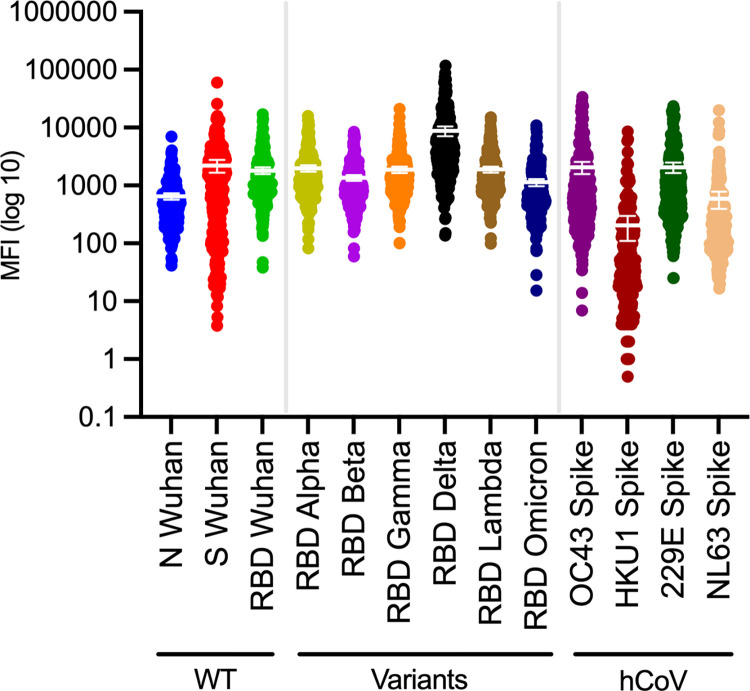
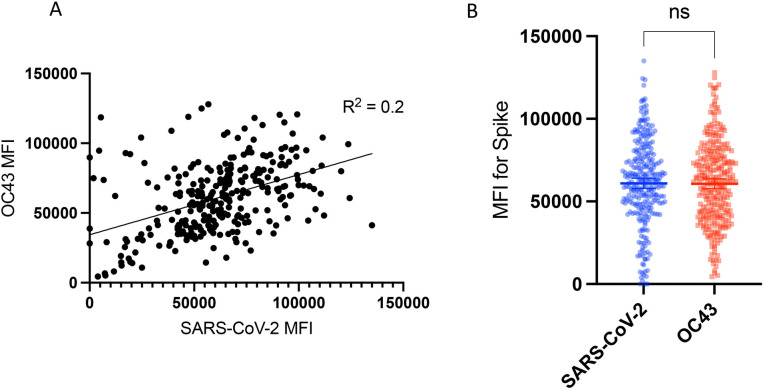
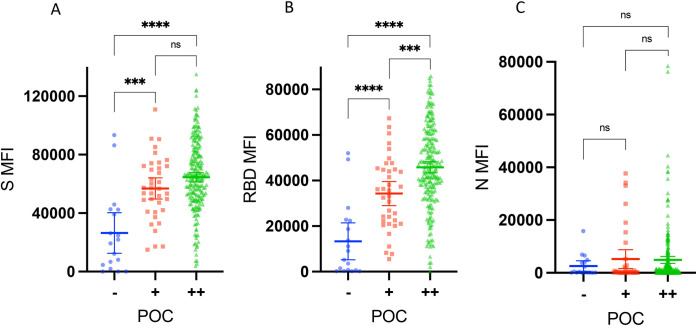
COVID-19 disproportionately affected minorities, while research barriers to engage underserved communities persist. Serological studies reveal infection and vaccination histories within these communities, however lack of consensus on downstream evaluation methods impede meta-analyses and dampen the broader public health impact. To reveal the impact of COVID-19 and vaccine uptake among diverse communities and to develop rigorous serological downstream evaluation methods, we engaged racial and ethnic minorities in Massachusetts in a cross-sectional study (April-July 2022), screened blood and saliva for SARS-CoV-2 and human endemic coronavirus (hCoV) antibodies by bead-based multiplex assay and point-of-care (POC) test and developed across-plate normalization and classification boundary methods for optimal qualitative serological assessments. Among 290 participants, 91.4% reported receiving at least one dose of a COVID-19 vaccine, while 41.7% reported past SARS-CoV-2 infections, which was confirmed by POC- and multiplex-based saliva and blood IgG seroprevalences. We found significant differences in antigen-specific IgA and IgG antibody outcomes and indication of cross-reactivity with hCoV OC43. Finally, 26.5% of participants reported lingering COVID-19 symptoms, mostly middle-aged Latinas. Hence, prolonged COVID-19 symptoms were common among our underserved population and require public health attention, despite high COVID-19 vaccine uptake. Saliva served as a less-invasive sample-type for IgG-based serosurveys and hCoV cross-reactivity needed to be evaluated for reliable SARS-CoV-2 serosurvey results. The use of the developed rigorous downstream qualitative serological assessment methods will help standardize serosurvey outcomes and meta-analyses for future serosurveys beyond SARS-CoV-2.
COVID-19 对少数族裔的影响不成比例,而参与服务不足社区的研究障碍仍然存在。血清学研究揭示了这些社区内的感染和疫苗接种史,但缺乏对下游评估方法的共识,阻碍了荟萃分析并削弱了更广泛的公共卫生影响。为了揭示 COVID-19 和疫苗接种在不同社区中的影响,并制定严格的血清学下游评估方法,我们在马萨诸塞州让少数族裔参与了一项横断面研究(2022 年 4 月至 7 月),通过基于珠的多重分析和即时检测 (POC) 检测筛选血液和唾液中的 SARS-CoV-2 和人类地方性冠状病毒 (hCoV) 抗体,并开发了跨板归一化和分类边界方法,以进行最佳定性血清学评估。在 290 名参与者中,91.4%报告至少接种了一剂 COVID-19 疫苗,而 41.7%报告过去曾感染过 SARS-CoV-2,这通过 POC 和基于多重的唾液和血液 IgG 血清流行率得到证实。我们发现抗原特异性 IgA 和 IgG 抗体结果存在显著差异,并表明与 hCoV OC43 存在交叉反应。最后,26.5%的参与者报告有持续的 COVID-19 症状,主要是中年拉丁裔。因此,尽管 COVID-19 疫苗接种率很高,但我们服务不足的人群中普遍存在长期 COVID-19 症状,需要引起公共卫生关注。唾液是用于 IgG 血清学调查的侵袭性较小的样本类型,需要评估 hCoV 交叉反应,以获得可靠的 SARS-CoV-2 血清学调查结果。使用开发的严格的下游定性血清学评估方法将有助于标准化未来超越 SARS-CoV-2 的血清学调查的结果和荟萃分析。