Bijari Salar, Sayfollahi Sahar, Mardokh-Rouhani Shiwa, Bijari Sahar, Moradian Sadegh, Zahiri Ziba, Rezaeijo Seyed Masoud
Department of Radiology, Faculty of Paramedical, Kurdistan University of Medical Sciences, Sanandaj P.O. Box 66177-13446, Iran.
Department of Neurosurgery, School of Medicine, Iran University of Medical Sciences, Tehran P.O. Box 14496-14535, Iran.
Bioengineering (Basel). 2024 Jun 24;11(7):643. doi: 10.3390/bioengineering11070643.
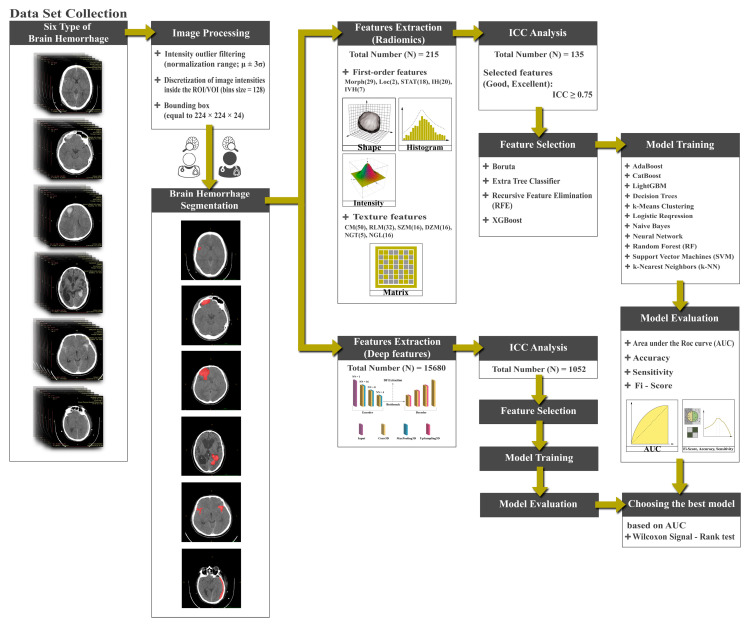
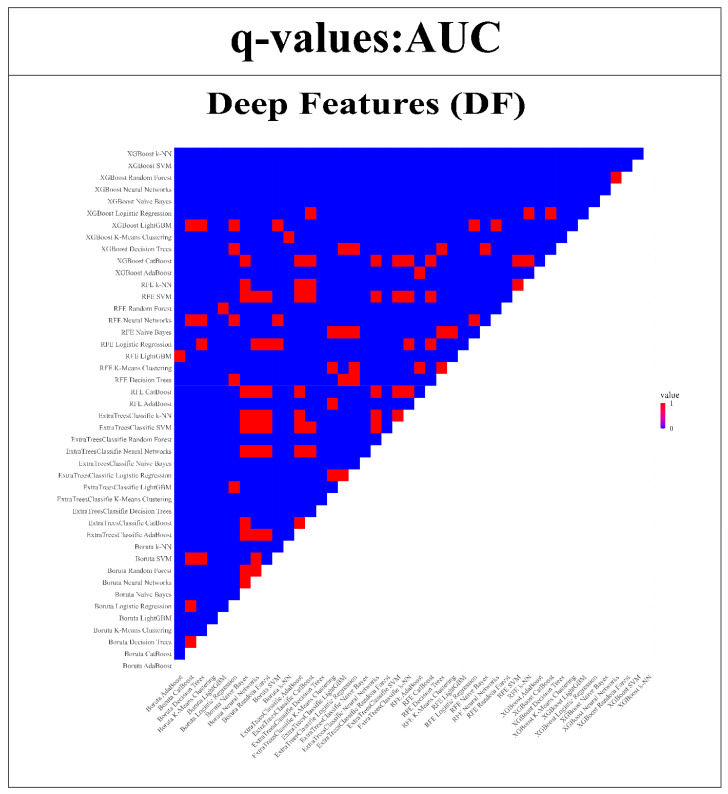
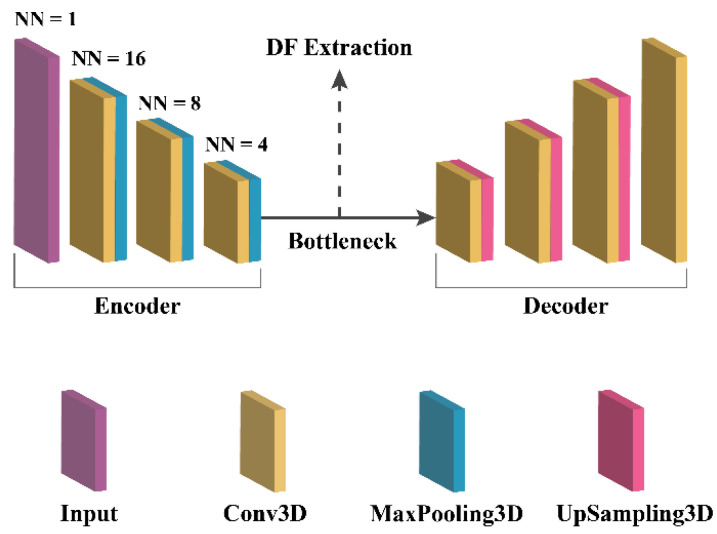
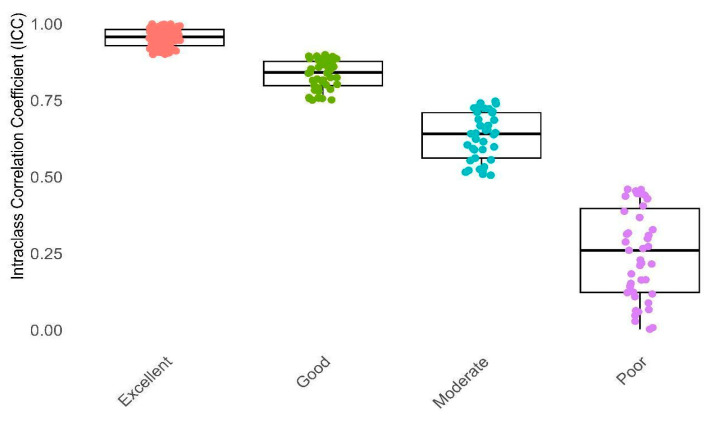
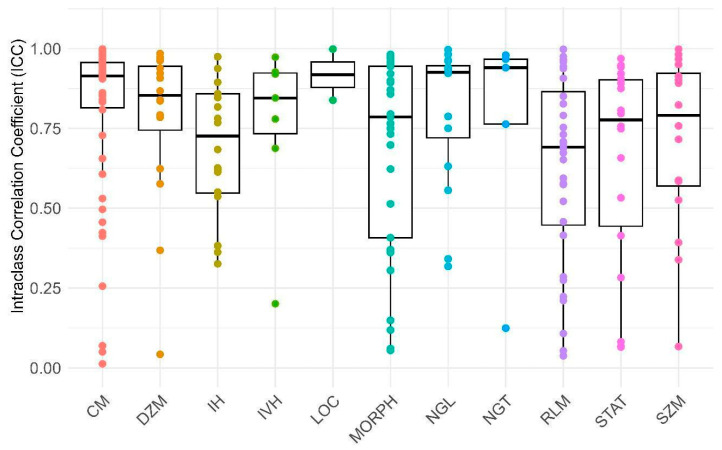
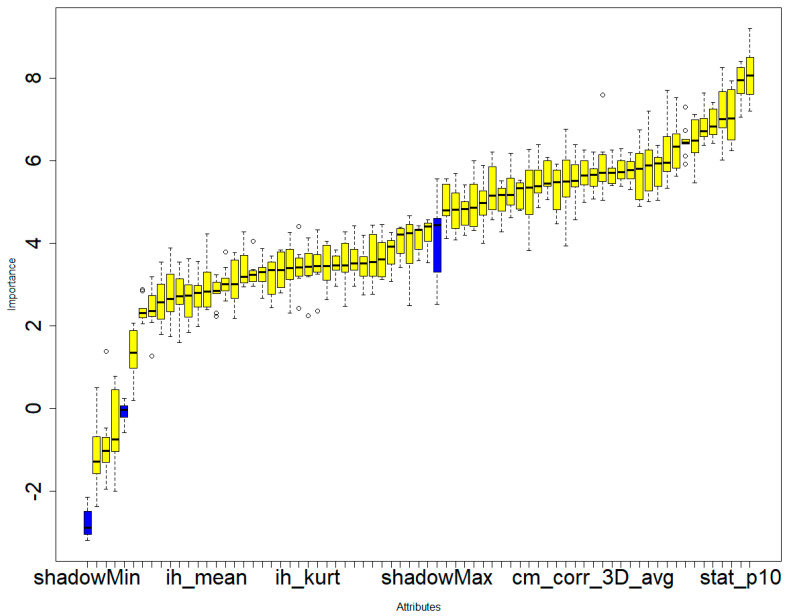
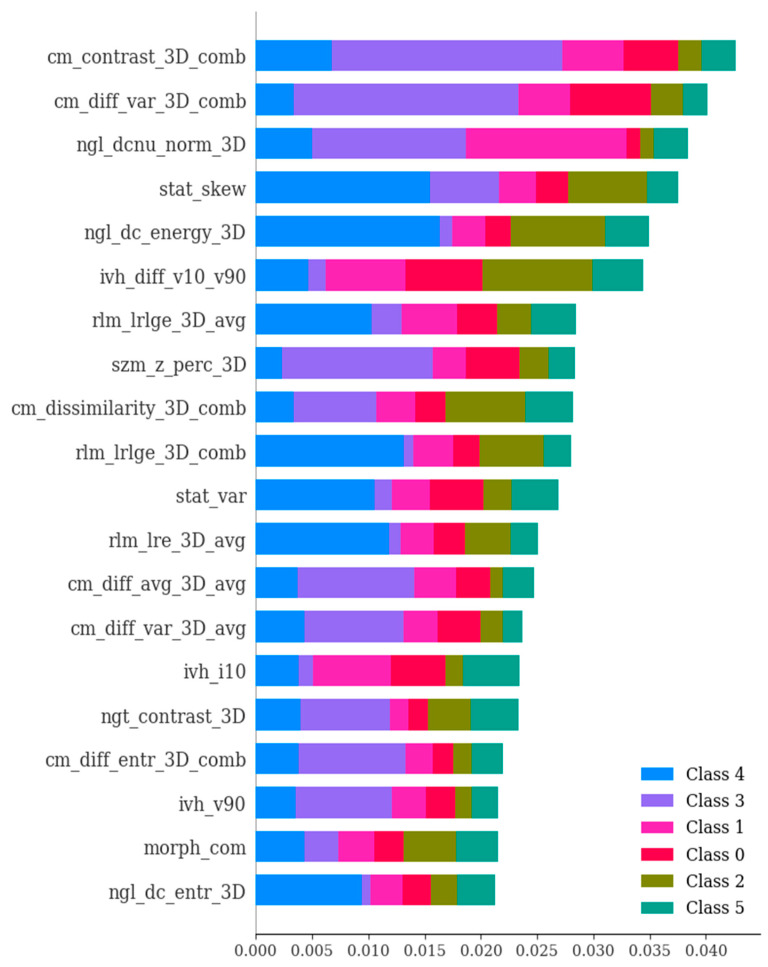
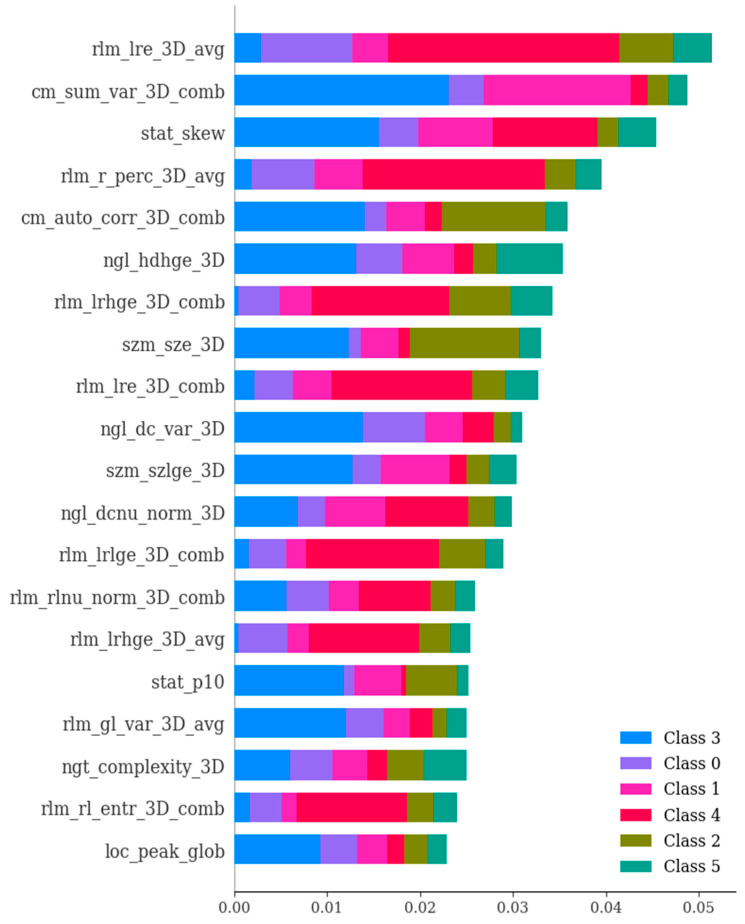
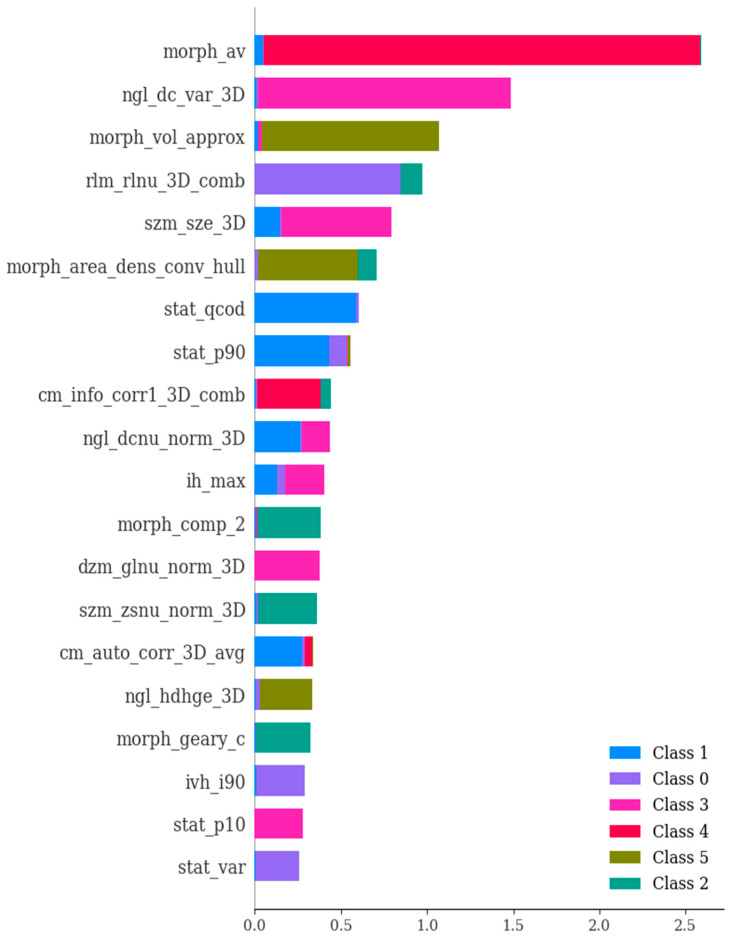
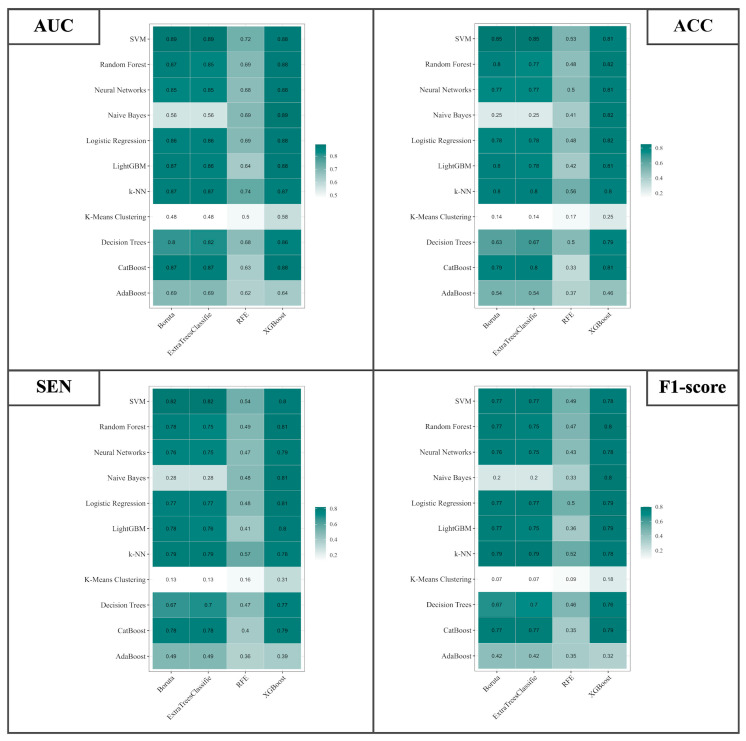
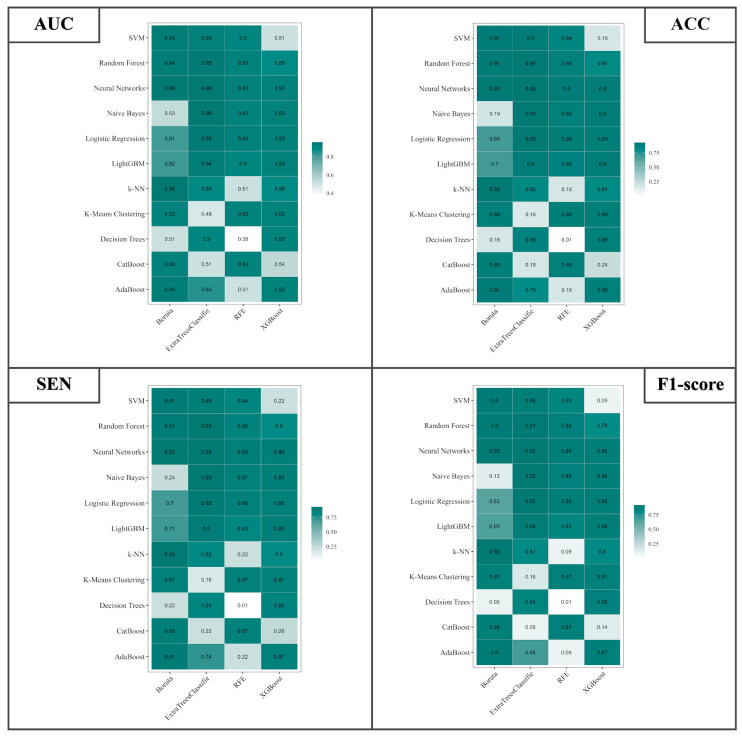
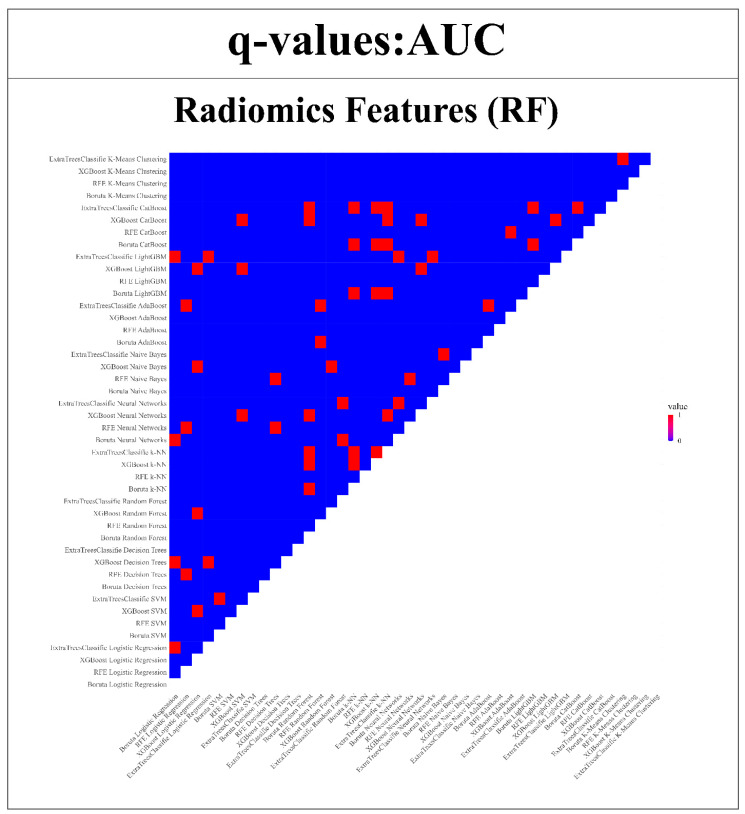
This study evaluates the reproducibility of machine learning models that integrate radiomics and deep features (features extracted from a 3D autoencoder neural network) to classify various brain hemorrhages effectively. Using a dataset of 720 patients, we extracted 215 radiomics features (RFs) and 15,680 deep features (DFs) from CT brain images. With rigorous screening based on Intraclass Correlation Coefficient thresholds (>0.75), we identified 135 RFs and 1054 DFs for analysis. Feature selection techniques such as Boruta, Recursive Feature Elimination (RFE), XGBoost, and ExtraTreesClassifier were utilized alongside 11 classifiers, including AdaBoost, CatBoost, Decision Trees, LightGBM, Logistic Regression, Naive Bayes, Neural Networks, Random Forest, Support Vector Machines (SVM), and k-Nearest Neighbors (k-NN). Evaluation metrics included Area Under the Curve (AUC), Accuracy (ACC), Sensitivity (SEN), and F1-score. The model evaluation involved hyperparameter optimization, a 70:30 train-test split, and bootstrapping, further validated with the Wilcoxon signed-rank test and q-values. Notably, DFs showed higher accuracy. In the case of RFs, the Boruta + SVM combination emerged as the optimal model for AUC, ACC, and SEN, while XGBoost + Random Forest excelled in F1-score. Specifically, RFs achieved AUC, ACC, SEN, and F1-scores of 0.89, 0.85, 0.82, and 0.80, respectively. Among DFs, the ExtraTreesClassifier + Naive Bayes combination demonstrated remarkable performance, attaining an AUC of 0.96, ACC of 0.93, SEN of 0.92, and an F1-score of 0.92. Distinguished models in the RF category included SVM with Boruta, Logistic Regression with XGBoost, SVM with ExtraTreesClassifier, CatBoost with XGBoost, and Random Forest with XGBoost, each yielding significant q-values of 42. In the DFs realm, ExtraTreesClassifier + Naive Bayes, ExtraTreesClassifier + Random Forest, and Boruta + k-NN exhibited robustness, with 43, 43, and 41 significant q-values, respectively. This investigation underscores the potential of synergizing DFs with machine learning models to serve as valuable screening tools, thereby enhancing the interpretation of head CT scans for patients with brain hemorrhages.
本研究评估了整合放射组学和深度特征(从3D自动编码器神经网络中提取的特征)的机器学习模型对各种脑内出血进行有效分类的可重复性。我们使用一个包含720名患者的数据集,从脑部CT图像中提取了215个放射组学特征(RFs)和15680个深度特征(DFs)。基于组内相关系数阈值(>0.75)进行严格筛选后,我们确定了135个RFs和1054个DFs用于分析。同时使用了诸如Boruta、递归特征消除(RFE)、XGBoost和ExtraTreesClassifier等特征选择技术以及11种分类器,包括AdaBoost、CatBoost、决策树、LightGBM、逻辑回归、朴素贝叶斯、神经网络、随机森林、支持向量机(SVM)和k近邻(k-NN)。评估指标包括曲线下面积(AUC)、准确率(ACC)、灵敏度(SEN)和F1分数。模型评估涉及超参数优化、70:30的训练-测试分割和自助法,并通过Wilcoxon符号秩检验和q值进行进一步验证。值得注意的是,DFs显示出更高的准确率。对于RFs,Boruta + SVM组合在AUC、ACC和SEN方面成为最优模型,而XGBoost + 随机森林在F1分数方面表现出色。具体而言,RFs分别实现了0.89、0.85、0.82和0.80的AUC、ACC、SEN和F1分数。在DFs中,ExtraTreesClassifier + 朴素贝叶斯组合表现出色,AUC为0.96,ACC为0.93,SEN为0.92,F1分数为0.92。RF类别中的杰出模型包括带有Boruta的SVM、带有XGBoost的逻辑回归、带有ExtraTreesClassifier的SVM、带有XGBoost的CatBoost以及带有XGBoost的随机森林,每个模型都产生了显著的q值42。在DFs领域,ExtraTreesClassifier + 朴素贝叶斯、ExtraTreesClassifier + 随机森林和Boruta + k-NN表现出稳健性,分别有43、43和41个显著的q值。这项研究强调了将DFs与机器学习模型协同作用作为有价值的筛查工具的潜力,从而增强对脑内出血患者头部CT扫描的解读。