Hu Zhongzhong, Liu Yuhang, Huang Keke, Huang Hao, Li Feng, Yuan Xiaoyi
School of Sports Science, Wenzhou Medical University, Wenzhou 325035, China.
China Athletics College, Beijing Sport University, Beijing 100084, China.
Life (Basel). 2024 Jul 21;14(7):908. doi: 10.3390/life14070908.
This systematic review and meta-analysis aimed to analyze whether isoinertial flywheel training (FWT) is superior to traditional resistance training (TRT) in enhancing maximal strength and muscle power in healthy individuals.
Electronic searches were conducted in the Web of Science, PubMed, Cochrane Library, SPORTDiscus, and Scopus databases up to 21 April 2024. Outcomes were analyzed as continuous variables using either a random or fixed effects model to calculate the standardized mean difference (SMD) and 95% confidence intervals (CI).
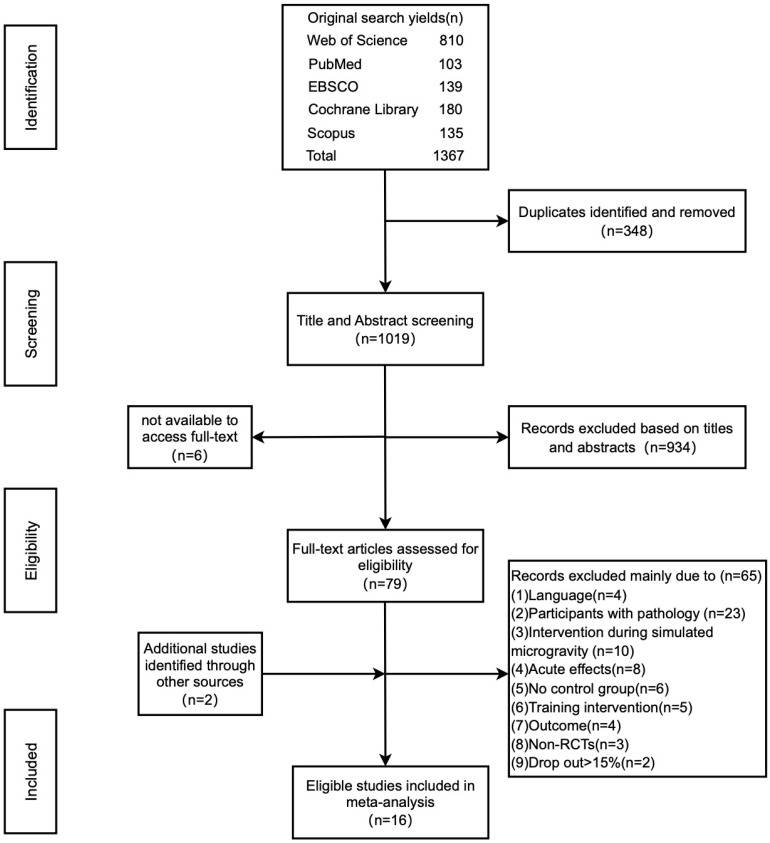
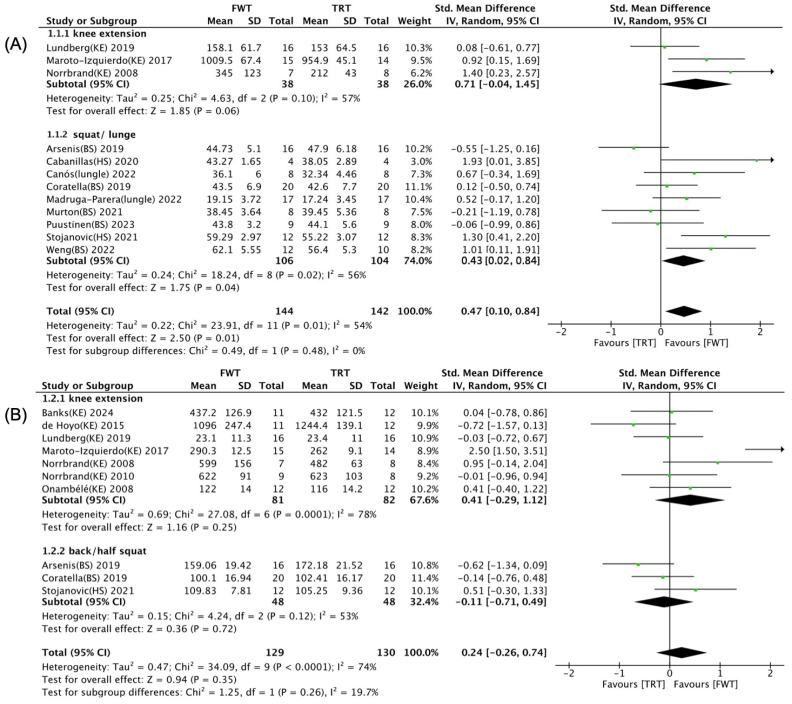
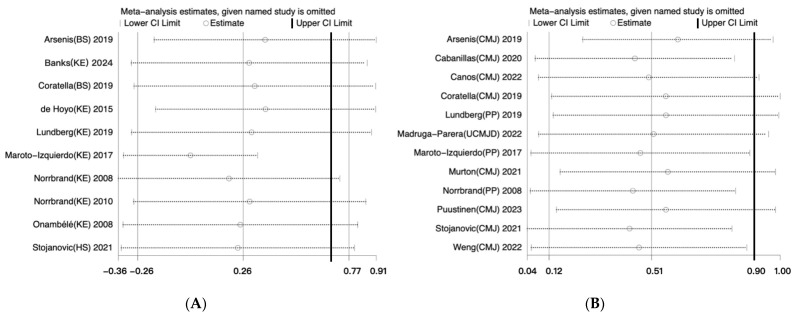
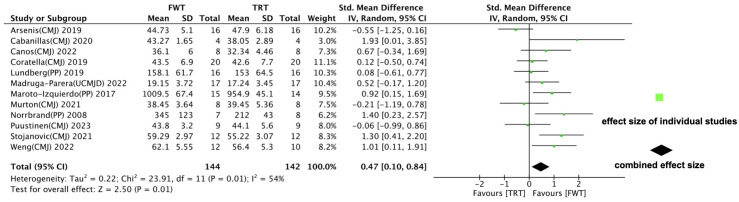
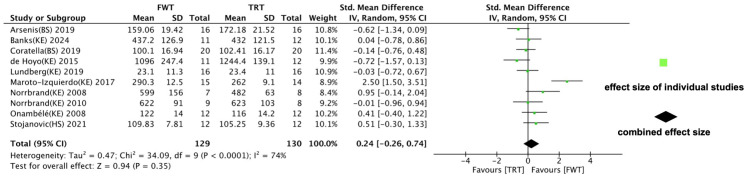
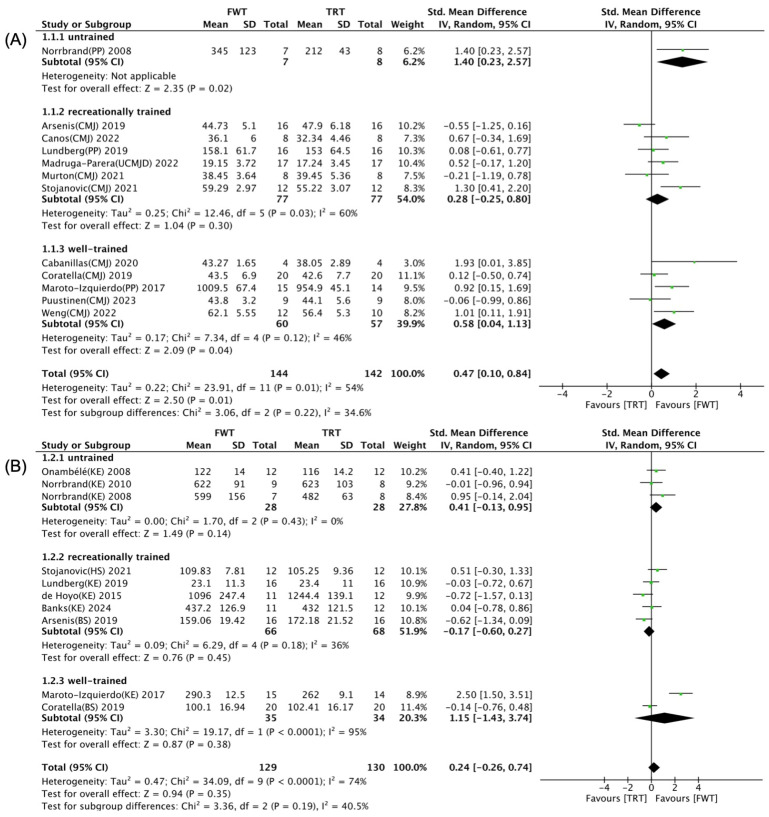
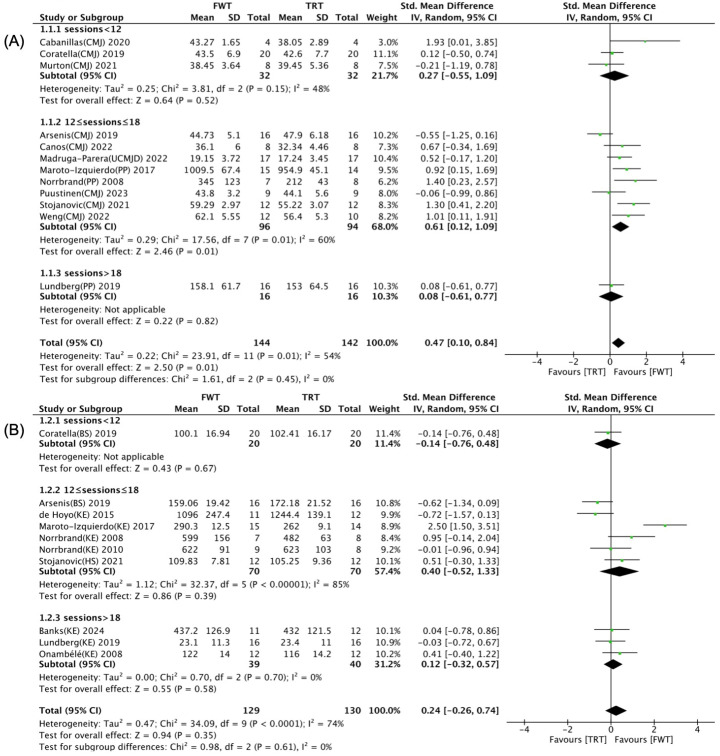
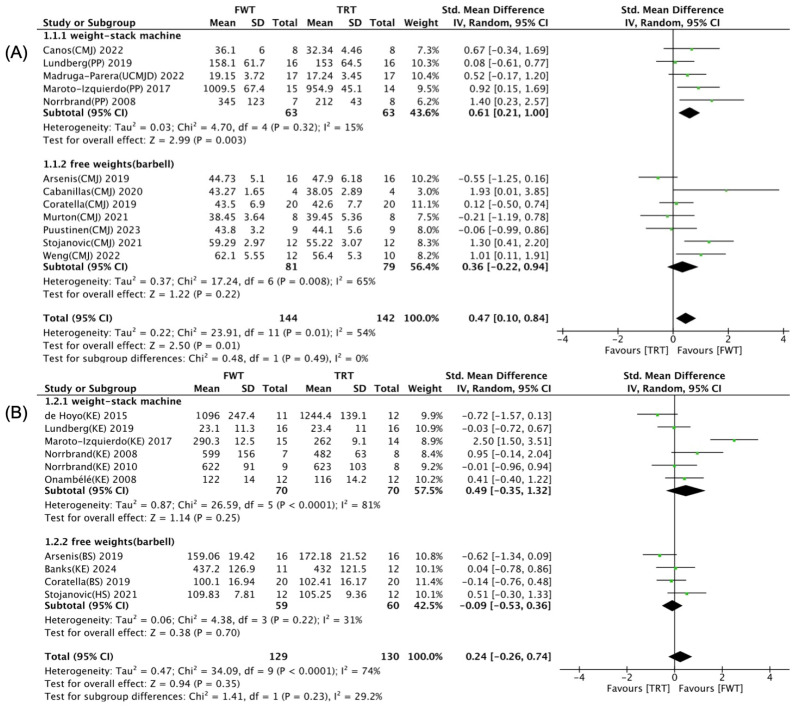
A total of sixteen articles, involving 341 subjects, met the inclusion criteria and were included in the statistical analyses. The pooled results indicate no statistically significant differences between FWT and TRT in developing maximal strength in healthy individuals (SMD = 0.24, 95% CI [-0.26, 0.74], = 0.35). Additionally, the pooled outcomes showed a small-sized effect in muscle power with FWT (SMD = 0.47, 95% CI [0.10, 0.84]), which was significantly higher than that with TRT ( = 0.01) in healthy individuals. Subgroup analysis revealed that when the total number of FWT sessions is between 12 and 18 (1-3 times per week), it significantly improves muscle power (SMD = 0.61, 95% CI [0.12, 1.09]). Significant effects favoring FWT for muscle power were observed in both well-trained (SMD = 0.58, 95% CI [0.04, 1.13]) and untrained individuals (SMD = 1.40, 95% CI [0.23, 2.57]). In terms of exercise, performing flywheel training with squat and lunge exercises significantly enhances muscle power (SMD = 0.43; 95% CI: 0.02-0.84, and = 0.04). Interestingly, FWT was superior to weight stack resistance training (SMD = 0.61, 95% CI [0.21, 1.00]) in enhancing muscle power, while no significant differences were found compared to barbell free weights training (SMD = 0.36, 95% CI [-0.22, 0.94]).
This meta-analysis confirms the superiority of FWT compared to TRT in promoting muscle power in both healthy untrained and well-trained individuals. Squats and lunges for FWT are more suitable for improving lower limb explosive power. It is recommended that coaches and trainers implement FWT for six weeks, 2-3 times per week, with at least a 48 h interval between each session. Although FWT is not superior to free weights training, it is advisable to include FWT in sport periodization to diversify the training stimuli for healthy individuals.
本系统评价和荟萃分析旨在分析等惯性飞轮训练(FWT)在增强健康个体的最大力量和肌肉力量方面是否优于传统阻力训练(TRT)。
截至2024年4月21日,在科学网、PubMed、Cochrane图书馆、SPORTDiscus和Scopus数据库中进行了电子检索。使用随机或固定效应模型将结果作为连续变量进行分析,以计算标准化均数差(SMD)和95%置信区间(CI)。
共有16篇文章,涉及341名受试者,符合纳入标准并被纳入统计分析。汇总结果表明,在健康个体中,FWT和TRT在发展最大力量方面无统计学显著差异(SMD = 0.24,95% CI [-0.26, 0.74],P = 0.35)。此外,汇总结果显示FWT在肌肉力量方面有小的效应(SMD = 0.47,95% CI [0.10, 0.84]),在健康个体中显著高于TRT(P = 0.01)。亚组分析显示,当FWT训练总次数在12至18次之间(每周1至3次)时,显著提高肌肉力量(SMD = 0.61,95% CI [0.12, 1.09])。在训练有素的个体(SMD = 0.58,95% CI [0.04, 1.13])和未经训练的个体(SMD = 1.40,95% CI [0.23, 2.57])中均观察到有利于FWT提高肌肉力量的显著效应。在运动方面,进行深蹲和弓步的飞轮训练显著增强肌肉力量(SMD = 0.43;95% CI:0.02 - 0.84,P = 0.04)。有趣的是,在增强肌肉力量方面,FWT优于配重块阻力训练(SMD = 0.61,95% CI [0.21, 1.00]),而与杠铃自由重量训练相比无显著差异(SMD = 0.36,95% CI [-0.22, 0.94])。
这项荟萃分析证实,与TRT相比,FWT在促进健康的未经训练和训练有素的个体的肌肉力量方面具有优越性。FWT的深蹲和弓步更适合提高下肢爆发力。建议教练和训练师实施FWT六周,每周2 - 3次,每次训练间隔至少48小时。尽管FWT不优于自由重量训练,但建议在运动周期化中纳入FWT,以使健康个体的训练刺激多样化。