Department of Biochemistry and Immunology, Lillebaelt Hospital, University Hospital of Southern Denmark, Beriderbakken 4, 7100, Vejle, Denmark.
Faculty of Health Sciences, Department of Regional Health Research, University of Southern Denmark, Campusvej 55, 5230, Odense M, Denmark.
Sci Rep. 2024 Aug 2;14(1):17889. doi: 10.1038/s41598-024-66837-w.
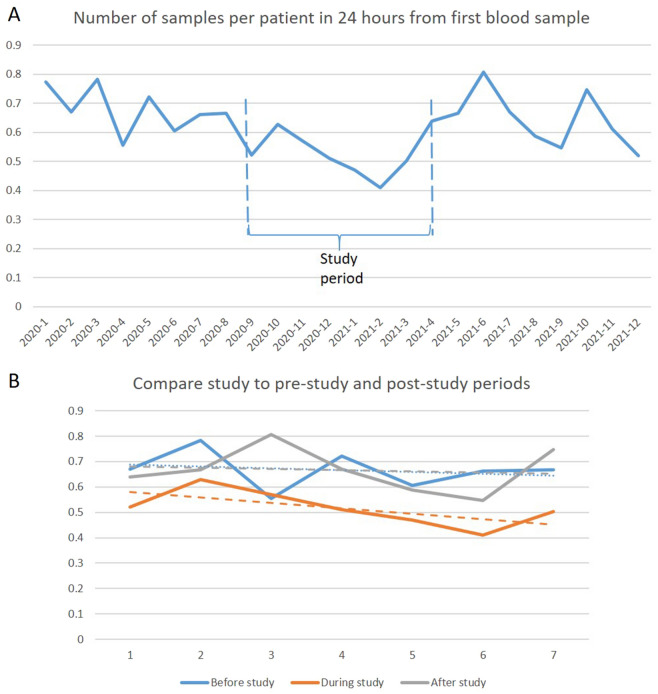
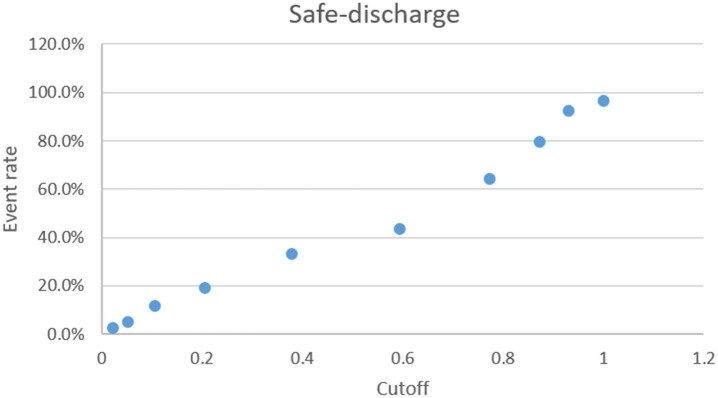
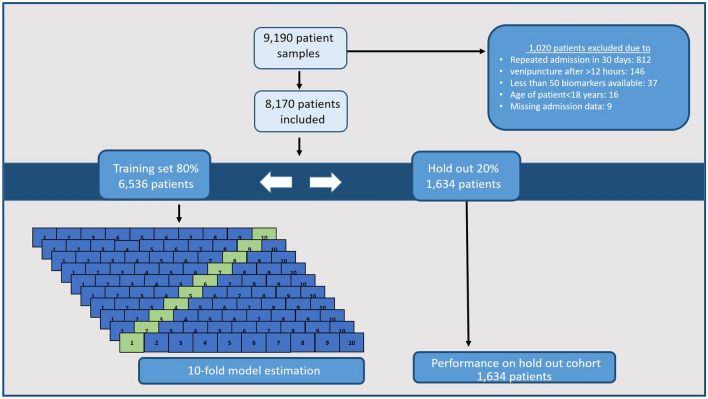
Diagnosing patients in the medical emergency department is complex and this is expected to increase in many countries due to an ageing population. In this study we investigate the feasibility of training machine learning algorithms to assist physicians handling the complex situation in the medical emergency departments. This is expected to reduce diagnostic errors and improve patient logistics and outcome. We included a total of 9,190 consecutive patient admissions diagnosed and treated in two hospitals in this cohort study. Patients had a biochemical workup including blood and urine analyses on clinical decision totaling 260 analyses. After adding nurse-registered data we trained 19 machine learning algorithms on a random 80% sample of the patients and validated the results on the remaining 20%. We trained algorithms for 19 different patient outcomes including the main outcomes death in 7 (Area under the Curve (AUC) 91.4%) and 30 days (AUC 91.3%) and safe-discharge(AUC 87.3%). The various algorithms obtained areas under the Receiver Operating Characteristics -curves in the range of 71.8-96.3% in the holdout cohort (68.3-98.2% in the training cohort). Performing this list of biochemical analyses at admission also reduced the number of subsequent venipunctures within 24 h from patient admittance by 22%. We have shown that it is possible to develop a list of machine-learning algorithms with high AUC for use in medical emergency departments. Moreover, the study showed that it is possible to reduce the number of venipunctures in this cohort.
在医疗急救部门诊断患者的情况非常复杂,预计在许多国家,由于人口老龄化,这种情况还会增加。在这项研究中,我们研究了培训机器学习算法来协助医生处理医疗急救部门复杂情况的可行性。这有望减少诊断错误,并改善患者的流程管理和预后。我们在这项队列研究中纳入了两家医院共 9190 例连续入院的患者。患者接受了包括血液和尿液分析在内的生化检查,这些检查是基于临床决策的,总共进行了 260 次分析。在添加了护士登记的数据后,我们在患者的 80%随机样本上训练了 19 种机器学习算法,并在剩余的 20%样本上验证了结果。我们针对 19 种不同的患者结局训练了算法,包括主要结局(死亡:AUC 91.4%)和 30 天(AUC 91.3%)和安全出院(AUC 87.3%)。在验证队列中,各种算法获得的受试者工作特征曲线下面积(ROC-AUC)范围为 71.8%-96.3%(训练队列中为 68.3%-98.2%)。在入院时进行这组生化分析还使入院后 24 小时内的后续静脉穿刺次数减少了 22%。我们已经证明,开发具有高 AUC 的机器学习算法列表并将其应用于医疗急救部门是可行的。此外,该研究还表明,在该队列中减少静脉穿刺次数是可行的。