• 文献检索
  • 文档翻译
  • 深度研究
  • 学术资讯
  • Suppr Zotero 插件Zotero 插件
  • 邀请有礼
  • 套餐&价格
  • 历史记录
应用&插件
Suppr Zotero 插件Zotero 插件浏览器插件Mac 客户端Windows 客户端微信小程序
定价
高级版会员购买积分包购买API积分包
服务
文献检索文档翻译深度研究API 文档MCP 服务
关于我们
关于 Suppr公司介绍联系我们用户协议隐私条款
关注我们

Suppr 超能文献

核心技术专利:CN118964589B侵权必究
粤ICP备2023148730 号-1Suppr @ 2026

文献检索

告别复杂PubMed语法,用中文像聊天一样搜索,搜遍4000万医学文献。AI智能推荐,让科研检索更轻松。

立即免费搜索

文件翻译

保留排版,准确专业,支持PDF/Word/PPT等文件格式,支持 12+语言互译。

免费翻译文档

深度研究

AI帮你快速写综述,25分钟生成高质量综述,智能提取关键信息,辅助科研写作。

立即免费体验

基于互联网的监测系统与传染病预测:对过去 10 年的最新回顾及新冠疫情带来的启示。

Internet-based Surveillance Systems and Infectious Diseases Prediction: An Updated Review of the Last 10 Years and Lessons from the COVID-19 Pandemic.

机构信息

Ecosystem Change and Population Health (ECAPH) Research Group, School of Public Health and Social Work, Queensland University of Technology (QUT), Brisbane, Australia.

Communicable Diseases Branch, Queensland Health, Brisbane, Australia.

出版信息

J Epidemiol Glob Health. 2024 Sep;14(3):645-657. doi: 10.1007/s44197-024-00272-y. Epub 2024 Aug 14.

DOI:10.1007/s44197-024-00272-y
PMID:39141074
原文链接:https://pmc.ncbi.nlm.nih.gov/articles/PMC11442909/
Abstract

The last decade has seen major advances and growth in internet-based surveillance for infectious diseases through advanced computational capacity, growing adoption of smart devices, increased availability of Artificial Intelligence (AI), alongside environmental pressures including climate and land use change contributing to increased threat and spread of pandemics and emerging infectious diseases. With the increasing burden of infectious diseases and the COVID-19 pandemic, the need for developing novel technologies and integrating internet-based data approaches to improving infectious disease surveillance is greater than ever. In this systematic review, we searched the scientific literature for research on internet-based or digital surveillance for influenza, dengue fever and COVID-19 from 2013 to 2023. We have provided an overview of recent internet-based surveillance research for emerging infectious diseases (EID), describing changes in the digital landscape, with recommendations for future research directed at public health policymakers, healthcare providers, and government health departments to enhance traditional surveillance for detecting, monitoring, reporting, and responding to influenza, dengue, and COVID-19.

摘要

过去十年,随着先进计算能力的发展、智能设备的广泛应用、人工智能(AI)的可用性提高,以及包括气候和土地利用变化在内的环境压力的增加,导致传染病大流行和新发传染病的威胁和传播加剧,基于互联网的传染病监测技术取得了重大进展和增长。随着传染病负担的增加和 COVID-19 大流行,开发新技术和整合基于互联网的数据方法以改善传染病监测的需求比以往任何时候都更加迫切。在这项系统评价中,我们从 2013 年至 2023 年,在科学文献中搜索了关于流感、登革热和 COVID-19 的基于互联网或数字监测的研究。我们提供了新兴传染病(EID)基于互联网监测的最新研究概述,描述了数字环境的变化,并为公共卫生政策制定者、医疗保健提供者和政府卫生部门提出了未来的研究建议,以加强传统监测,以检测、监测、报告和应对流感、登革热和 COVID-19。
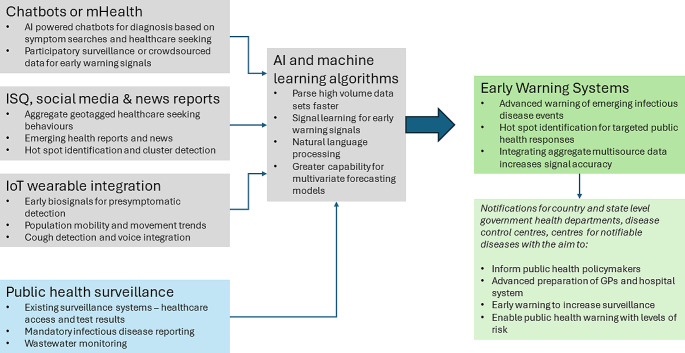
https://cdn.ncbi.nlm.nih.gov/pmc/blobs/37fb/11442909/7db6af4b8d2c/44197_2024_272_Fig4_HTML.jpg
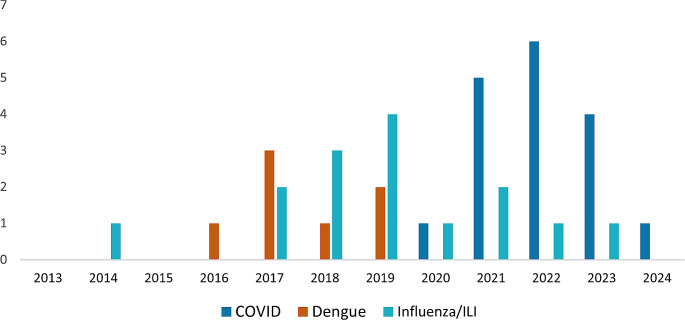
https://cdn.ncbi.nlm.nih.gov/pmc/blobs/37fb/11442909/4119dc977e4a/44197_2024_272_Fig1_HTML.jpg
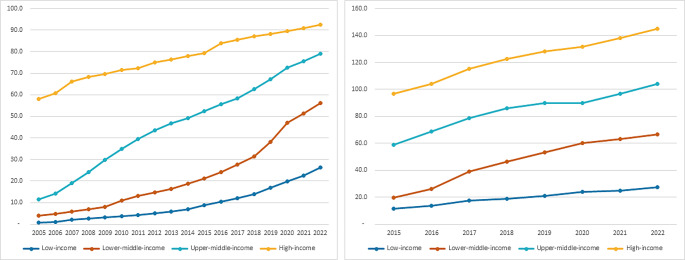
https://cdn.ncbi.nlm.nih.gov/pmc/blobs/37fb/11442909/5a37ff8634f9/44197_2024_272_Fig2_HTML.jpg
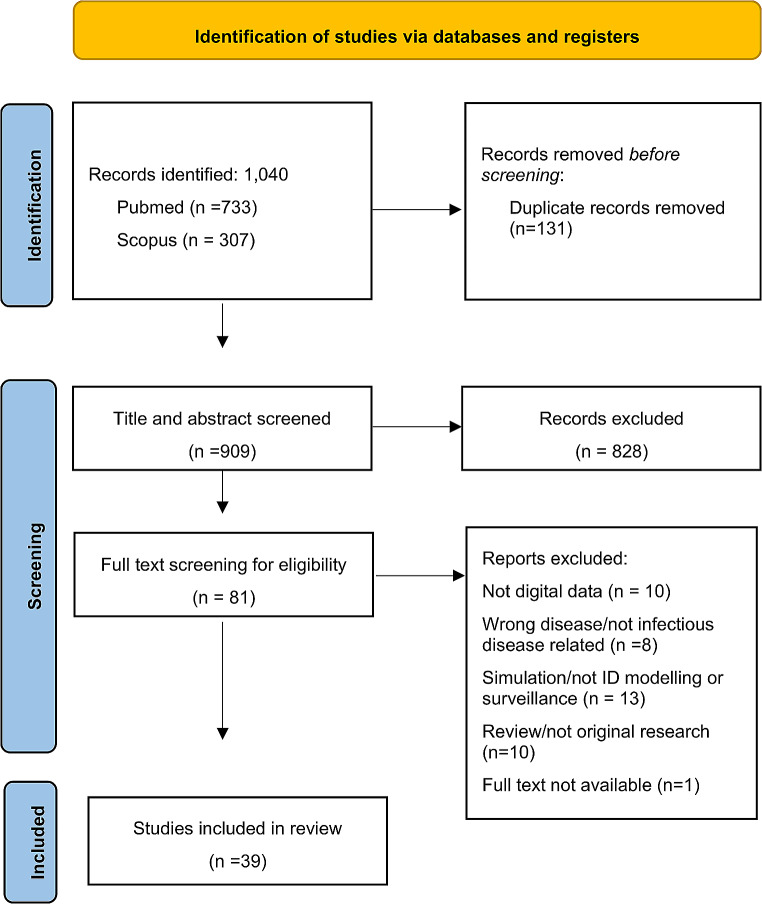
https://cdn.ncbi.nlm.nih.gov/pmc/blobs/37fb/11442909/199df5554e89/44197_2024_272_Fig3_HTML.jpg
https://cdn.ncbi.nlm.nih.gov/pmc/blobs/37fb/11442909/7db6af4b8d2c/44197_2024_272_Fig4_HTML.jpg
https://cdn.ncbi.nlm.nih.gov/pmc/blobs/37fb/11442909/4119dc977e4a/44197_2024_272_Fig1_HTML.jpg
https://cdn.ncbi.nlm.nih.gov/pmc/blobs/37fb/11442909/5a37ff8634f9/44197_2024_272_Fig2_HTML.jpg
https://cdn.ncbi.nlm.nih.gov/pmc/blobs/37fb/11442909/199df5554e89/44197_2024_272_Fig3_HTML.jpg
https://cdn.ncbi.nlm.nih.gov/pmc/blobs/37fb/11442909/7db6af4b8d2c/44197_2024_272_Fig4_HTML.jpg

相似文献

1
Internet-based Surveillance Systems and Infectious Diseases Prediction: An Updated Review of the Last 10 Years and Lessons from the COVID-19 Pandemic.基于互联网的监测系统与传染病预测:对过去 10 年的最新回顾及新冠疫情带来的启示。
J Epidemiol Glob Health. 2024 Sep;14(3):645-657. doi: 10.1007/s44197-024-00272-y. Epub 2024 Aug 14.
2
Internet-based surveillance systems for monitoring emerging infectious diseases.基于互联网的传染病监测系统。
Lancet Infect Dis. 2014 Feb;14(2):160-8. doi: 10.1016/S1473-3099(13)70244-5. Epub 2013 Nov 28.
3
Ethics, Integrity, and Retributions of Digital Detection Surveillance Systems for Infectious Diseases: Systematic Literature Review.传染病数字检测监测系统的伦理、诚信和回报:系统文献回顾。
J Med Internet Res. 2021 Oct 20;23(10):e32328. doi: 10.2196/32328.
4
Influenza and COVID-19: What does co-existence mean?流感和 COVID-19:共存意味着什么?
Influenza Other Respir Viruses. 2021 May;15(3):407-412. doi: 10.1111/irv.12824. Epub 2020 Oct 31.
5
Using internet-based query and climate data to predict climate-sensitive infectious disease risks: a systematic review of epidemiological evidence.利用基于互联网的查询和气候数据预测气候敏感型传染病风险:系统评价流行病学证据。
Int J Biometeorol. 2021 Dec;65(12):2203-2214. doi: 10.1007/s00484-021-02155-4. Epub 2021 Jun 1.
6
Editorial: Infectious Disease Surveillance Using Artificial Intelligence (AI) and its Role in Epidemic and Pandemic Preparedness.社论:利用人工智能(AI)进行传染病监测及其在疫情和大流行防范中的作用。
Med Sci Monit. 2023 Jun 1;29:e941209. doi: 10.12659/MSM.941209.
7
Internet of medical things (IoMT)-integrated biosensors for point-of-care testing of infectious diseases.物联网医疗(IoMT)集成生物传感器,用于即时检测传染病。
Biosens Bioelectron. 2021 May 1;179:113074. doi: 10.1016/j.bios.2021.113074. Epub 2021 Feb 6.
8
Adoption of Digital Technologies in Health Care During the COVID-19 Pandemic: Systematic Review of Early Scientific Literature.新冠疫情期间医疗保健领域数字技术的应用:早期科学文献的系统综述
J Med Internet Res. 2020 Nov 6;22(11):e22280. doi: 10.2196/22280.
9
Global influenza surveillance systems to detect the spread of influenza-negative influenza-like illness during the COVID-19 pandemic: Time series outlier analyses from 2015-2020.全球流感监测系统在 COVID-19 大流行期间检测流感阴性流感样疾病的传播:2015-2020 年时间序列异常值分析。
PLoS Med. 2022 Jul 19;19(7):e1004035. doi: 10.1371/journal.pmed.1004035. eCollection 2022 Jul.
10
Notifiable diseases after implementation of COVID-19 public health prevention measures in Central Queensland, Australia.澳大利亚昆士兰州中部实施 COVID-19 公共卫生预防措施后的法定传染病。
Commun Dis Intell (2018). 2021 Feb 26;45. doi: 10.33321/cdi.2021.45.11.

引用本文的文献

1
AI-driven epidemic intelligence: the future of outbreak detection and response.人工智能驱动的疫情情报:疫情检测与应对的未来。
Front Artif Intell. 2025 Jul 30;8:1645467. doi: 10.3389/frai.2025.1645467. eCollection 2025.
2
Country-Specific Data and Priorities for Pertussis in Latin America: Recent Findings From the Global Pertussis Initiative.拉丁美洲百日咳的特定国家数据及优先事项:全球百日咳倡议的最新发现
Open Forum Infect Dis. 2025 May 13;12(5):ofaf154. doi: 10.1093/ofid/ofaf154. eCollection 2025 May.
3
Evolving Landscape of Emerging Virus Diagnosis: Challenges and Innovations.

本文引用的文献

1
Towards development of functional climate-driven early warning systems for climate-sensitive infectious diseases: Statistical models and recommendations.迈向气候敏感型传染病功能性气候驱动预警系统的开发:统计模型与建议
Environ Res. 2024 May 15;249:118568. doi: 10.1016/j.envres.2024.118568. Epub 2024 Feb 28.
2
Predicting COVID-19 new cases in California with Google Trends data and a machine learning approach.利用谷歌趋势数据和机器学习方法预测加利福尼亚州的新冠病毒新发病例。
Inform Health Soc Care. 2024 Jan 2;49(1):56-72. doi: 10.1080/17538157.2024.2315246. Epub 2024 Feb 14.
3
Scientific discovery in the age of artificial intelligence.
新兴病毒诊断的发展态势:挑战与创新
Mol Biotechnol. 2025 Mar 5. doi: 10.1007/s12033-025-01385-w.
4
Global infectious disease early warning models: An updated review and lessons from the COVID-19 pandemic.全球传染病早期预警模型:最新综述及新冠疫情的教训
Infect Dis Model. 2024 Dec 3;10(2):410-422. doi: 10.1016/j.idm.2024.12.001. eCollection 2025 Jun.
人工智能时代的科学发现。
Nature. 2023 Aug;620(7972):47-60. doi: 10.1038/s41586-023-06221-2. Epub 2023 Aug 2.
4
ChatGPT, GPT-4, and Other Large Language Models: The Next Revolution for Clinical Microbiology?ChatGPT、GPT-4 和其他大型语言模型:临床微生物学的下一次革命?
Clin Infect Dis. 2023 Nov 11;77(9):1322-1328. doi: 10.1093/cid/ciad407.
5
Digital Disease Surveillance for Emerging Infectious Diseases: An Early Warning System Using the Internet and Social Media Data for COVID-19 Forecasting in Canada.利用互联网和社交媒体数据进行数字疾病监测以发现新发传染病:用于加拿大 COVID-19 预测的预警系统。
Stud Health Technol Inform. 2023 May 18;302:861-865. doi: 10.3233/SHTI230290.
6
ChatGPT and the rise of large language models: the new AI-driven infodemic threat in public health.ChatGPT 和大型语言模型的兴起:公共卫生领域新的 AI 驱动的信息疫情威胁。
Front Public Health. 2023 Apr 25;11:1166120. doi: 10.3389/fpubh.2023.1166120. eCollection 2023.
7
Covid-19: WHO declares end of global health emergency.新冠疫情:世界卫生组织宣布全球卫生紧急状态结束。
BMJ. 2023 May 9;381:1041. doi: 10.1136/bmj.p1041.
8
Advances in Artificial Intelligence for Infectious-Disease Surveillance.用于传染病监测的人工智能进展。
N Engl J Med. 2023 Apr 27;388(17):1597-1607. doi: 10.1056/NEJMra2119215.
9
Benefits, Limits, and Risks of GPT-4 as an AI Chatbot for Medicine.GPT-4作为医学人工智能聊天机器人的益处、局限性和风险
N Engl J Med. 2023 Mar 30;388(13):1233-1239. doi: 10.1056/NEJMsr2214184.
10
Artificial intelligence in public health: the potential of epidemic early warning systems.人工智能在公共卫生领域:疫情预警系统的潜力。
J Int Med Res. 2023 Mar;51(3):3000605231159335. doi: 10.1177/03000605231159335.