Elsewedy Heba S, Alshehri Sultan, Alsammak Naheda S, Abou Chahin Nada F, Alotaibi Manal S, Alshammari Rehab A, Shehata Tamer M, Aldhubiab Bandar, Soliman Wafaa E
Department of Pharmaceutical Sciences, College of Pharmacy, AlMaarefa University, Dariyah, Riyadh 13713, Saudi Arabia.
Department of Pharmaceutics, College of Pharmacy, King Saud University, Riyadh 11451, Saudi Arabia.
Saudi Pharm J. 2024 Sep;32(9):102152. doi: 10.1016/j.jsps.2024.102152. Epub 2024 Jul 28.
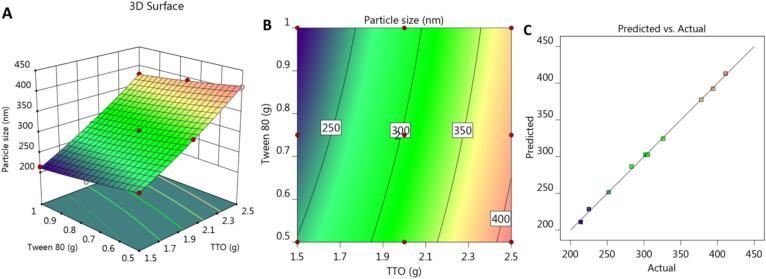
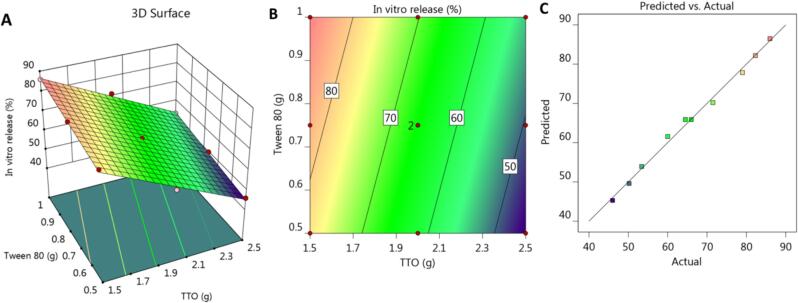
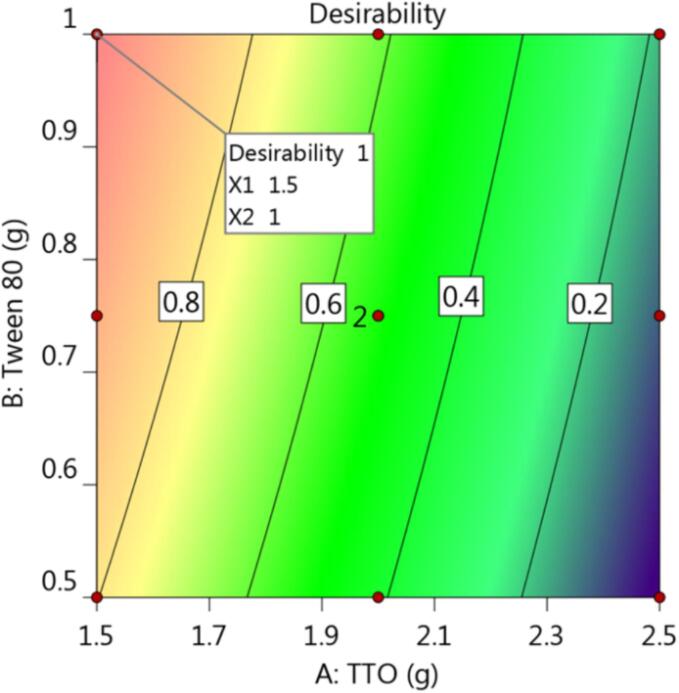
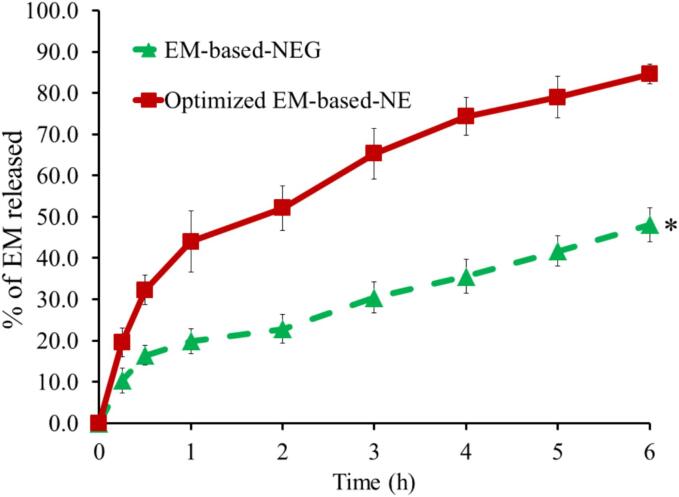
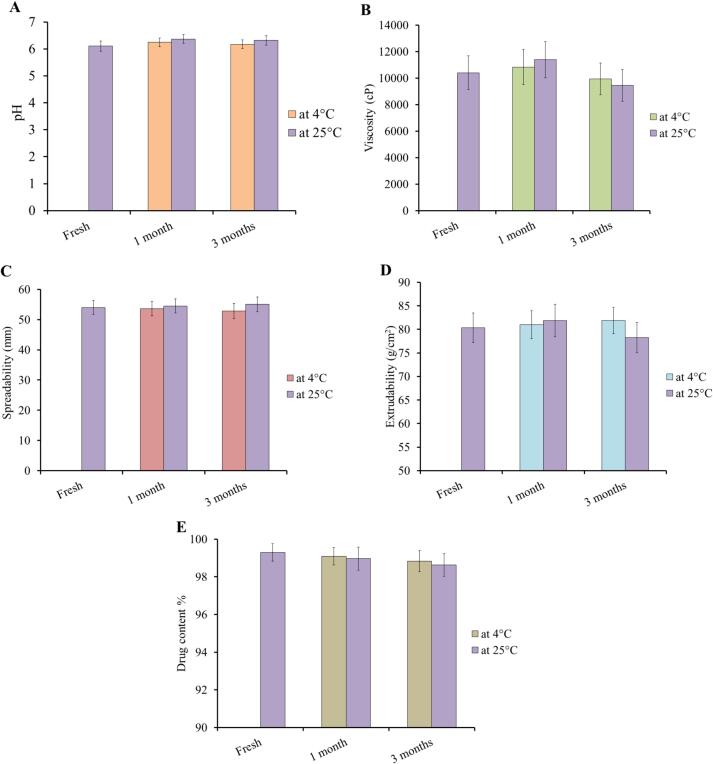
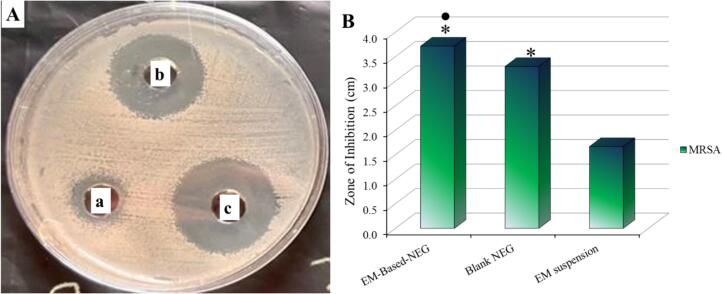
Skin infections considered as one of the predominant disorders that could greatly influence humans. Topical drug delivery is believed to be an effective substitute to systemically delivered medication for skin disorders management. Erythromycin has been proven to retain anti-bacterial activity. Based on that, the aim of existent study is to develop a proper nanocarrier, namely; nanoemulsion using tea tree oil including Erythromycin. Applying quality by design approach, the optimized nanoemulsion was selected based on number of independent variables namely; particle size and release study. Yet, in order to get appropriate topical application, the optimized nanoemulsion was combined with previously prepared hydrogel base to provide Erythromycin based nanoemulgel. The developed nanoemulgel was assessed for its organoleptic and physical characters to ensure its suitability for topical application. Stability study was implemented over three months after being kept in two distinct environments. Eventually, the antibacterial behavior of the preparation was investigated on MRSA to verify the expected antibacterial improvement and validate the effectiveness of the developed nanocarrier. The formulation showed consistent appearance, with pH (6.11 ± 0.19), viscosity (10400 ± 1275 cP), spreadability (54.03 ± 2.3 mm), extrudability (80.36 ± 3.15 g/cm) and drug content (99.3 ± 0.46 %) that seemed to be satisfied for topical application. It could provide 48.1 ± 4.2 % releases over 6 h in addition to be stable at room temperature and at refrigerator. Ultimately, the formula showed a significant antibacterial activity against MRSA proving the combination and the nanocarrier effectiveness.
皮肤感染被认为是可能对人类产生重大影响的主要疾病之一。局部给药被认为是治疗皮肤疾病的全身给药的有效替代方法。红霉素已被证明具有抗菌活性。基于此,现有研究的目的是开发一种合适的纳米载体,即含红霉素的茶树油纳米乳剂。采用质量源于设计的方法,基于粒径和释放研究等自变量选择优化的纳米乳剂。然而,为了获得合适的局部应用,将优化的纳米乳剂与先前制备的水凝胶基质混合,以提供基于红霉素的纳米乳凝胶。对所开发的纳米乳凝胶的感官和物理特性进行评估,以确保其适合局部应用。在两种不同环境中保存三个月后进行稳定性研究。最终,在耐甲氧西林金黄色葡萄球菌(MRSA)上研究该制剂的抗菌行为,以验证预期的抗菌改善并验证所开发纳米载体的有效性。该制剂外观一致,pH值为(6.11±0.19),粘度为(10400±1275厘泊),铺展性为(54.03±2.3毫米),挤出性为(80.36±3.15克/厘米),药物含量为(99.3±0.46%),似乎满足局部应用要求。它在6小时内可释放48.1±4.2%,并且在室温及冰箱中均稳定。最终,该配方对MRSA显示出显著的抗菌活性,证明了组合及纳米载体的有效性。