Department of Marine Microbiology and Biogeochemistry, NIOZ Royal Netherlands Institute for Sea Research, PO Box 59, 1790AB Den Burg, Texel, The Netherlands.
Department of Freshwater and Marine Ecology, Institute for Biodiversity and Ecosystem Dynamics (IBED), University of Amsterdam, PO Box 94240, 1090 GE Amsterdam, The Netherlands.
ISME J. 2024 Jan 8;18(1). doi: 10.1093/ismejo/wrae161.
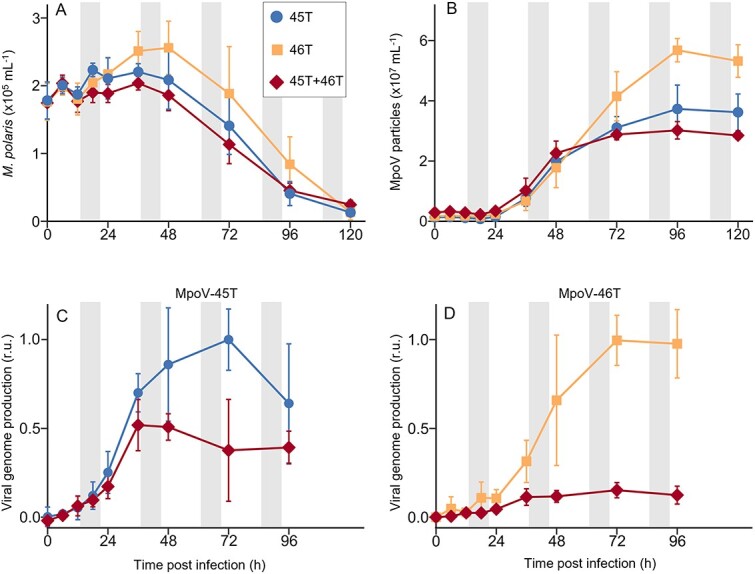
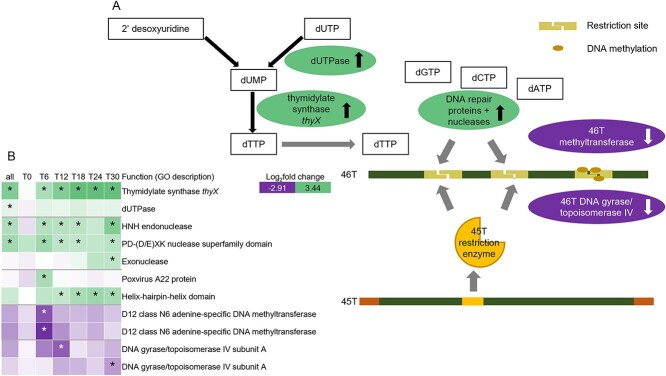
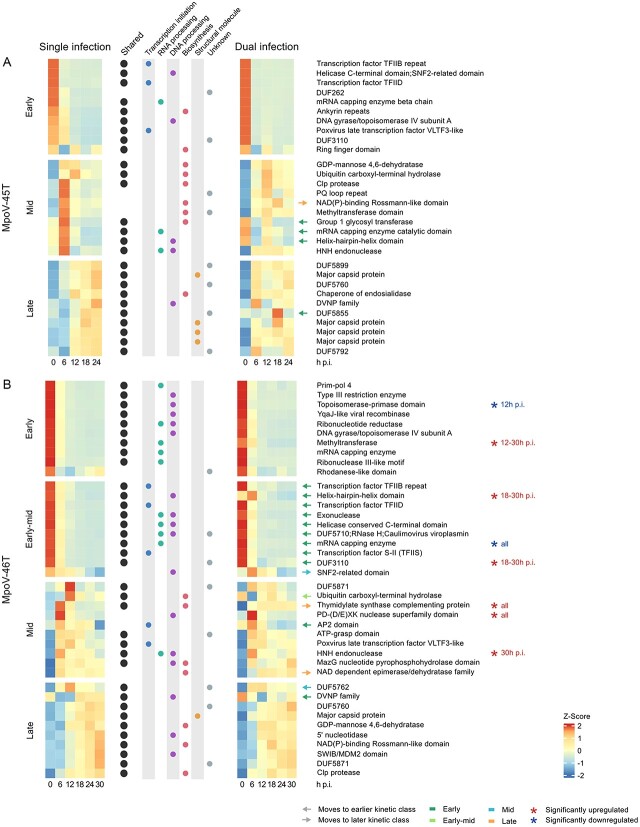
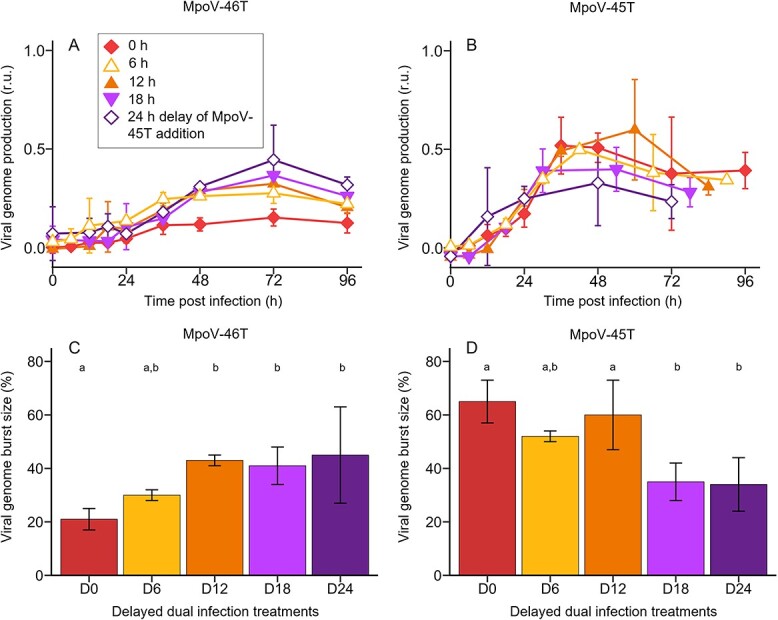
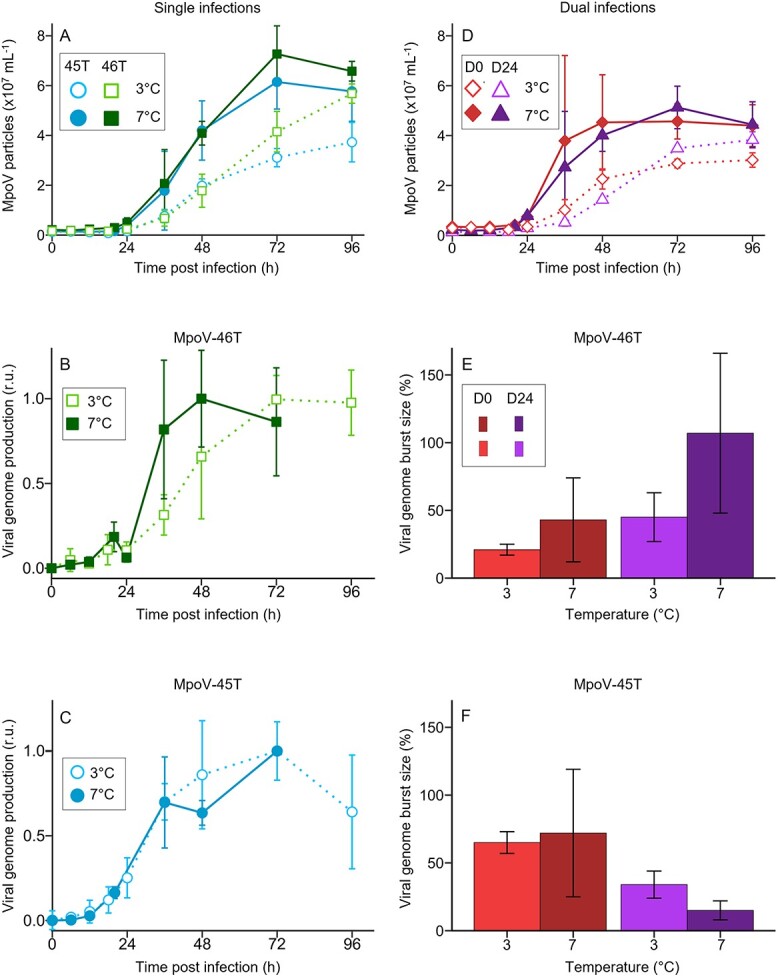
Complex virus-virus interactions can arise when multiple viruses coinfect the same host, impacting infection outcomes with broader ecological and evolutionary significance for viruses and host. Yet, our knowledge regarding virus competition is still limited, especially for single-celled eukaryotic host-virus systems. Here, we report on mutual interference of two dsDNA viruses, MpoV-45T and MpoV-46T, competing for their Arctic algal host Micromonas polaris. Both viruses affected each other's gene expression and displayed reduced genome replication during coinfection. MpoV-45T was the dominant virus, likely due to interference in the DNA replication of is competitor. Even when its coinfection was delayed, the dominant virus still prevailed while genome production of the other virus was strongly suppressed. This contrasts with typical superinfection exclusion, where the primary infection prevents secondary infection by other viruses. Higher temperature made the suppressed virus a stronger competitor, signifying that global warming is likely to alter virus-virus interactions in Arctic waters.
当多种病毒同时感染同一宿主时,会产生复杂的病毒-病毒相互作用,这对病毒和宿主的生态和进化具有更广泛的意义。然而,我们对于病毒竞争的了解仍然有限,特别是对于单细胞真核宿主-病毒系统。在这里,我们报告了两种 dsDNA 病毒 MpoV-45T 和 MpoV-46T 之间的相互干扰,它们竞争北极藻类宿主 Micromonas polaris。两种病毒都影响了彼此的基因表达,并在共感染时显示出基因组复制减少。MpoV-45T 是优势病毒,可能是由于其对竞争病毒 DNA 复制的干扰。即使共感染被延迟,优势病毒仍然占主导地位,而另一种病毒的基因组产生则受到强烈抑制。这与典型的超感染排斥形成对比,在超感染排斥中,初次感染会阻止其他病毒的二次感染。较高的温度使受抑制的病毒成为更强的竞争者,这表明全球变暖可能会改变北极水域中的病毒-病毒相互作用。