Alipour Neda, Burke Ted, Courtney Jane
School of Electrical and Electronic Engineering Technological, TU Dublin, City Campus, Dublin, Ireland.
Curr Dermatol Rep. 2024;13(3):198-210. doi: 10.1007/s13671-024-00440-0. Epub 2024 Aug 14.
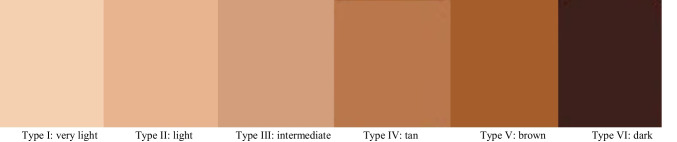
Skin type diversity in image datasets refers to the representation of various skin types. This diversity allows for the verification of comparable performance of a trained model across different skin types. A widespread problem in datasets involving human skin is the lack of verifiable diversity in skin types, making it difficult to evaluate whether the performance of the trained models generalizes across different skin types. For example, the diversity issues in skin lesion datasets, which are used to train deep learning-based models, often result in lower accuracy for darker skin types that are typically under-represented in these datasets. Under-representation in datasets results in lower performance in deep learning models for under-represented skin types.
This issue has been discussed in previous works; however, the reporting of skin types, and inherent diversity, have not been fully assessed. Some works report skin types but do not attempt to assess the representation of each skin type in datasets. Others, focusing on skin lesions, identify the issue but do not measure skin type diversity in the datasets examined.
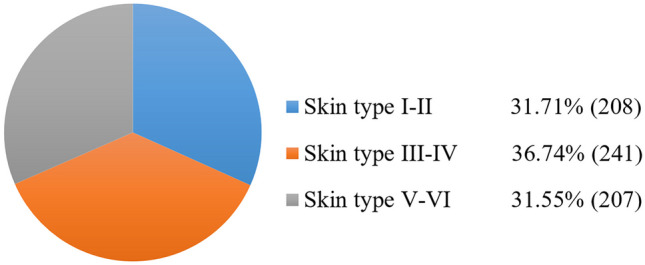
Effort is needed to address these shortcomings and move towards facilitating verifiable diversity. Building on previous works in skin lesion datasets, this review explores the general issue of skin type diversity by investigating and evaluating skin lesion datasets specifically. The main contributions of this work are an evaluation of publicly available skin lesion datasets and their metadata to assess the frequency and completeness of reporting of skin type and an investigation into the diversity and representation of each skin type within these datasets.
The online version contains material available at 10.1007/s13671-024-00440-0.
图像数据集中的皮肤类型多样性是指各种皮肤类型的呈现。这种多样性有助于验证训练模型在不同皮肤类型上的可比性能。在涉及人类皮肤的数据集中,一个普遍存在的问题是皮肤类型缺乏可验证的多样性,这使得难以评估训练模型的性能是否能推广到不同皮肤类型。例如,用于训练基于深度学习模型的皮肤病变数据集中的多样性问题,通常导致在这些数据集中代表性不足的深色皮肤类型的准确率较低。数据集中的代表性不足会导致深度学习模型在代表性不足的皮肤类型上性能较低。
这个问题在以前的研究中已经被讨论过;然而,皮肤类型的报告以及内在多样性尚未得到充分评估。一些研究报告了皮肤类型,但没有试图评估数据集中每种皮肤类型的代表性。其他研究聚焦于皮肤病变,识别出了这个问题,但没有在所研究的数据集中测量皮肤类型的多样性。
需要努力解决这些不足,朝着促进可验证的多样性迈进。基于之前在皮肤病变数据集中的工作,本综述通过具体研究和评估皮肤病变数据集来探讨皮肤类型多样性的一般问题。这项工作的主要贡献包括对公开可用的皮肤病变数据集及其元数据进行评估,以评估皮肤类型报告的频率和完整性,以及对这些数据集中每种皮肤类型的多样性和代表性进行调查。
在线版本包含可在10.1007/s13671-024-00440-0获取的材料。