Department of Economics and CERPA, Appalachian State University, Boone, NC, USA.
IZA, Bonn, Germany.
J Gambl Stud. 2024 Dec;40(4):2055-2075. doi: 10.1007/s10899-024-10339-x. Epub 2024 Aug 27.
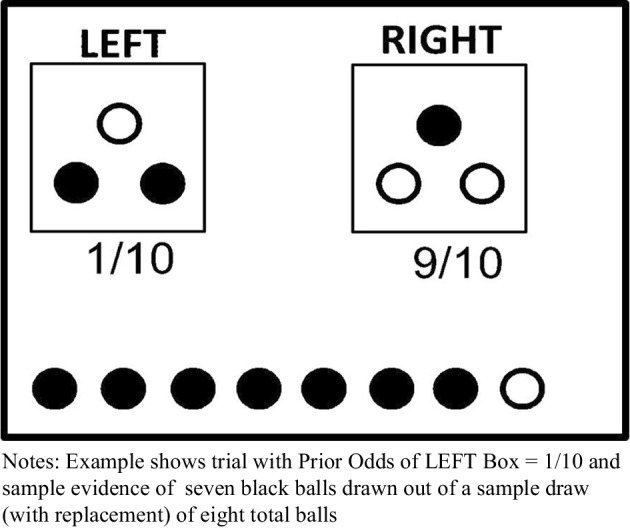
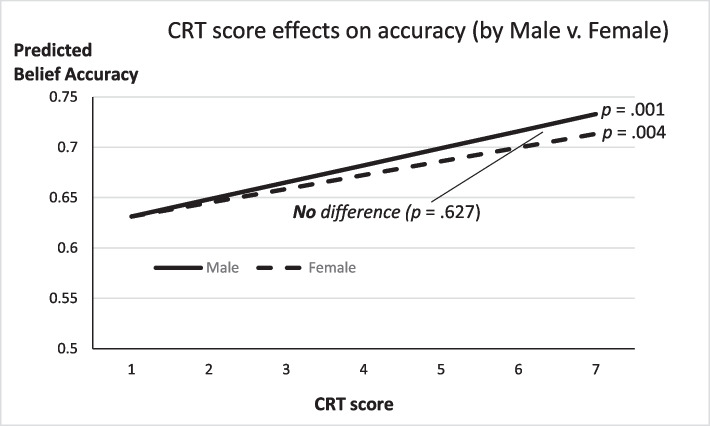
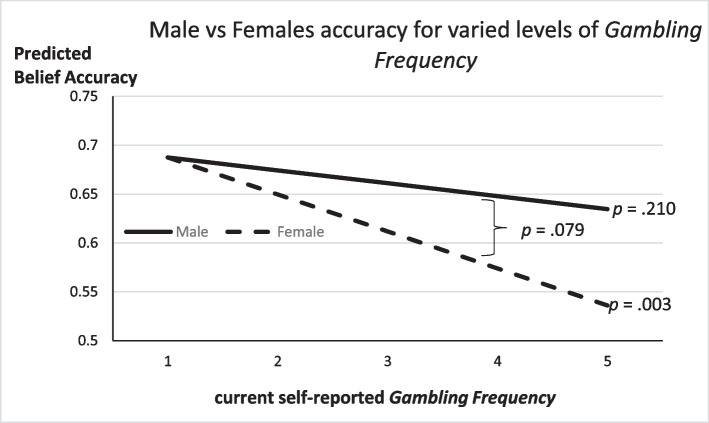
Little is known about how gamblers form probability assessments. This paper reports on a preregistered study that administered an incentivized Bayesian choice task to n = 465 self-reported gamblers and non-gamblers. The task elicits subjective probability assessments and allows one to estimate the degree to which distinct information sources are weighted in forming probability assessments. Our data failed to support our main hypotheses that experienced online gamblers would be more accurate than non-gamblers in estimating probabilities, that gamblers experienced in games of skill (e.g., poker) would be more accurate than gamblers experienced only in non-skill games (e.g., slots), that accuracy would differ by sex, or that information sources would be weighted differently across different participant groups. Exploratory analysis, however, revealed that gambling frequency predicted lower Bayesian accuracy, while cognitive reflection predicted higher accuracy. The decline in accuracy linked to self-reported gambling frequency was stronger for female participants. Decision modeling estimated a decreased weight place on new evidence (over base rate odds) for those participant groups who showed decreased accuracy, which suggests that a proper incorporation of new information is important for probability assessments. Our results link online gambling frequency to worse performance in the critical probability assessment skills that should benefit gambling success (i.e., in skill-based games). Additional research is needed to better understand the mechanism linking reported gambling frequency to probability assessment accuracy.
关于赌徒如何形成概率评估,人们知之甚少。本文报告了一项预先注册的研究,该研究向 465 名自我报告的赌徒和非赌徒实施了一项有激励的贝叶斯选择任务。该任务引出了主观概率评估,并允许人们估计在形成概率评估时不同信息源的权重程度。我们的数据不支持我们的主要假设,即经验丰富的在线赌徒在估计概率方面会比非赌徒更准确,在技能游戏(如扑克)方面有经验的赌徒会比只在非技能游戏(如老虎机)方面有经验的赌徒更准确,准确性会因性别而异,或者信息来源在不同的参与者群体中会有不同的权重。然而,探索性分析显示,赌博频率预测贝叶斯准确性较低,而认知反射预测准确性较高。女性参与者的赌博频率与自我报告的准确性下降之间的关联更强。决策建模估计,对于那些表现出准确性下降的参与者群体,对新证据(相对于基本概率赔率)的权重降低,这表明正确纳入新信息对于概率评估很重要。我们的结果将在线赌博频率与在应该有利于赌博成功的关键概率评估技能(即基于技能的游戏)中的较差表现联系起来。需要进一步的研究来更好地理解将报告的赌博频率与概率评估准确性联系起来的机制。