Institute of Physiology II, University of Muenster, Muenster, Germany.
Nat Cardiovasc Res. 2023 Nov;2(11):991-1002. doi: 10.1038/s44161-023-00348-1. Epub 2023 Oct 26.
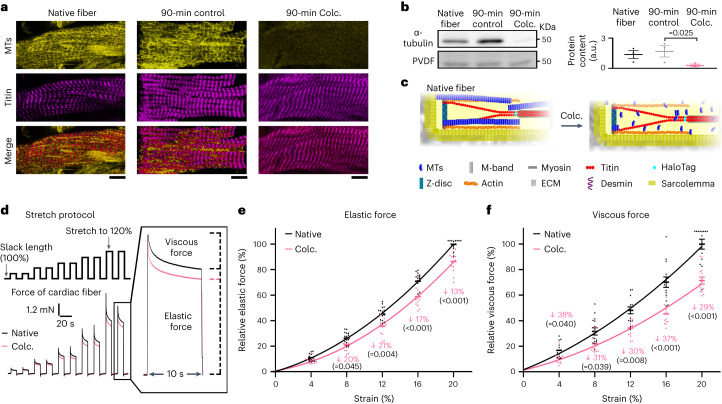
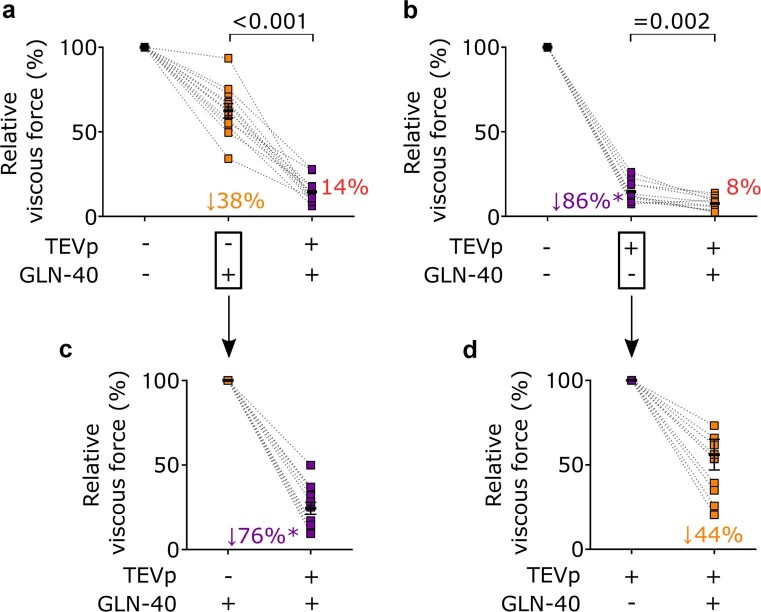
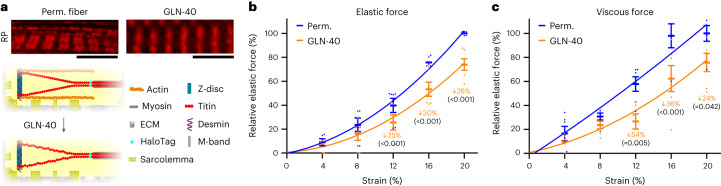
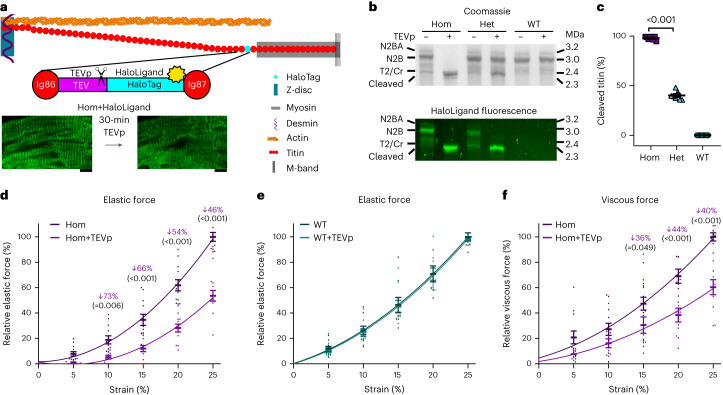
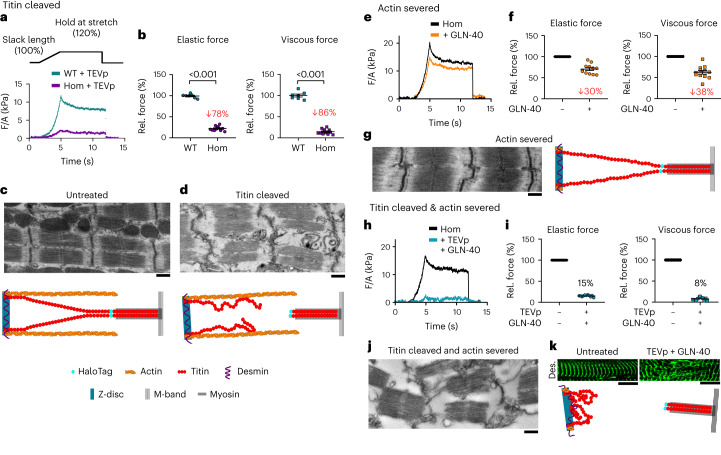
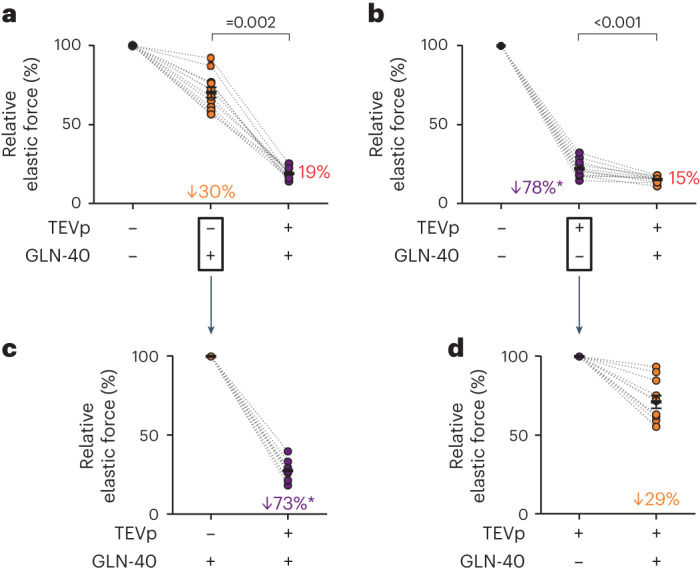
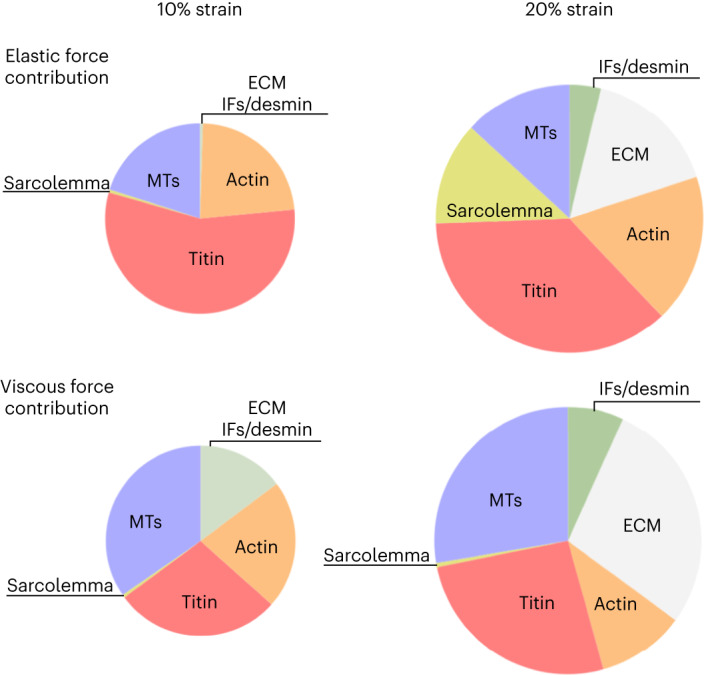
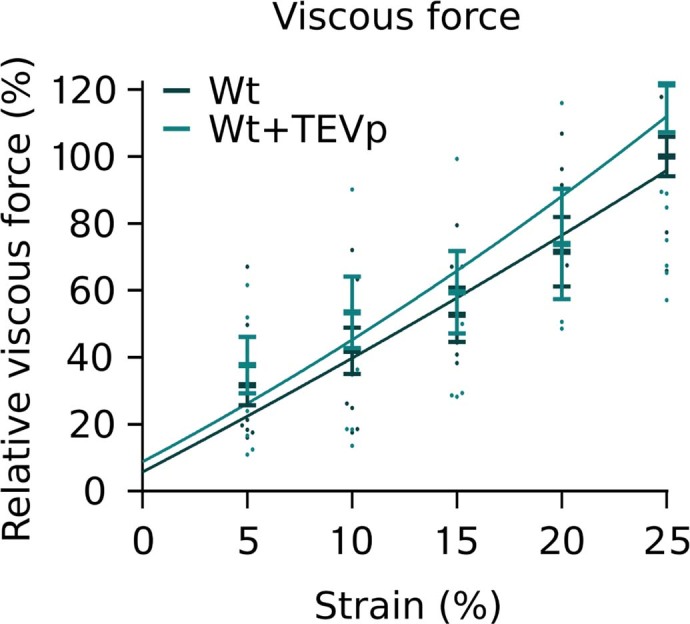
Myocardial passive stiffness is crucial for the heart's pump function and is determined by mechanical elements, including the extracellular matrix and cytoskeletal filaments; however, their individual contributions are controversially discussed and difficult to quantify. In this study, we targeted the cytoskeletal filaments in a mouse model, which enables the specific, acute and complete cleavage of the sarcomeric titin springs. We show in vitro that each cytoskeletal filament's stiffness contribution varies depending on whether the elastic or the viscous forces are considered and on strain level. Titin governs myocardial elastic forces, with the largest contribution provided at both low and high strain. Viscous force contributions are more uniformly distributed among the microtubules, titin and actin. The extracellular matrix contributes at high strain. The remaining forces after total target element disruption are likely derived from desmin filaments. Our findings answer longstanding questions about cardiac mechanical architecture and allow better targeting of passive myocardial stiffness in heart failure.
心肌被动僵硬度对心脏的泵功能至关重要,由机械元素决定,包括细胞外基质和细胞骨架丝;然而,它们各自的贡献存在争议,难以量化。在这项研究中,我们针对小鼠模型中的细胞骨架丝,实现了肌联蛋白弹簧的特异性、急性和完全切割。我们在体外表明,每条细胞骨架丝的刚度贡献取决于是考虑弹性力还是粘性力,以及应变水平。肌联蛋白控制心肌的弹性力,在低应变和高应变时都有最大的贡献。粘性力的贡献在微管、肌联蛋白和肌动蛋白之间更均匀地分布。细胞外基质在高应变时起作用。在完全破坏目标元素后剩余的力可能来自结蛋白丝。我们的发现回答了关于心脏机械结构的长期问题,并允许更好地针对心力衰竭中的心肌被动僵硬度。